


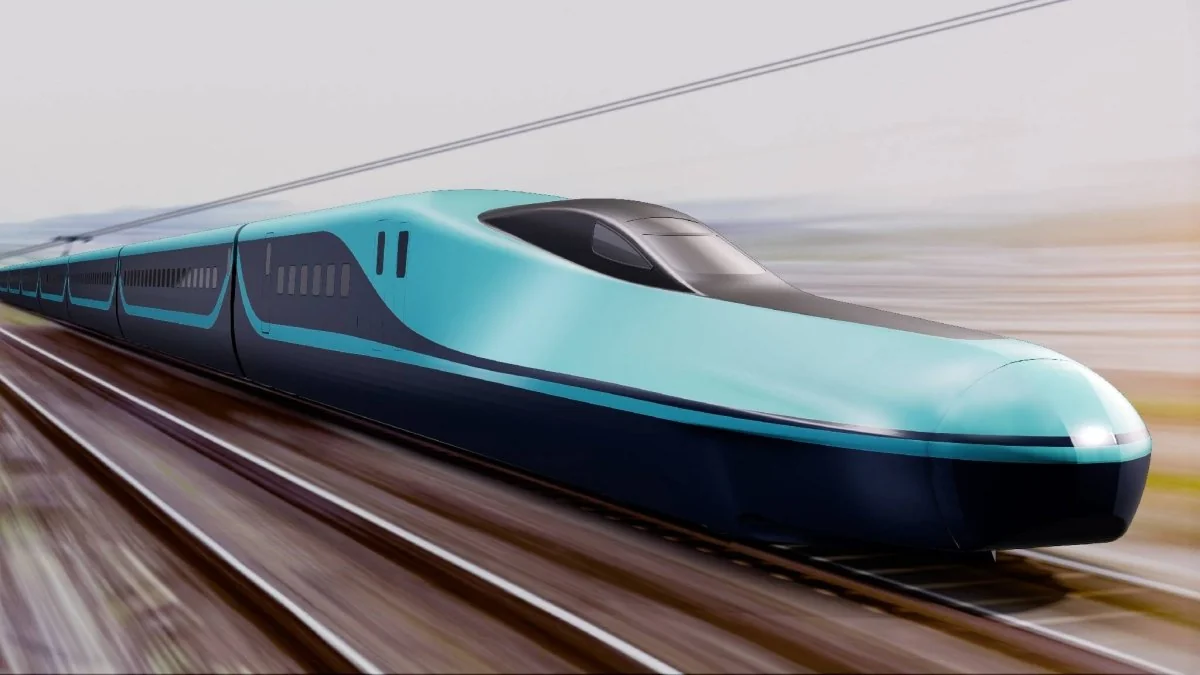
Indian Railways is rapidly modernising its passenger network by scaling up operations of the Vande Bharat, Amrit Bharat and Namo Bharat Rapid Rail trains across 72 routes nationwide.
With this expansion, the national transporter has signalled a decisive shift towards faster, cleaner and more efficient intercity travel, advancing India’s ambitions of zero-carbon mobility and home-grown infrastructure.The network now includes 67 routes served by the Vande Bharat Express — India’s flagship semi-high-speed train — with additional corridors operated by the recently launched Amrit Bharat and Namo Bharat trains. These indigenous trains are seen not only as symbols of technological self-reliance under the “Make in India” and “Atmanirbhar Bharat” campaigns, but also as critical interventions in sustainable mobility planning.
Introduced in 2019, the Vande Bharat Express has quickly become a backbone of Indian Railways’ next-generation fleet. With its regenerative braking system, energy efficiency features, and significant reductions in travel time, it now serves major city pairs including New Delhi-Varanasi, Mumbai-Gandhinagar, Chennai-Mysuru, and Howrah-Puri. On many routes, occupancy levels remain above 95%, indicating robust passenger demand for faster and cleaner travel options.Complementing the Vande Bharat fleet are the newly introduced Amrit Bharat trains—designed to offer faster travel between Tier 2 and Tier 3 towns—and the Namo Bharat Rapid Rail, which is positioned as a high-speed regional link for daily commuters, notably in the National Capital Region. Though smaller in number, these trains mark a critical pivot in decentralising India’s rail development, making high-speed connectivity more inclusive and regionally accessible.
The expansion comes at a time when India is under increasing pressure to decarbonise its transport sector. Railways, being among the least polluting modes of surface transport, has been identified as a core component of the national decarbonisation strategy. The Vande Bharat fleet, powered by electric traction and requiring no fossil fuels, plays a key role in replacing older diesel-powered express trains, particularly on high-density corridors.While high-speed rail continues to attract political and public attention—especially with the Mumbai-Ahmedabad bullet train corridor under construction—experts point out that the real transformation lies in scaling up sustainable options across regions, not just metros. The pan-India roll-out of the Vande Bharat and allied trains is therefore being seen as a democratising force in India’s mobility sector.
A senior Indian Railways official noted that future expansion would focus on improving last-mile connectivity at major terminals, upgrading feeder infrastructure, and enhancing accessibility for women, senior citizens and differently abled passengers. “Sustainability is no longer optional—it is a design principle,” the official said, referring to the long-term goal of net-zero emissions by 2030.Beyond their technological sophistication, these modern trains are also shifting cultural perceptions around train travel. Once seen as time-consuming and outdated, rail journeys on the Vande Bharat and its sister trains are now being preferred over short-haul flights, especially by business and leisure travellers in urban and semi-urban belts.
The success of the 72-route network may well pave the way for new public-private partnerships and more regional customisation of services. However, the broader vision remains tied to India’s climate commitments, mobility equity, and economic resilience. As the green train network grows, it reinforces the idea that efficient mobility must go hand-in-hand with environmental and social justice.Indian Railways’ transition to clean high-speed transport is no longer an experiment—it is the future rolling steadily on steel tracks.
Also Read : Mumbai Ahmedabad bullet train nears 2028 launch

