


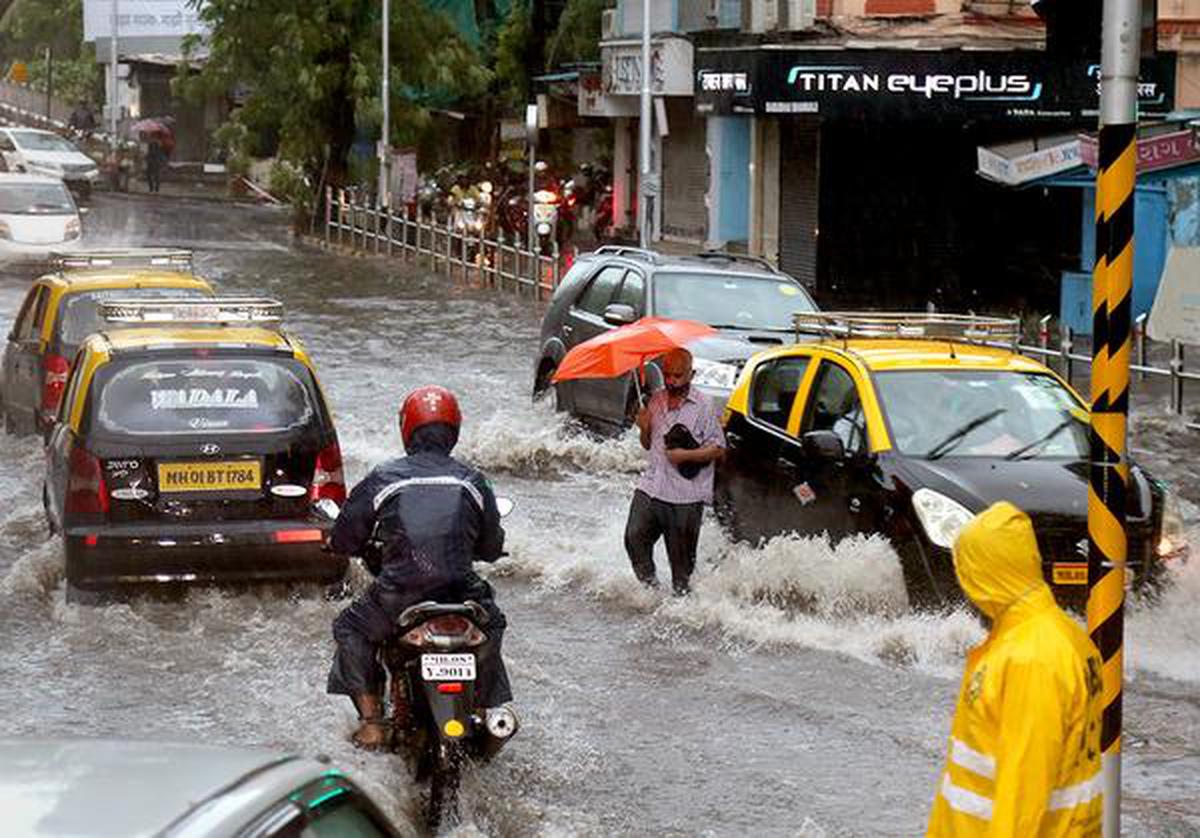
Mumbai witnessed a deluge of historic proportions on Monday, recording its highest May rainfall in over a century, disrupting urban life and once again exposing the city’s fragile infrastructure.
With the Colaba observatory logging 295 mm of rain — breaking the previous May record of 279.4 mm set in 1918 — the India Meteorological Department (IMD) was compelled to issue a red alert for the city and adjoining districts.The IMD confirmed that Mumbai, along with Thane, Raigad, and Ratnagiri, is likely to experience extremely heavy rainfall accompanied by thunderstorms and gusty winds up to 40 kmph through Tuesday morning. The unusually early arrival of the southwest monsoon — clocked in on May 25, a full ten days before the typical onset date of June 5 — has set an alarming tone for the rainy season ahead.
Between midnight and 11 am on Monday, several parts of the Island City recorded over 200 mm of rainfall, with Nariman Point logging the highest at 252 mm, followed by Byculla (213 mm), Colaba (207 mm), and Do Taki (202 mm), according to data from the Brihanmumbai Municipal Corporation (BMC). Eastern suburbs saw 19 mm, while the western suburbs received 15 mm during the same period.The downpour paralysed traffic across the city. Low-lying zones like Dadar TT, Hindmata Junction, Sion Circle, and Elphinstone Bridge were inundated, resulting in long tailbacks and widespread commuter distress. Even elevated areas such as King’s Circle and Saki Naka reported slowed vehicular movement, raising concerns over the drainage capacity and monsoon readiness of key transport corridors.
Despite civic claims of pre-monsoon desilting, clogged drains and overflowing gutters were visible across several stretches. The BMC’s automated weather stations recorded sharp rainfall spikes between 6 am and 7 am, with Nariman Point witnessing 40 mm in just an hour. Areas like Grant Road and Colaba also experienced intense rainfall within short time windows, overwhelming the stormwater network.”This is not pre-monsoon activity; this is full-fledged monsoon rain,” said Sushma Nair, a senior scientist at IMD Mumbai. She attributed the torrential downpour in southern Mumbai to intensified cloud systems emerging over Raigad and the Arabian Sea. “We expect more such events in the coming days. Citizens and agencies must remain alert.”
The disruption raises broader concerns about Mumbai’s resilience as a global coastal megacity. Urban experts have long warned that short-sighted development and unregulated construction over natural drains and floodplains are compounding the city’s flood vulnerability. The absence of adequate green cover, impermeable urban surfaces, and erratic maintenance of stormwater drains further exacerbate waterlogging.
As Mumbai begins its monsoon season under record-breaking circumstances, there is a clear call for a rethink in how the city prepares for extreme weather. The choice is stark — between continuing to chase quick fixes or investing in systemic, sustainable, and climate-resilient urban planning.
Also Read : Mumbai Cuffe Parade Floods After First Rain
Mumbai Records Heaviest May Rainfall in Decades
