


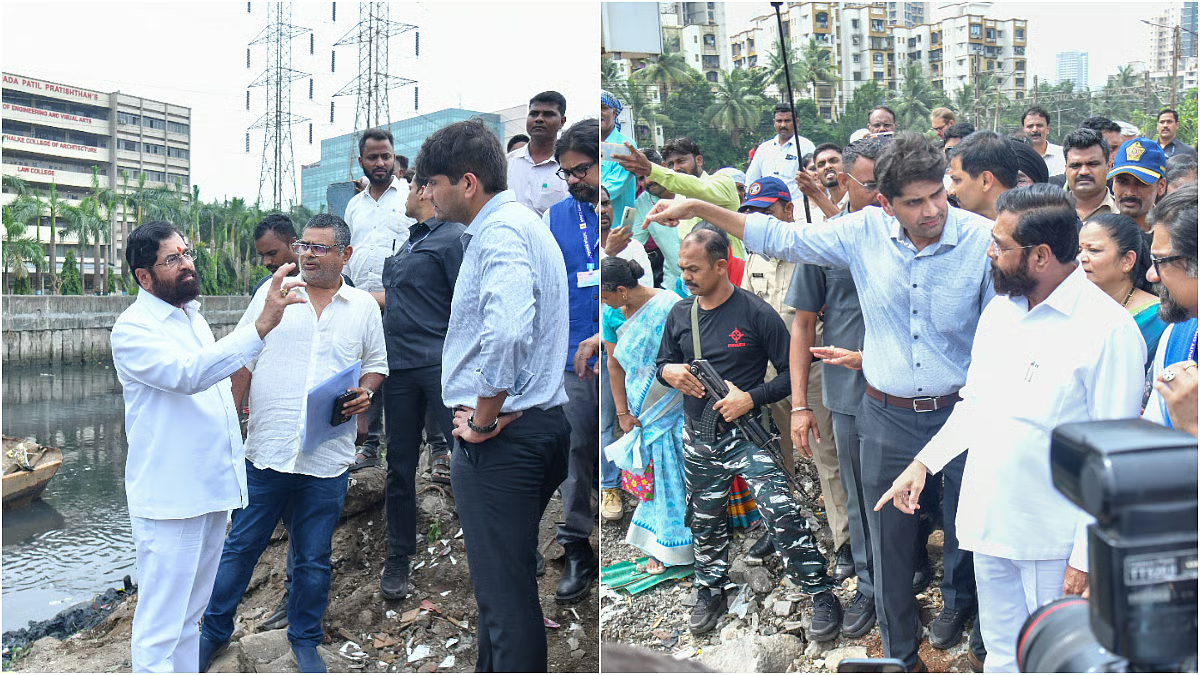
Mumbai is racing against time to complete its pre-monsoon drain-cleaning operations. Deputy Chief Minister and Guardian Minister for Mumbai, Eknath Shinde, has directed the Brihanmumbai Municipal Corporation (BMC) to complete all desilting work by 7 June 2025, ensuring the city is fully prepared to handle heavy rains.
In a city that battles annual flooding and waterlogging, drain cleaning remains one of the most critical public safety and urban resilience tasks. During his recent inspection of vulnerable neighbourhoods including Bhandup, Wadala, Dharavi and Vikhroli, Shinde said that 85% of major stormwater drains and 65% of minor ones have already been cleared. The remaining work, he instructed, must be completed in the next 15 days. Officials failing to meet this deadline would face strict administrative action.
Shinde has also insisted on the swift removal and disposal of silt — within 48 hours of extraction — to prevent it from being washed back into the drains. This directive comes amid growing concerns from citizens that incomplete or poorly timed cleaning often worsens flooding in low-lying areas.
What sets this year’s operation apart is the deployment of artificial intelligence and robotic tools for desilting operations, particularly in railway culvert zones where human access is limited. This marks a new era of tech-led governance, aligning with the state’s broader ambition of turning Mumbai into a climate-resilient and smart city. In partnership with Indian Railways, these machines are being used to clean hard-to-reach sections of the city’s vast and ageing drainage system.
The BMC has also identified 422 flood-prone locations and activated ten mini-pumping stations, in addition to two large storage tanks. High-capacity dewatering pumps are already in place in several vulnerable zones. These interventions are part of a larger flood mitigation strategy designed to improve Mumbai’s ability to manage urban runoff, reduce disruption to daily life, and protect infrastructure.
The Deputy Chief Minister also visited the landslide-prone Surya Nagar area in Vikhroli, ordering the immediate installation of protective nets and relocation of residents living in high-risk zones. The tour concluded in Kasarwadi, Dadar, a colony for sanitation workers, where Shinde reviewed local public amenities such as study centres, health clinics, and the recently inaugurated Balasaheb Thackeray Aapla Davakhana.
The coordinated campaign underscores the urgency of climate-preparedness in India’s largest city. As Mumbai urbanises at breakneck speed, this year’s desilting mission is more than routine—it is a test of how well the city can balance modern technology, civic accountability and climate resilience.
Also Read : Pune’s ₹200 Crore Flood Project Stuck as Funds Remain Frozen
