


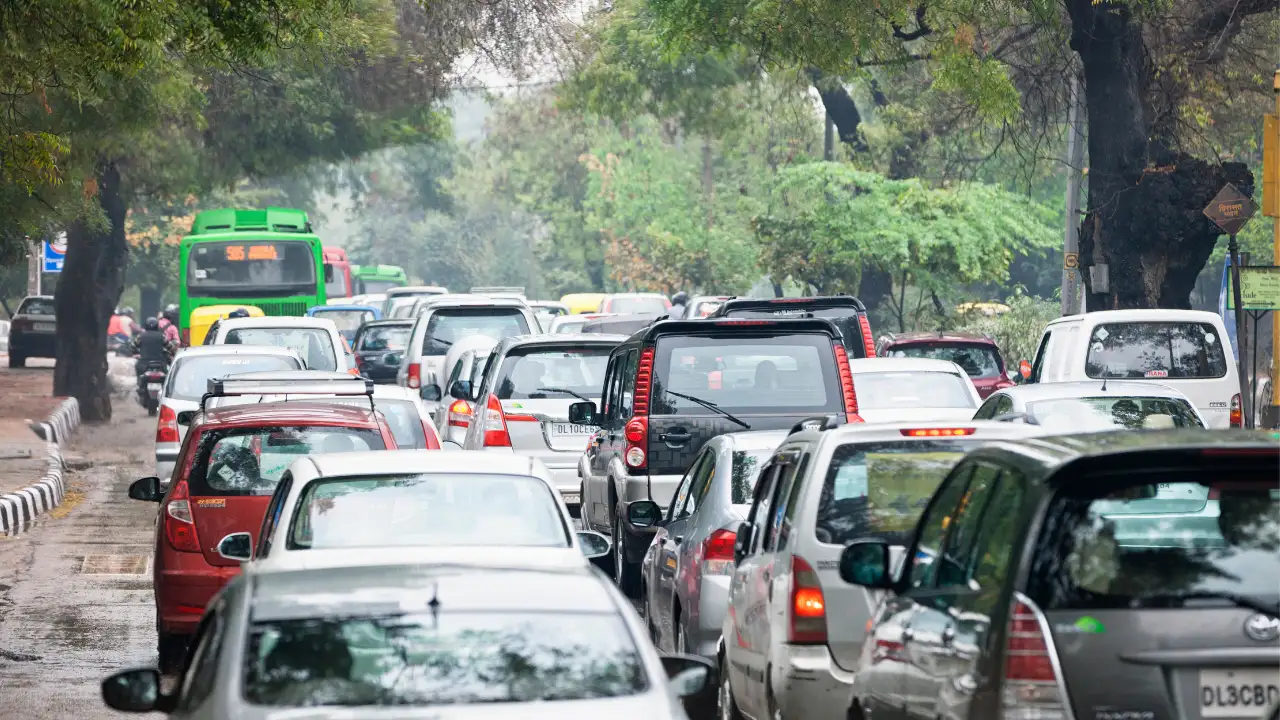
Daily commuters in the heart of the national capital are set to face prolonged delays as the Hanuman Setu bridge, a key arterial link between Rajghat and ISBT Kashmiri Gate, is partially closed for urgent repair and rehabilitation.
The closure, effective from May 23 to June 11, has triggered traffic diversions across some of Delhi’s busiest stretches, with ripple effects expected across neighbouring corridors.The Public Works Department (PWD) has commenced structural rehabilitation on the right-side carriageway of Hanuman Setu, citing urgent maintenance needs to ensure long-term durability and commuter safety. As one of the key connectors over the Yamuna, the Setu serves not only local traffic but also interstate buses and commercial vehicles headed towards Old Delhi and northern hinterlands.
Traffic authorities have flagged the likelihood of significant congestion in the surrounding zones and have urged commuters to plan alternative routes or adopt public transport wherever possible. Among the affected routes are Netaji Subhash Marg and the Ring Road stretch between Shanti Van and ISBT Kashmiri Gate, along with arterial roads such as Raja Ram Kohli Marg and Nishad Raj Marg.Additional disruptions are anticipated around Outer Ring Road, especially the corridor spanning from Geeta Colony Flyover to the ISBT junction. Traffic may also slow down around Red Fort as diversions are activated near Mangi Bridge and Shanti Van Chowk based on real-time congestion data.
To offset the impact, Delhi Traffic Police has recommended alternative routes for key origin points. Commuters travelling from Noida, Sarai Kale Khan, and Akshardham towards ISBT Kashmiri Gate and Chandgiram Akhara are advised to take Geeta Colony Road via Pushta Road to either GT Road or Wazirabad Road, continuing via Signature Bridge. Similarly, those coming from Shahdara, Seelampur, or Shastri Park are directed to use the same diversionary loops.While these arrangements aim to mitigate bottlenecks, the repairs spotlight a wider urban mobility challenge in Delhi – the need for resilient, climate-conscious infrastructure upgrades that do not severely interrupt daily life. In a city where 70 percent of daily trips are made on public roads, even partial closures like Hanuman Setu can result in exponentially larger delays and higher vehicular emissions.
Urban planners and sustainable mobility advocates argue that routine maintenance of vital infrastructure should integrate eco-sensitive planning, including night-time work schedules and staggered closures, especially in corridors linking high-density zones. Furthermore, they emphasise the urgency of fast-tracking mass transit alternatives, such as bus lanes and metro connectivity, to reduce dependency on overloaded flyovers.
With civic bodies under growing pressure to future-proof Delhi’s transportation network, incidents like these underline the importance of synchronised urban planning, environmental safeguards, and equitable access to mobility solutions. Until June 11, however, commuters will have to brace for a longer, less predictable journey through the city’s eastern corridor.
Authorities have assured that traffic personnel will be deployed at key junctions to facilitate smoother vehicular movement. While the repairs are essential for structural safety, their implementation will serve as a test case for how India’s capital navigates the fine balance between infrastructure development and commuter convenience.
As Delhi navigates these repairs, the broader takeaway is clear: the future of mobility must be sustainable, smart, and people-centric.
Also Read : Mumbai Jetty Drilling Triggers Heritage Wall Cracks

