


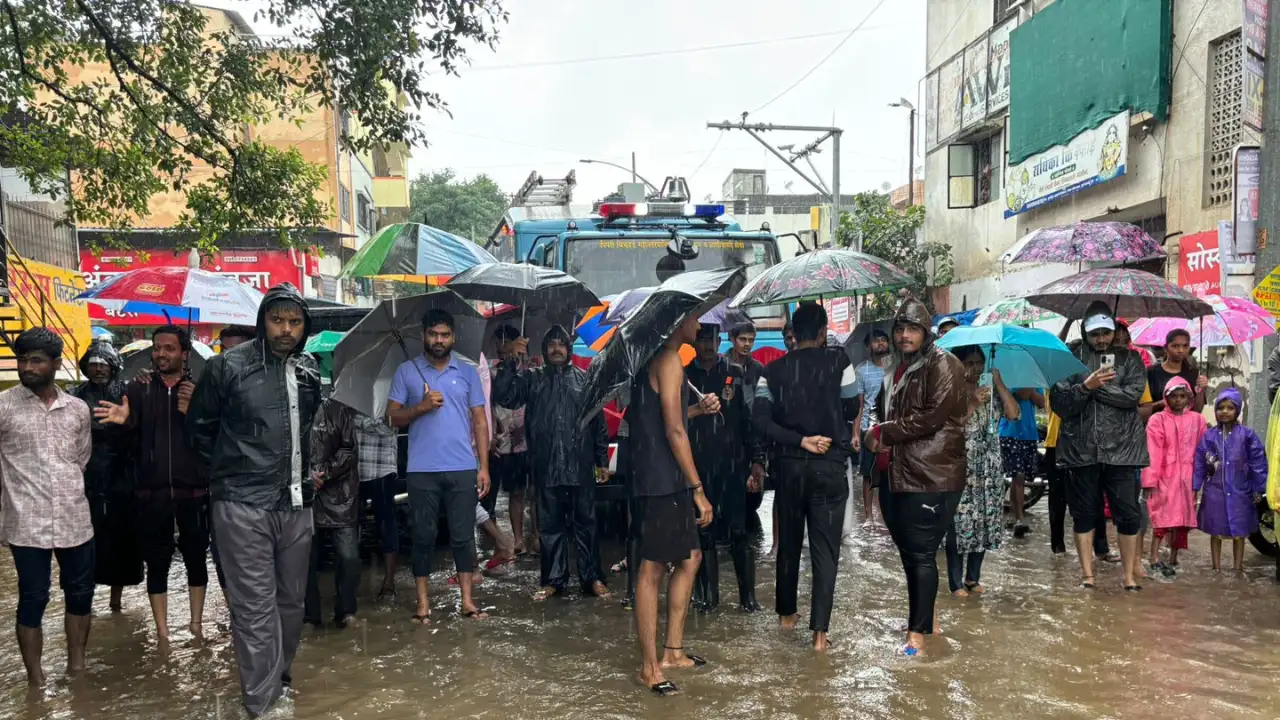
Pune faced a critical test of its urban infrastructure on Tuesday evening as a sudden and intense spell of monsoon rain disrupted power supply across key city zones and peripheral areas.
With around 38,000 residents in Kondhwa alone plunged into darkness, the incident underlined the fragile state of essential civic systems in the face of extreme weather events.According to officials at the Maharashtra State Electricity Distribution Company Limited (MSEDCL), torrential rains caused flash flooding in multiple low-lying areas, forcing the utility to shut off power in precautionary phases. Among the hardest hit zones were Kondhwa, central Pune, and extended industrial belts in Bhosari and Chakan—each crucial to the city’s residential and economic functioning.
Floodwaters infiltrated 38 underground feeder pillars in Kondhwa, a residential hub that has witnessed rapid but often unplanned growth. As per MSEDCL engineers, three main supply lines—Kondhwa, JK Park, and Kumarapam—had to be shut down to prevent electrical short-circuits and potential hazards. These emergency disconnections left tens of thousands without electricity for several hours, prompting a swift but complex restoration effort through the night.
By 6 a.m. Wednesday, power had been restored in most areas after extensive pumping operations and electrical checks were carried out. Emergency repair teams worked through the night, manually draining submerged components and ensuring safety before reactivating lines. The MSEDCL’s rapid response helped mitigate prolonged disruption, though many residents experienced an anxious, sleepless night.
Beyond the urban sprawl of Pune, the adjoining industrial and semi-rural areas of Pimpri-Chinchwad and Chakan bore the brunt of weather-induced damage. In these zones, particularly in Chakan, at least ten high- and low-voltage electricity poles were reported to have collapsed under storm pressure. Villages in and around the manufacturing belt, including Talwade, Shelarvasti, and Alandi Road, remained without power late into Wednesday.
Neighbourhoods such as Maharshinagar, Market Yard, and Bundgarden experienced intermittent outages, as did pockets of Shivne, Dhanori, and Fursungi. With the increasing frequency of such urban power failures, concerns are growing over Pune’s preparedness for climate-induced disruptions, especially in the monsoon season.
Environmental planners and civic experts have repeatedly warned that rapid urbanisation, particularly in areas like Kondhwa and Chikhali, has outpaced sustainable planning. These localities, often marked by inadequate drainage and overburdened civic services, are vulnerable to such cascading system failures. Each year, Pune receives substantial monsoon rainfall, yet the city’s underground power network and surface water drainage remain underfunded and poorly maintained.
As India continues its transition towards eco-conscious urban development, such incidents cast a spotlight on the urgent need for climate-resilient infrastructure. The flooding of electrical systems is not merely an inconvenience—it presents a hazard that threatens human lives, impedes economic activity, and undermines progress toward sustainable, equitable cities.
While emergency services and power authorities responded with urgency, a broader solution lies in long-term investments in green infrastructure, underground waterproofing of power systems, and robust stormwater management. Without this, cities like Pune risk reliving this disruption with every monsoon surge.
For now, the city breathes a sigh of relief with power gradually restored. But the storm serves as a sharp reminder that resilience must be built before the next cloudburst, not after.
Also Read : Powergrid plans Rs 3 lakh crore capex by 2032
