


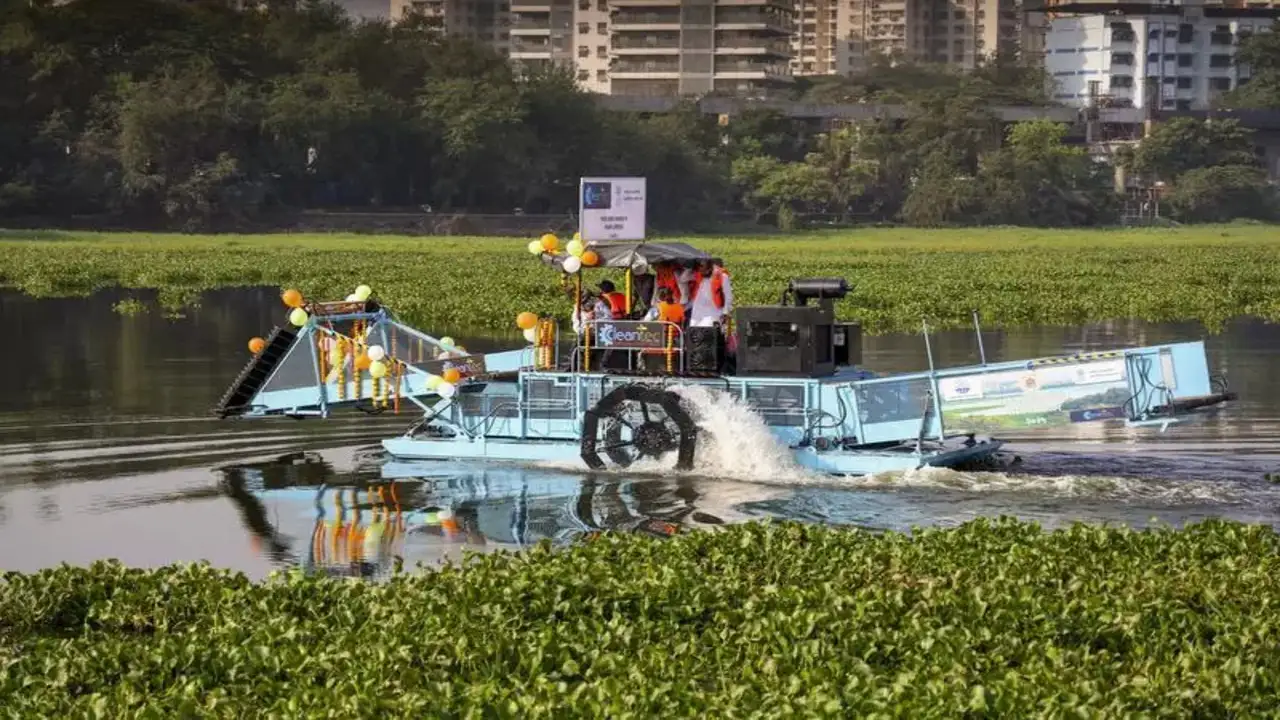
Mumbai’s municipal body has initiated a major intervention to rescue the polluted Powai Lake from the choking grip of water hyacinth.
Faced with the relentless spread of this invasive aquatic plant, attributed largely to unchecked sewage inflow, the Brihanmumbai Municipal Corporation (BMC) is now set to implement a two-pronged infrastructure response: diverting sewage lines away from the lake and constructing a decentralised sewage treatment plant (STP) with a capacity of 8 million litres per day (MLD). The plan, which was finalised this week, includes two separate tenders for the twin works — sewage line redirection and setting up the STP — aimed at reducing the 18 MLD of untreated sewage that currently enters the lake daily. The BMC has directed concerned departments to expedite the award of contracts and commence work within the next week, with an 18-month execution deadline.
This renewed push comes in the wake of public pressure and environmental concerns, as local residents and conservation groups raised alarms over the deteriorating health of the lake ecosystem. Over the last six months, nearly 25,000 metric tonnes of water hyacinth have been manually removed from the lake, but the spread of the plant has consistently outpaced removal efforts. The municipal body has now committed to deploying six floating weed-removal machines, up from the current two, along with additional manpower to tackle the immediate biomass overload. However, officials have acknowledged that mechanical removal alone is a short-term fix and not a sustainable solution. “The root cause is the continuous inflow of untreated sewage, feeding nutrient-rich waters that allow water hyacinth and other invasive species to thrive,” an official involved in the lake conservation planning said.
As per the finalised diversion plan, 8 MLD of sewage will be routed to the proposed new STP on the site of the defunct Powai pumping station. Treated water will be channelled back into the lake, potentially helping to stabilise the aquatic ecosystem. Another 8 MLD will be redirected through existing sewerage infrastructure on Adi Shankaracharya Road to the Bhandup STP, one of the city’s largest treatment facilities. The remaining 2 MLD is to be pumped to the Mithi River STP, leveraging its current 9 MLD treatment capacity. Together, these measures are expected to eliminate untreated discharges into the lake. Powai Lake, once a recreational and ecological landmark nestled amid the city’s burgeoning suburbs, has suffered significantly due to rapid urbanisation in the surrounding areas. The inflow of domestic and industrial waste, coupled with unregulated development, has led to oxygen depletion, loss of aquatic life, and visual degradation of what was once considered a biodiversity hotspot. The rampant spread of water hyacinth, often referred to as the “green curse” of Indian lakes, forms dense mats that block sunlight, reduce oxygen levels, and restrict fish movement.
Environmental experts have long warned that unless urgent and systemic measures are implemented, the lake could become biologically dead. In a recent consultation, ecologists stressed the need for decentralised wastewater treatment, active lake monitoring, and a continuous commitment to zero discharge of untreated sewage. The BMC’s decision comes after a wave of civic activism in the area. Local stakeholders had launched an online petition earlier this month, calling for immediate intervention to protect Powai Lake’s remaining biodiversity. Conservation volunteers also submitted written appeals to top state and civic leadership, demanding swift action and accountability. Officials conducting a recent inspection have identified key inflow zones around the lake, including densely populated residential belts near Ganesh Ghat, Pawarwadi Ghat, Westin Hotel precincts, and IIT Bombay. These hotspots are now being mapped for source detection and on-ground verification before physical work begins.
The intervention is being framed not only as an environmental restoration effort but also as a climate resilience measure. Urban lakes like Powai, often relegated to waste sinks, are essential natural infrastructure that mitigate heat island effects, recharge groundwater, and offer refuge to migratory birds and urban wildlife. In this context, the current clean-up is being positioned as a broader commitment towards building a climate-adaptive Mumbai. While the proposed infrastructure overhaul is significant, the real test will lie in its execution. Past civic projects have suffered delays and underperformance due to weak monitoring and coordination failures. Stakeholders are urging the administration to adopt a transparent and inclusive approach, with periodic reporting and citizen engagement. “It is not just about engineering solutions, but about sustaining ecological health and people’s trust,” a lake conservation expert noted.
Furthermore, experts have flagged the need for integrated catchment management that includes stormwater regulation, prohibition of plastic and greywater discharges, and increased green buffer zones around the lake. Without addressing peripheral threats, they caution, any gains from the STP or hyacinth removal may be short-lived. As Mumbai continues to grapple with the twin pressures of urban sprawl and climate stress, the revival of Powai Lake could offer a replicable model of nature-based urban regeneration. Whether this becomes a turning point or just another missed opportunity will depend on the commitment of the civic authorities to see the mission through — not just in policy but in tangible, measurable action.
Also Read : Mumbai Gets Rs 1500 Crore Boost for Slum Upgrade

