


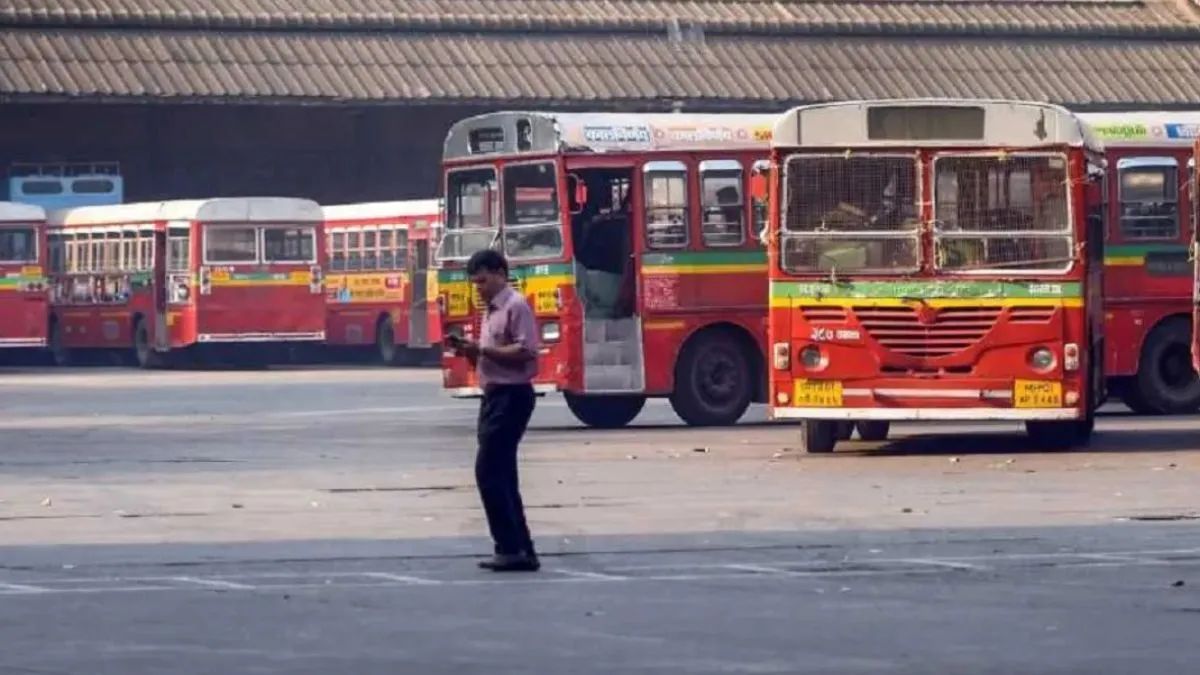
Mumbai’s public transport users are once again feeling the pinch of fare adjustments, as the city’s primary bus operator, Brihanmumbai Electric Supply and Transport (BEST), has reinstated a ₹2 toll fee for passengers crossing city limits.
This move follows a recent and significant fare hike, effectively doubling the ticket rates for both air-conditioned and non-air-conditioned buses. The decision has stirred public discontent, especially among daily wage earners and office-goers who rely on the city’s bus network as a cost-effective mobility solution. What was once considered an affordable and accessible mode of transport is increasingly being perceived as financially burdensome. Commuters have reported that routes passing through toll plazas, such as the Dahisar check post connecting the suburbs to the island city, now include a toll component within the bus fare itself. Several passengers have expressed confusion and frustration over this reinstated charge, noting that such a practice had previously been discontinued.
Before 2019, BEST had been collecting a ₹1 toll fee for cross-border journeys. However, in an effort to promote public transport and reduce carbon emissions, a consolidated ₹5 flat fare system was introduced, which effectively included all such charges. The rollback of this system—without any proportional improvement in service quality—has become a flashpoint for criticism. An official from the transport undertaking clarified that the current toll is not a new fee but a reintroduction following the cancellation of earlier fare subsidies. “With the rollback of concessions and the restructured fare policy, the previous toll waiver no longer applies. The toll component has been restored accordingly,” the official explained.
Despite this clarification, the optics of the move have sparked concern among transport experts and citizen advocacy groups. Many argue that imposing additional costs on public transport users contradicts the city’s broader goals of sustainable and inclusive urban mobility. Representatives from commuter welfare associations have pointed out the stark contrast between toll exemptions granted to private vehicles on premium infrastructure projects, such as the Mumbai Coastal Road, and the surcharges now levied on daily bus riders. “While elite infrastructure continues to enjoy subsidies, the burden is being unfairly shifted onto working-class commuters,” said one transport rights campaigner.
Another expert in urban planning observed that such regressive policies discourage public transport use, inadvertently pushing commuters towards private or informal transport options like auto-rickshaws and ride-hailing services, which increases both congestion and pollution. “When cities are trying to push towards zero-emission transport systems, penalising bus commuters financially sends the wrong signal,” the expert noted. The issue also exposes an underlying gap in state-level funding support for city-operated transport systems. According to BEST officials, the transport body has already submitted a proposal to the Maharashtra government seeking a complete toll exemption for BEST buses, similar to the policy adopted for Maharashtra State Road Transport Corporation (MSRTC) buses. However, the proposal has yet to receive a formal response.
BEST’s decision to include toll in the fare structure also comes at a time when the undertaking is struggling to manage operational sustainability. Mounting operational costs, declining ridership, and limited financial backing have left the system at a crossroads. While BEST has taken commendable steps in adopting electric buses and expanding last-mile connectivity, public faith in the service hinges largely on affordability. Urban transport researchers argue that the cost of maintaining and operating a public bus system should be offset through long-term state investment and congestion pricing mechanisms targeted at polluting private vehicles—not by shifting the cost to the public who choose greener alternatives. “It’s ironic that in the effort to boost the financial health of the BEST undertaking, the very people keeping it alive are being penalised,” one researcher said.
The situation has reignited discussions around the long-term vision for Mumbai’s public transport. For a city aspiring to become more eco-friendly and carbon-neutral, prioritising affordability and accessibility of buses is essential. Industry experts believe that fare rationalisation, along with increased investment in infrastructure and seamless integration with metro and suburban railway systems, is crucial to making public transport the first choice for all. Environmental campaigners, too, have weighed in, criticising the decision for undermining efforts to reduce carbon emissions and traffic congestion. “If cities want to seriously address climate change and reduce dependence on fossil fuels, they must incentivise, not penalise, public transport use,” said one campaigner.
The toll controversy thus brings to the fore larger questions about equity and access in urban transport planning. For many, public buses are not just a convenience but a necessity. Adding additional tolls, however nominal, could result in a gradual but significant shift in travel patterns—one that veers away from mass transit and towards more carbon-intensive modes. With mounting commuter backlash and increasing calls for a waiver, the spotlight is now firmly on the state government. Its decision in the coming weeks will not only impact lakhs of commuters but also signal its priorities—whether it intends to invest in inclusive, low-emission cities or continue to impose the cost of transition on the already burdened.
Also Read : Mumbai Coastal Road to Open 24×7 Soon
