


In a world racing against the clock to achieve climate targets, airports are emerging as unexpected but powerful allies in the push for net-zero emissions.
Once seen as carbon-heavy zones of relentless energy consumption, these vast transport hubs are undergoing a silent revolution powered by the sun. India, in particular, is taking centre stage in this global transition. With over 44 airports now operating entirely on renewable energy as of mid-2023, and more than 120 expected to become carbon-neutral by 2025, the country is setting a benchmark for sustainable aviation infrastructure. The shift is not merely cosmetic; it is a strategic overhaul of the way energy is sourced, managed, and consumed at one of the most energy-intensive public infrastructures.
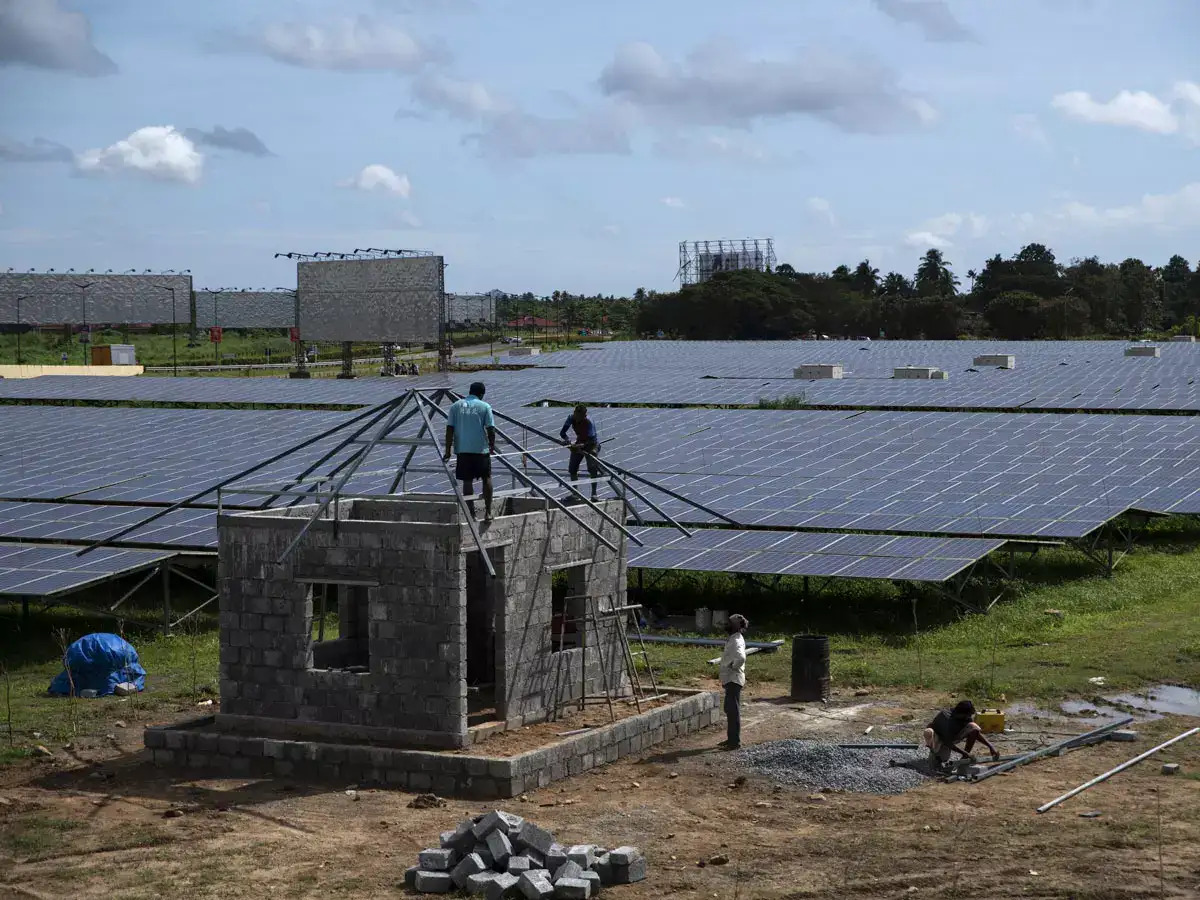
The catalyst for this transformation was set nearly a decade ago when Cochin International Airport became the world’s first fully solar-powered airport in 2015. Beginning with a modest 12 MW capacity, it has since scaled up to a 50 MW solar farm that generates over 70 million units annually offsetting more than 1.5 million tonnes of carbon dioxide in the process. The success of Cochin has become a case study in clean airport operations, prompting replication across India and abroad. Newer airport designs now incorporate rooftop panels, solar canopies over parking lots, and ground-mounted arrays on vacant land parcels converting every inch of available space into a solar asset. These installations are increasingly integrated with battery storage systems, ensuring uninterrupted energy supply even during cloudy spells or peak hours. In many cases, excess power is sold back to the grid, making the business case for solar not only environmentally sound but economically viable.
The long-term financial benefits are equally persuasive. With minimal maintenance and a lifespan exceeding two decades, solar energy installations at airports generally recover their costs within 4–7 years. Beyond energy savings, many airports are beginning to monetise their surplus electricity and offset carbon credits, unlocking new revenue streams in a sector traditionally marked by high operational overheads. The shift to solar is not limited to Indian shores. Across Asia and the Middle East, airports are embedding renewables into core infrastructure. Hybrid systems combining solar, wind, and hydrogen are being explored to buffer against energy shocks and ensure resilience.
What makes this movement compelling is its social dimension. Solar airports are generating employment for local communities, from panel installation and maintenance to energy systems management. Several airports are also turning to agro-photovoltaic models growing vegetables under solar arrays—to maximise land use without disrupting sustainability goals. Complementing the solar push are initiatives in water conservation, waste recycling, electric mobility, and green landscaping. These projects are gradually redefining airports not just as transit hubs, but as exemplars of climate-conscious urban infrastructure.
As global aviation continues to grapple with its environmental footprint, the rise of solar-powered airports offers a promising blueprint. With policy support and falling technology costs, this quiet solar revolution may well power the journey towards a greener aviation future starting not in the skies, but on the ground.
Also Read :Pune Airport Impasse District Seeks Accord with Villagers Through Dialogue Next Week
