


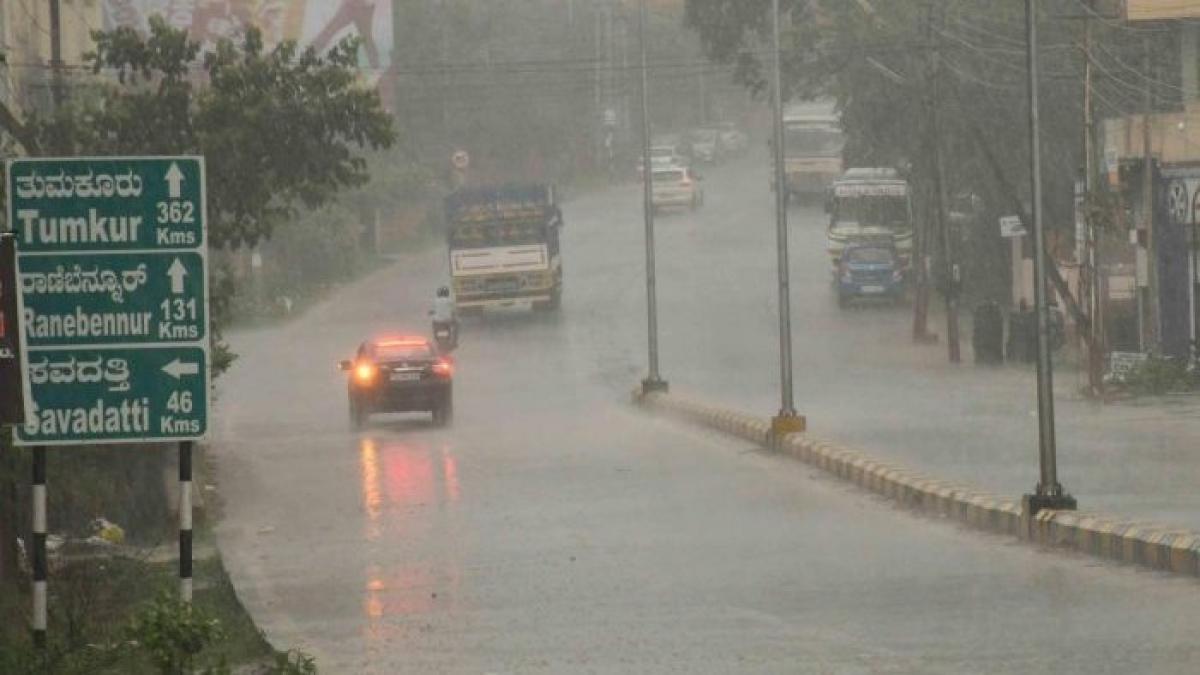
A fresh spell of pre-monsoon showers swept across parts of Karnataka on Monday, with the India Meteorological Department (IMD) issuing a yellow alert for Bengaluru and several southern districts, warning of heavy rainfall accompanied by thunderstorms and strong winds.
The maximum temperature in Bengaluru is expected to remain between 34°C and 35°C, while the minimum will likely hover around 21°C. This sudden shift in weather patterns comes after a brief lull in rainfall across Karnataka since May 5. However, the southern interior districts—including Mysuru, Hassan, Bidar, Mandya, Kodagu, Chamarajanagar, and Ramanagara—continue to remain under weather watch, with IMD officials predicting isolated heavy showers, lightning and thunderstorm activity. The rainfall has brought short-term relief from heat, but concerns remain about long-term preparedness for erratic climate behaviour in one of India’s fastest urbanising regions.
While the rain may seem like a reprieve for Bengaluru’s swelling urban population facing prolonged dry spells and water stress, officials have advised residents to remain cautious. The rainfall, expected to be accompanied by lightning and surface-level winds, could disrupt traffic, especially in low-lying and poorly drained neighbourhoods. Urban planners are urging local administrations to upgrade stormwater infrastructure to withstand sudden cloudbursts that are becoming increasingly frequent due to climate change. The IMD’s regional centre confirmed that the weather in Bengaluru will remain cloudy through the day, with a significant probability of thundershowers towards the evening. Although this activity is forecast to subside slightly after May 7, scattered light showers may still occur sporadically through the week.
According to senior meteorological officials, the broader state outlook reflects two distinct patterns. Northern Karnataka districts such as Uttara Kannada, Dakshina Kannada, Udupi, Bellary, Vijayapura, Shimoga, Chikkaballapur, and Tumkur are experiencing dry and warm conditions, with temperatures peaking in Kalaburagi at a scorching 41.2°C. These areas are unlikely to see any significant rainfall in the coming days. In contrast, central and southern districts are witnessing a transitional phase. While rainfall intensity has decreased compared to last week, the IMD has indicated a potential uptick in precipitation post-May 9. Experts believe this variation is part of a broader pre-monsoon phase, influenced by changing wind patterns in peninsular India and increasing land surface temperatures.
Despite temporary cool weather in Bengaluru due to the showers, civic challenges persist. Residents in many parts of the city have reported clogged drains, waterlogging, and disrupted electricity lines due to thunderstorm activity. Urban infrastructure across the city has yet to adapt to extreme weather fluctuations, highlighting the need for resilient urban planning rooted in climate-responsive design. Environmental experts warn that Karnataka’s urban sprawl—particularly in the Bengaluru Metropolitan Region—has grown with minimal integration of climate adaptation strategies. “The frequency of sudden rain accompanied by lightning is not just a seasonal concern anymore; it’s a sign that climate volatility is intensifying. Our cities must treat weather unpredictability as the new normal,” said a senior climate resilience researcher working with a national think tank.
The ongoing rains also have implications for agriculture in southern Karnataka. Officials in Mandya and Hassan have noted that the scattered showers may benefit certain pre-monsoon sowing activities. However, erratic rainfall distribution, especially if followed by dry spells, can disrupt crop cycles, particularly in rain-fed regions. The state’s agricultural department is closely monitoring the developments and has advised farmers to stagger planting and opt for drought-resilient crop varieties. Additionally, the current rainfall trend highlights Karnataka’s need to accelerate sustainable water management practices. Bengaluru, which has long struggled with a widening gap between demand and supply of drinking water, could utilise rain events to promote community-led rainwater harvesting initiatives. According to civic officials, while several areas have rainwater harvesting mandates, enforcement and maintenance remain weak. Experts say this is a missed opportunity to turn extreme weather into a resource rather than a threat.
With temperatures in Bengaluru expected to remain stable between 32°C and 35°C over the next five days, the IMD has not issued any red alerts, but the yellow alert for May 6 serves as a reminder of the need for preparedness. By May 7, conditions are likely to become more stable, although slight fluctuations in temperature may persist. The state government has urged district-level disaster management cells to stay on alert, especially in urban centres like Bengaluru and Mysuru, where minor infrastructure failures during heavy rain have a cascading impact on daily life. City corporations have been instructed to inspect vulnerable trees, monitor stormwater drain systems, and issue timely advisories on social media platforms.
As Karnataka’s climate becomes increasingly erratic, the urgency to embed resilience into city planning cannot be overstated. Green cover regeneration, urban wetland restoration, and decentralised drainage infrastructure must take priority over short-term relief projects. While the current rainfall may seem like a cooling spell for citizens, the long-term message is clear: sustainable urban ecosystems are no longer optional but essential. For now, Bengaluru and surrounding districts are expected to experience isolated rain until at least May 7, with a potential increase in precipitation activity thereafter. Residents are advised to follow IMD updates and take precautions during thunderstorms, including avoiding open areas and ensuring that vulnerable infrastructure, such as corrugated rooftops or temporary housing, is adequately secured.
In the face of these climatic uncertainties, Karnataka’s journey towards becoming a climate-smart state will depend on how effectively it integrates localised weather data, decentralised planning, and citizen awareness into its policy fabric.
Also Read: Delhi Braces for Heat and Rain Today
