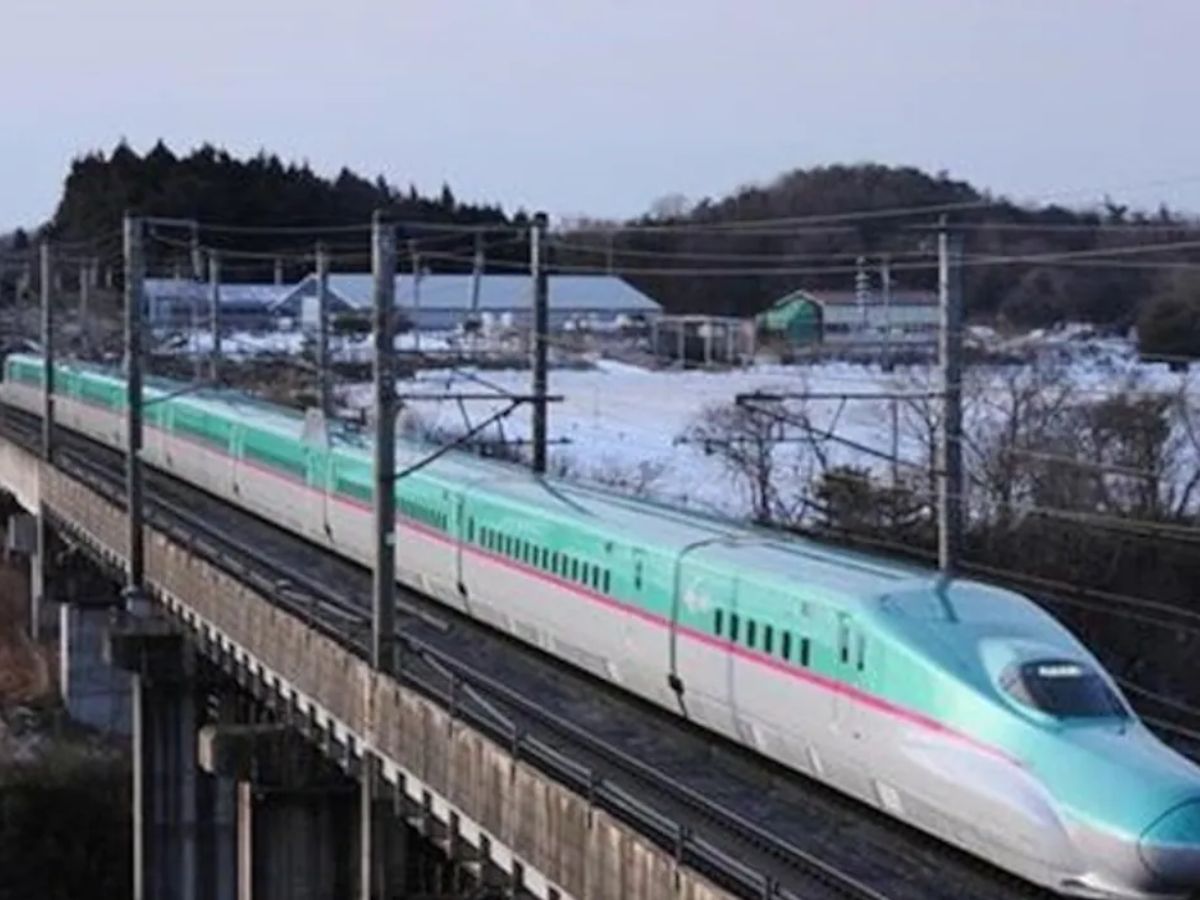
India’s first bullet train corridor between Mumbai and Ahmedabad is now set to be operational by 2028, according to top state officials.
The ambitious high-speed rail project, developed in collaboration with Japan, marks a major milestone in India’s pursuit of advanced, sustainable transport infrastructure. Once functional, the corridor is expected to significantly reduce travel time between the two commercial hubs, offering a fast, energy-efficient alternative to road and air transport. Speaking at a global infrastructure investment forum, officials confirmed that the long-awaited project is on track for a 2028 launch. The bullet train is being developed by the National High-Speed Rail Corporation Limited (NHSRCL), with technical and financial support from Japan. The 508-kilometre stretch will incorporate cutting-edge Japanese Shinkansen technology, with several stations, elevated corridors, and undersea tunnels in the pipeline.
The announcement was accompanied by broader infrastructure ambitions for Maharashtra, with the state aiming to mobilise international funding to the tune of USD 50 billion. The funds are expected to accelerate the development of a robust multi-modal network that aligns with climate goals and addresses congestion, carbon emissions, and logistic inefficiencies. Among the key future-facing infrastructure initiatives is the Vadhavan Port, currently under development on reclaimed land along Maharashtra’s coast. State officials said the port is expected to become operational in the next three to four years. Once completed, it is projected to ease cargo traffic at the overburdened Jawaharlal Nehru Port and substantially reduce logistics costs by improving turnaround time.
Officials also revealed plans for an adjoining airport, to be constructed on reclaimed seabed land—a model inspired by infrastructure seen in global port cities. Further strengthening the intermodal connectivity of the region, authorities confirmed that the bullet train network will include a halt at Vadhavan Port. This integrated connectivity blueprint is part of a larger vision to make Maharashtra a hub of efficient, sustainable trade and mobility. To augment hinterland connectivity, a new highway linking Nashik to Vadhavan Port is under construction. This corridor will connect 17 districts across the state, thereby enhancing last-mile access and fostering inclusive regional development. Officials emphasised that this initiative is designed to reduce dependency on carbon-intensive freight routes by offering smoother, shorter, and cleaner transport alternatives.
In addition, another strategic corridor named the Shaktipeeth Highway is being planned to connect Nagpur to Goa. This east-west transport artery aims to improve connectivity between Maharashtra’s interior regions and its western coastal belt. When completed, the project is expected to catalyse tourism, trade, and regional balance in development. The bullet train project and associated infrastructure development align with India’s larger commitments to climate-conscious growth, equitable urbanisation, and zero-net carbon transitions. The adoption of high-speed rail not only reduces travel time but also cuts fossil fuel consumption, potentially shifting passenger traffic away from high-emission modes.
Infrastructure experts have lauded the state’s integrated planning approach, pointing out that the seamless fusion of ports, airports, rail, and highways reflects a mature, globally relevant logistics vision. However, they also cautioned that land acquisition, environmental clearances, and financing risks must be handled transparently and inclusively to ensure long-term success. Despite delays in previous phases, officials now insist that key engineering and civil works are progressing on schedule. With tunnelling work underway and several viaducts completed, project timelines appear to be stabilising.
If delivered on time, the Mumbai-Ahmedabad bullet train will become a defining symbol of India’s infrastructure modernisation, echoing the government’s broader push to create world-class, people-centric, and climate-resilient cities. The convergence of transit-oriented planning, sustainable freight logistics, and international investment is expected to set a new benchmark in how large-scale infrastructure should be conceived and implemented in India. Officials reiterated that while 2028 is the current operational target, the state machinery is working to expedite deliverables wherever feasible. As Maharashtra positions itself as an infrastructure and investment magnet, the Mumbai-Ahmedabad high-speed rail corridor stands poised to not only transform travel but redefine regional development paradigms.
Bullet Train Project to Link Mumbai and Gujarat Soon