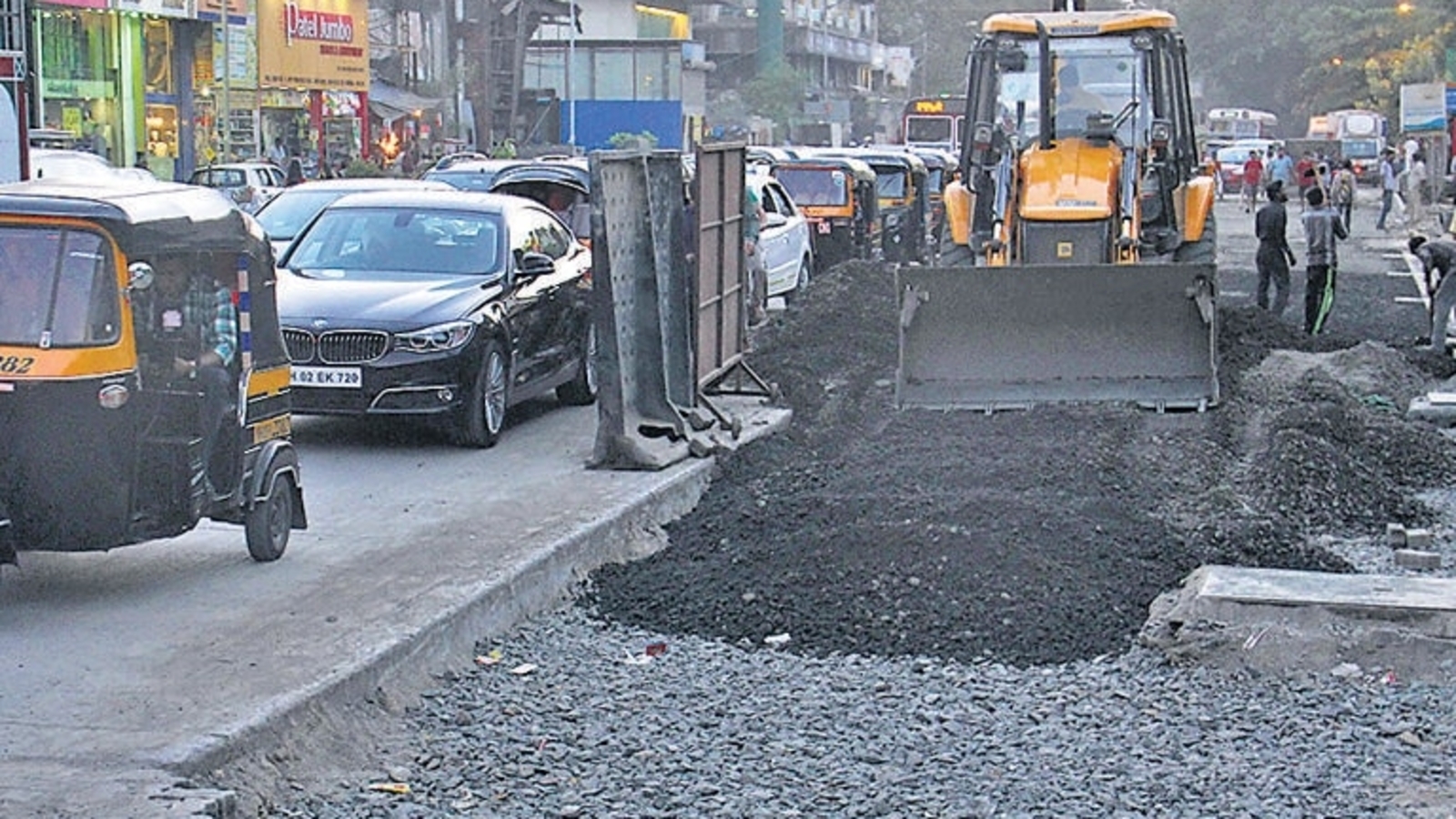
The Brihanmumbai Municipal Corporation (BMC) has called for urgent improvements in the logistics chain of Ready Mix Concrete (RMC) to meet the ambitious May 2025 deadline.
The move comes amid widespread complaints from contractors over delays caused by inefficient RMC supply and transportation to key worksites. During an unscheduled night inspection this week of ongoing road works in Sion and a nearby RMC plant in the Bandra Kurla Complex, senior civic officials instructed contractors and stakeholders to increase the number of vehicles transporting the RMC mix to worksites. The goal, officials said, is to reduce turnaround time and maintain a consistent supply of materials critical to the timely completion of roadworks. The inspection revealed operational and logistical chokepoints, especially in the movement of RMC from plants often located on the city’s outskirts to congested urban work zones. With over 525 kilometres of roads currently excavated under the city’s mega infrastructure plan, a reliable and fast supply of RMC has become a major determinant of project timelines.
The civic body has undertaken the daunting task of concretising 702 kilometres of Mumbai’s arterial and internal roads a transformation seen as crucial for building climate-resilient infrastructure that can withstand the city’s intense monsoon and increasing vehicular load. However, given Mumbai’s spatial constraints and high population density, setting up casting yards or on-site RMC plants, as done on highways, is not feasible in many parts of the city. Civic engineers noted that since RMC mixing sites must be established in non-residential areas due to pollution and noise control norms, the distance to work zones can span several kilometres. This has led to longer wait times at sites, slower work cycles, and ultimately, project delays. To mitigate the issue, top-level instructions were issued to expand transport capacity primarily through deployment of additional RMC mixer trucks. Officials from the engineering department also conducted a thorough assessment of the RMC plant’s automated systems, cleanliness of storage tanks, and the condition of raw material stock such as aggregates and sand. Experts from a reputed technical institution were also present during the inspection to advise on improving operational efficiency.
Apart from logistics, civic administrators also emphasised the importance of inter-departmental coordination. At the Sion site, for instance, instructions were issued to the water supply department to synchronise pipeline work with the road-laying schedule, ensuring that underground installations do not disrupt surface work. Urban planning analysts say the BMC’s push for concretised roads is a step in the right direction for a climate-sensitive city like Mumbai. Concrete roads are more durable than asphalt and are known to better resist waterlogging, pothole formation, and wear from heavy traffic. However, the transition must be supported by an agile supply chain and sustainable construction practices that do not compromise on environmental standards or disrupt residents’ lives unduly.
There is a growing call among urban experts for the BMC to integrate sustainable construction practices—including the use of recycled aggregates, low-emission RMC blends, and electric transport vehicles for material haulage—into its future tenders and contracts. Such changes, they argue, could help Mumbai inch closer to its net-zero emissions goals while still delivering world-class infrastructure. The BMC has assured the public that all dug-up road stretches currently under construction will be completed by 31 May 2025. The success of this timeline, however, rests heavily on the cooperation of contractors, logistical improvements, and a coordinated push from multiple municipal departments.
With roadworks visibly affecting daily commutes and contributing to air and noise pollution, the civic body’s renewed focus on execution speed and systemic efficiency could not be more timely. If managed well, Mumbai’s concretisation drive could mark a turning point in how Indian cities approach infrastructure development—balancing speed, sustainability, and sensitivity in equal measure.
Mumbai Road Concretisation Faces Delays as BMC Calls for RMC Overhaul