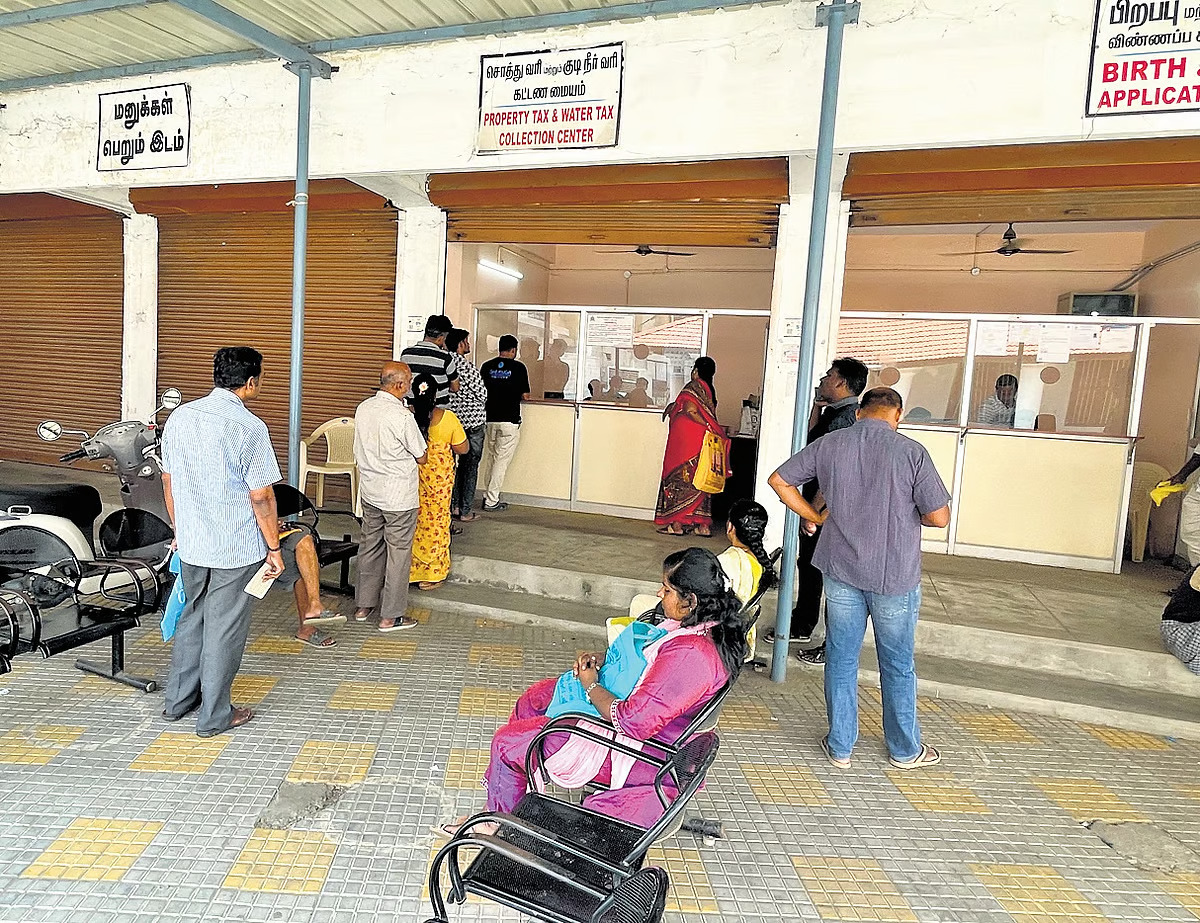
Chennai is evaluating the feasibility of creating a single platform for both property and water tax payments.
The proposal, currently under detailed review, seeks to eliminate the need for residents to navigate multiple online portals, offering a more user-friendly experience while ensuring more efficient tax collection for the city’s civic bodies. At present, citizens are required to pay property taxes through the Greater Chennai Corporation (GCC) portal and water taxes through the Chennai Metropolitan Water Supply and Sewerage Board (CMWSSB) platform. This dual-payment system can often lead to confusion and delays, especially for taxpayers who are unaware of the different rules and regulations that govern each sector. The proposed unified system, officials suggest, will consolidate both taxes into a single payment gateway, making it easier for residents to settle their dues.
The new system, if implemented, would direct payments into an escrow account under the GCC’s jurisdiction, from where the funds would be disbursed to the respective departments. This approach is expected to foster greater transparency in revenue management and improve the efficiency of fund allocation. While the integration is in its initial stages, experts from both the GCC and CMWSSB are conducting extensive feasibility studies to assess the technical challenges involved, including reconciling differences between tax databases. A key consideration is the wide disparity between the two tax regimes. For example, certain households located on poramboke land (government land without proper ownership records) are exempted from property taxes by the GCC, despite receiving basic amenities like water from CMWSSB. This presents a challenge, as these households continue to pay water taxes, but would not be included in the property tax collection under the proposed system. Similarly, public institutions like temples and schools are exempt from property taxes but still liable for water taxes, adding another layer of complexity.
Another challenge lies in the illegal use of domestic water connections for commercial purposes, a widespread issue that has contributed to discrepancies between the number of consumers on record and the actual amount of water used. Addressing this challenge requires a thorough examination of CMWSSB’s existing database, which could be integrated with data from the Tamil Nadu Electricity Board (TNEB) to provide a more accurate picture of actual usage patterns. As both departments work to resolve these inconsistencies, officials are keen to ensure that the new system will support an equitable and seamless process. The goal is not only to simplify tax payments but also to address issues such as overdue payments and tax evasion. Given the growing number of taxpayers – approximately 13.19 lakh property tax payers and 14 lakh water consumers in Chennai – such a unified platform could significantly reduce administrative burden, benefiting both the city government and residents.
The proposed integration is seen as a major step towards digital governance and financial transparency. With the introduction of features like QR codes for property tax payments and GIS-based assessments for commercial establishments, the city has already seen a notable increase in tax revenue. The implementation of a unified tax portal could further streamline the process, eliminating redundancies and reducing administrative costs. However, the complexity of the integration process should not be underestimated. Both CMWSSB and GCC are already working with limited human resources to manage the current system. A smooth transition to a unified platform will require extensive training, system upgrades, and possibly the recruitment of additional staff to manage the increased workload. Experts believe that a phased roll-out could help mitigate these challenges and allow both departments to learn and adapt to the new system gradually.
A significant concern among residents is the potential for diminished customer support and grievance handling. Some users have raised alarms that consolidating the two systems may make it harder to address complaints or resolve issues promptly. One resident, for instance, expressed concern that CMWSSB’s customer service could be less responsive if payments are routed through a single portal. As such, experts emphasise the need for robust grievance redress mechanisms to ensure that citizens can continue to voice concerns and receive timely resolutions. This integrated approach is also being seen through the lens of sustainability. By reducing the number of physical transactions and paperwork associated with tax payments, the city could significantly cut down on paper usage and related carbon emissions. The push for more streamlined digital processes aligns with Chennai’s larger vision of becoming a zero-net-carbon city, which prioritises sustainability, efficiency, and better public services.
The proposed system also aligns with global trends of smart city initiatives, which advocate for the use of technology to improve the quality of urban living. By combining essential services such as property and water tax payments into one easy-to-use platform, Chennai could set a benchmark for other Indian cities grappling with similar challenges. Despite the promising outlook, city officials caution that the integration will require considerable time and resources. The complexity of harmonising data, addressing discrepancies, and managing technical challenges means that full implementation of the unified platform could take months, if not longer. As Chennai continues to grow and modernise, the prospect of a single portal for both property and water taxes represents an important step towards a more efficient, transparent, and sustainable urban ecosystem. While the technical hurdles are substantial, the potential benefits for both the city’s administration and its residents are immense, particularly in the context of urban governance evolving in the digital age.
Chennai Plans Single Portal for Property and Water Taxes