India has made a compelling push to reframe its northeastern region as a vital, sustainable connectivity corridor bridging the Bay of Bengal with the Indo-Pacific.
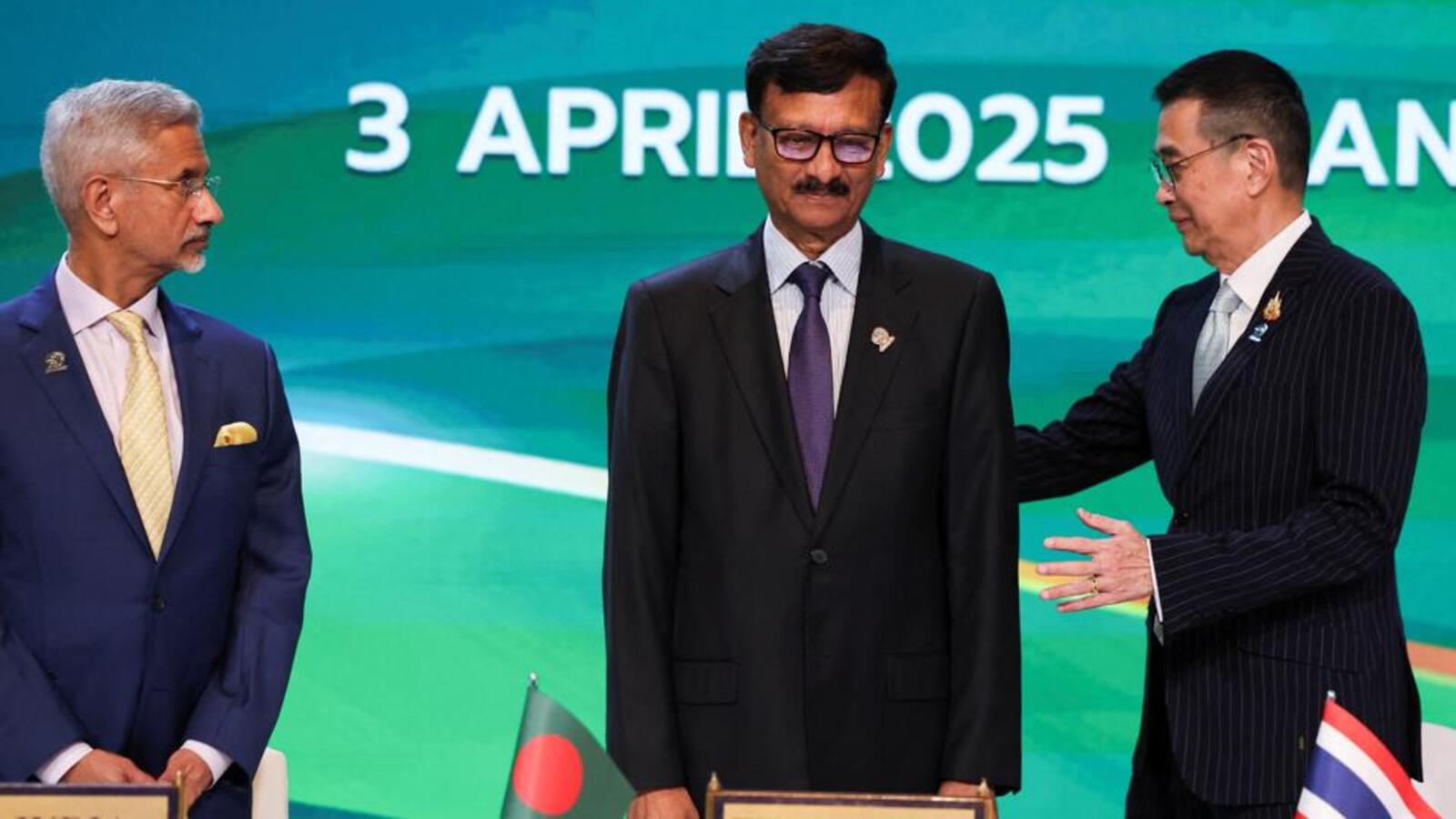
At the Bay of Bengal Initiative for Multi-Sectoral Technical and Economic Cooperation (BIMSTEC) foreign ministers’ meet held in Bangkok, External Affairs Minister projected the region not as an isolated frontier, but as an emerging anchor for cross-border infrastructure and regional cooperation. Citing an evolving matrix of road, rail, waterway, power grid and pipeline linkages, the minister underscored New Delhi’s multi-vector strategy to consolidate the Northeast as an integral pivot in its “Act East”, “Neighbourhood First” and Indo-Pacific policies.
In remarks seen as a pointed rebuttal to comments made by Bangladesh’s interim leadership, who had described India’s northeastern states as “landlocked” and dependent on Dhaka for maritime access, He invoked both geography and responsibility. “With over 6,500 km of coastline and borders with five BIMSTEC members, India bears a special responsibility,” he noted, hinting at the country’s broader stewardship of the Bay of Bengal. While his statement may appear diplomatic on the surface, it carried clear strategic undertones aimed at reinforcing India’s image as a net connectivity provider rather than a dependent regional actor.
A cornerstone of India’s connectivity narrative is the ambitious Trilateral Highway, a transformative corridor under development to link India, Myanmar and Thailand, with plans to eventually extend into Cambodia, Laos and Vietnam. Termed a potential “game-changer” by the minister, the highway’s completion is expected to drastically enhance trade, logistics, and people-to-people ties between the Indian subcontinent and ASEAN economies, while also unlocking economic opportunities in India’s far-flung but resource-rich northeastern states. This infrastructure focus is also seen as vital for ensuring that development in the Northeast aligns with net-zero carbon goals, with rail and inland water transport forming low-emission alternatives to traditional road traffic.
At a time when the global trade order faces mounting uncertainty—accentuated by reciprocal tariffs recently announced by the United States that affect five BIMSTEC countries including India—He called on member states to approach the bloc with heightened ambition. The minister urged deeper cooperation on grid connectivity, sustainable transport, food and health resilience, and coordinated action against transnational crimes, including trafficking, terrorism and cyber threats. The BIMSTEC platform, now regaining strategic relevance amid the ASEAN’s institutional gridlock, is also expected to witness a landmark maritime cooperation agreement during its summit on April 5.
By framing the Northeast as more than just a geographic periphery and countering narratives that portray it as isolated, New Delhi is signalling both economic intent and strategic assertion. In doing so, it is also reinforcing an inclusive model of regional growth—where remote borderlands evolve into engines of sustainable and gender-neutral progress rather than remaining development outposts. Whether this vision translates into lasting regional integration will depend on infrastructure execution, geopolitical stability and mutual political will across the BIMSTEC landscape. But the message is clear: India’s eastern frontier is no longer its edge; it is its bridge.
India sees Northeast as key link connecting BIMSTEC nations