


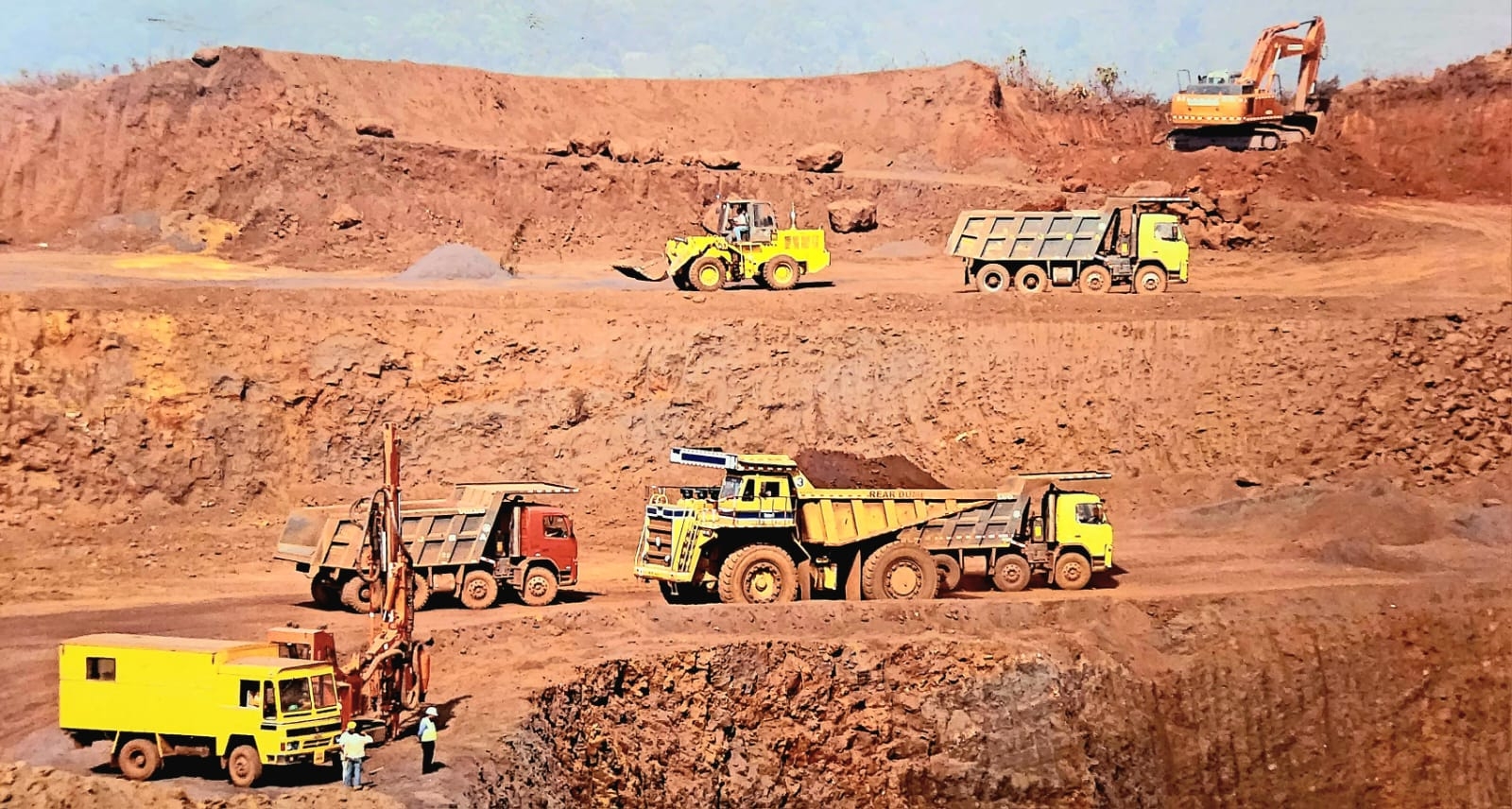
Illegal extraction of minor minerals worth Rs 4,624 crore has been exposed in Odisha, raising concerns over governance, environmental degradation, and revenue losses. A recent report by the Comptroller and Auditor General (CAG) has revealed that between 2015 and 2022, massive quantities of minor minerals were unlawfully extracted and used in public infrastructure projects with the knowledge of the state government.
This unregulated activity not only led to financial setbacks amounting to Rs 864.45 crore in lost revenue but also pointed to significant lapses in regulatory enforcement and oversight.The CAG findings have laid bare large-scale irregularities in mining, transportation, and utilisation of minor minerals, highlighting a pattern of contractors supplying these resources for public projects without proper authorisation. Official procedures mandate that contractors provide valid transit passes and money receipts to prove that the materials were procured from authorised sources. However, these legal requirements were overlooked, and despite the deduction of Rs 4,624.58 crore from contractors’ bills for non-compliance, a substantial portion of additional charges meant for the District Mineral Fund (DMF) and Environment Management Fund (EMF) remained uncollected. In 14 districts, only Rs 21.25 crore was realised out of Rs 399.91 crore due, while 16 districts failed to collect any of the Rs 485.79 crore owed, further exacerbating the financial losses.
The report further criticises the negligence of government officials in ensuring compliance, particularly the tehsildars, who failed to monitor the quantities of minerals extracted and used in public projects without transit passes. Their inability to raise demands for additional charges, coupled with a lack of enforcement on the deducted royalty amounts, has resulted in an unchecked system of mineral exploitation. The CAG audit also exposed flaws in the bidding process, excessive mining in multiple districts, and rampant extraction without valid leases. According to data provided by the Revenue and Disaster Management Department, Odisha has 4,106 minor mineral sources, with 1,837 located in nine sampled districts. Among them, 688 sources were operational, but many operated without due authorisation, leading to regulatory failures that facilitated illegal mining.
The revelations have sparked concerns among environmentalists and public policy analysts, who argue that unchecked mineral extraction poses serious threats to ecological stability. The depletion of minor minerals without sustainable management affects riverbeds, groundwater levels, and biodiversity, potentially triggering long-term environmental consequences. The absence of strict oversight not only leads to financial losses but also enables unsustainable industrial expansion at the cost of natural resources. Given these concerns, experts emphasise the urgent need for enhanced regulatory mechanisms, stringent monitoring, and legal action against those responsible for violations. The CAG’s findings place accountability squarely on government agencies that have failed to curb illegal practices, raising fundamental questions about governance, transparency, and environmental responsibility in Odisha’s mining sector.
