


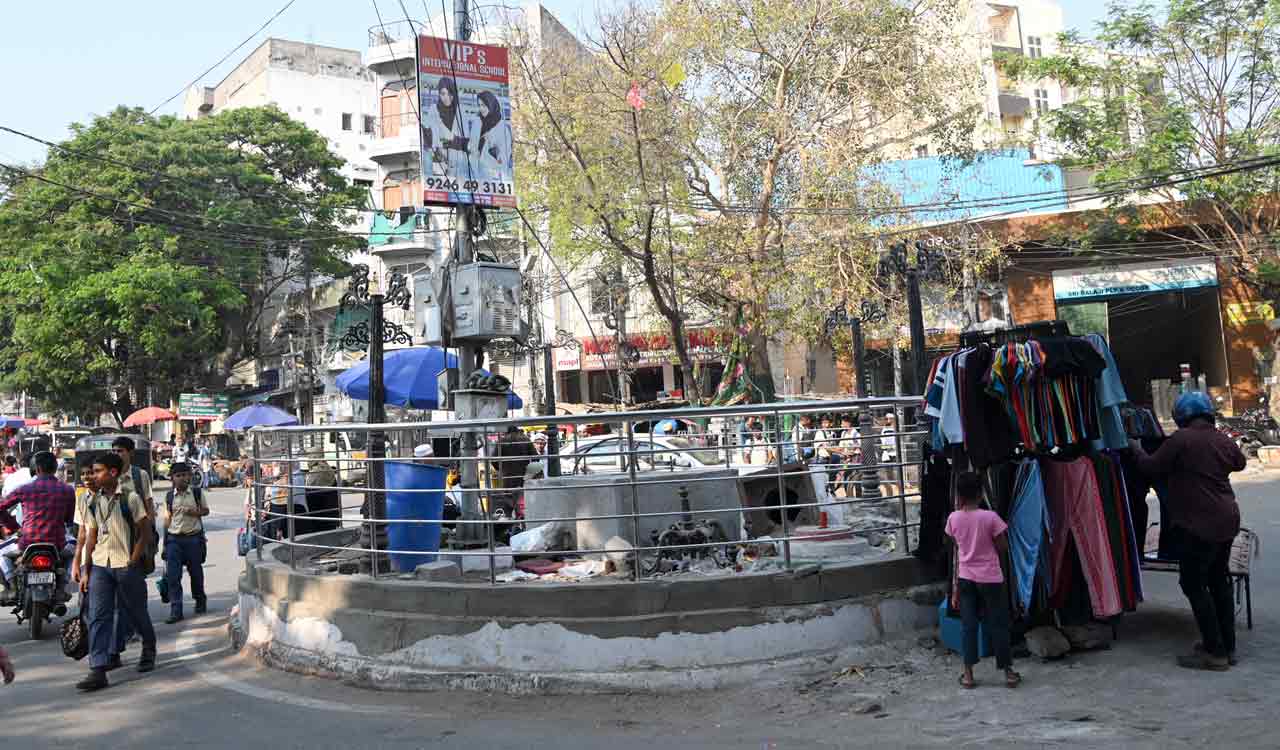
Hyderabad Charkandil Junction Gets New Lantern Feature
The iconic Charkandil Junction in Aghapura has undergone a remarkable transformation, as the Greater Hyderabad Municipal Corporation (GHMC) installed a giant lamp post with five lanterns, at a cost of Rs 27 lakh. This update not only modernises the junction but also reinvigorates a piece of Hyderabad’s rich history, enhancing its unique character while blending the old with the new.
Charkandil, derived from the Arabic term ‘char kandil,’ meaning four lanterns, has long been a symbol of the city’s legacy, especially in its post-Nizam era. During this time, when streetlights were not yet a common feature, the junction was illuminated by lanterns. Residents of the city recall with nostalgia how, during the Nizam’s reign, a dedicated wing within the municipal system was established to maintain and light these lanterns. Workers, known locally as ‘Baldia’ men, would walk the streets with torches, lighting up the lanterns one by one at night. This practice was a nightly ritual and became an integral part of the city’s identity. In the earlier days, the junction was home to four lanterns, which illuminated not only the crossroads but the surrounding roads as well. The system was a central part of Hyderabad’s public services, and every residential cluster had a designated worker to carry out the task. As time passed, and the Nizam era came to an end, electric streetlights gradually replaced the lanterns, but their charm and historical significance persisted. The original tradition continued in other important junctions, such as Ek Minar Masjid Junction, MJ Market, Alaska Junction, and Puranapul Junction, each becoming iconic in their own right as these lanterns marked the heart of the old city.
Now, over a century later, GHMC has revived the spirit of these lanterns with a modern twist. The newly installed lamp post, with its five lanterns, is more than just an ornamental addition. It serves as a bridge between the city’s historical past and its present, seamlessly integrating heritage with the demands of modern urban living. The lighting project not only enhances the aesthetic appeal of the junction but also fosters a deeper connection to the city’s cultural roots. As Hyderabad continues to grow into a sprawling metropolis, such projects reflect the city’s commitment to preserving its history while accommodating modern development. The installation of this giant lamp post could be seen as part of a broader effort to blend sustainable infrastructure with the city’s rich cultural heritage. The lamp post, designed with energy-efficient lighting, demonstrates the municipality’s intent to move towards an eco-friendly, sustainable model of urban development that balances preservation with progress. However, the revitalisation of Charkandil Junction is not only about aesthetics or nostalgia. It serves as a reminder of the simple, sustainable practices of the past, where urban spaces were lit up not just by electricity but by the careful work of individuals, often in sync with nature’s rhythms. As the city moves towards a future with greener, more sustainable urban planning, this project provides an opportunity to reflect on the importance of integrating heritage into modern developments.
In a city where rapid urbanisation is often accompanied by concerns over the loss of heritage, initiatives like the restoration of Charkandil Junction can offer a sense of continuity and pride to residents. As Hyderabad continues to modernise its infrastructure, there is an increasing need for projects that ensure a balance between development and cultural preservation. The Charkandil Junction lamp post, with its lanterns glowing brightly against the city’s evolving skyline, is a powerful testament to the city’s ability to harmonise the old and the new, lighting the way for a future that honours its roots while embracing progress.

