


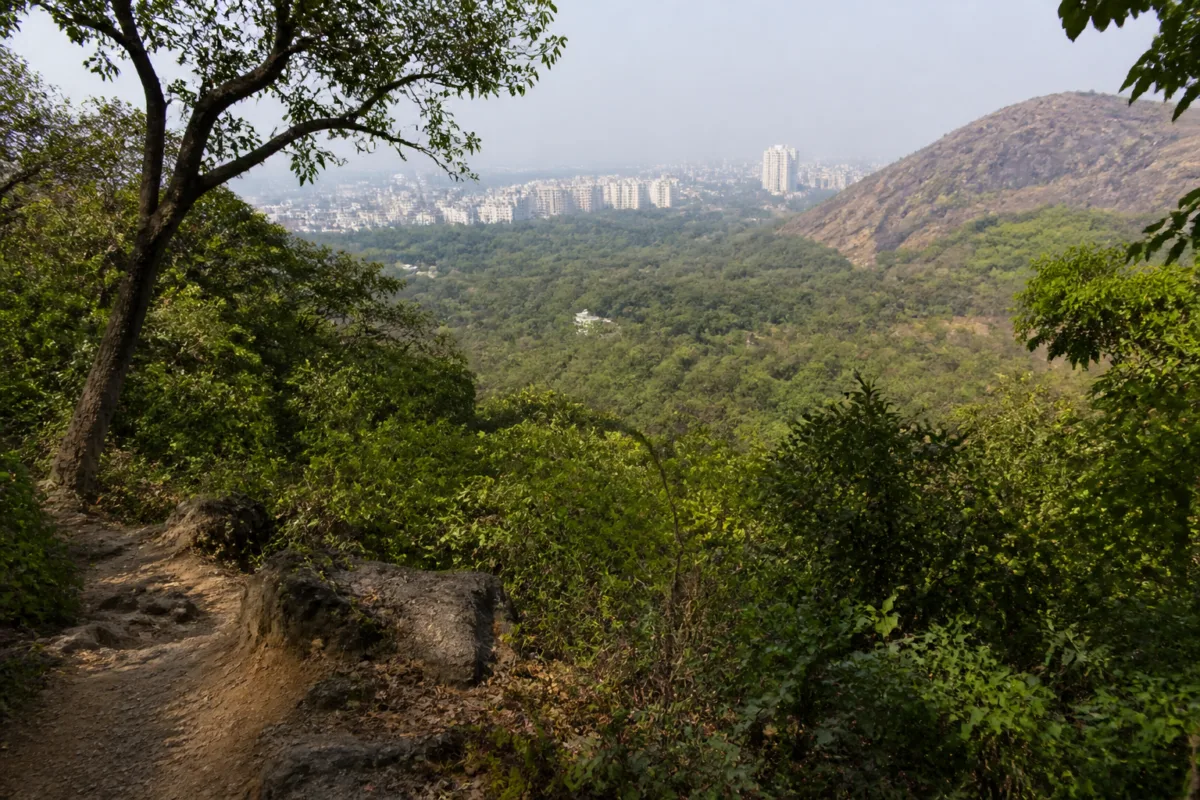
The proposed Mulund–Sanjay Gandhi National Park (SGNP) ropeway in Mumbai is facing opposition from wildlife organisations, which have urged the Maharashtra government to cancel the project over concerns about habitat disturbance, fragmented animal movement corridors and increased visitor activity inside the protected forest.
Sunish Subramanian Kunju, Honorary Wildlife Warden of Mumbai Suburban, appointed by the Maharashtra Forest Department, joined representatives of the International Organisation for Animal Protection, Amma Care Foundation and Plant & Animals Welfare Society–Mumbai in submitting representations to the Forest Department and the Public Works Department, according to the report.
The groups have also sought clarification on the proposed ropeway’s alignment and destination. The project is expected to connect the foothills of Mulund with the Taramati Mata Temple, which is located within the boundaries of SGNP. The representations ask the authorities to verify the legal status of the existing religious structure and the land it occupies.
The proposed scheme is intended to improve visitor access to the temple and promote tourism. It also includes a hilltop viewing point from which visitors would be able to see SGNP and nearby Tulsi Lake. The Public Works Department has floated a consultant tender for the proposed project, according to the report.
Wildlife groups have argued that construction and subsequent visitor activity could affect animal movement, birds and vegetation. Their objection is not limited to the ropeway’s physical alignment; they have also questioned whether infrastructure-led tourism is compatible with the protected-forest character of SGNP.
The representation describes the park as a protected forest that should remain focused on wildlife rather than becoming a destination for infrastructure-driven tourism. These statements are the position of the organisations opposing the project. The report does not provide a response from the Maharashtra Forest Department, the Public Works Department or the project proponents on the objections.
The dispute places the proposed ropeway within a wider governance question: how access to an existing religious site and visitor facilities should be managed when the destination lies inside a national park. Before the project advances, the concerns raised by the wildlife organisations would require consideration alongside the project’s alignment, the legal status of the temple site and the likely implications of construction and increased visitation for the park’s ecology.

