


Mumbai’s housing societies and other bulk waste generators may soon have to separate their waste into four streams under a Brihanmumbai Municipal Corporation (BMC) plan aimed at shifting more processing responsibility to large residential and institutional premises.
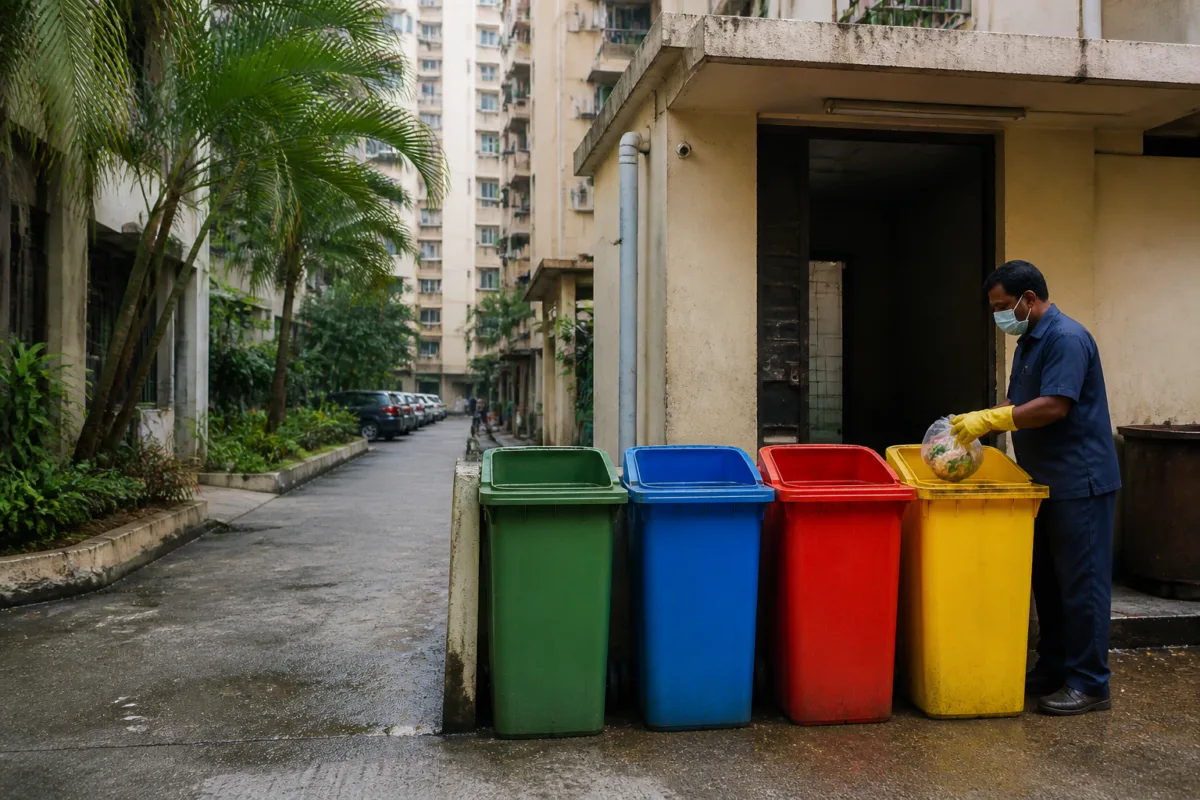
According to a November 18 post on the BMC’s official X account, the proposed system would use green bins for wet waste, blue bins for dry waste, red bins for sanitary waste such as napkins, diapers and tampons, and yellow bins for special-care waste including paint cans and bulbs. The plan is intended for establishments classified as Bulk Waste Generators (BWGs).
The report defines a BWG as an establishment with a floor area exceeding 20,000 square metres, daily water consumption of at least 40,000 litres or solid-waste generation of more than 100 kilograms a day. The classification therefore covers a significant number of large housing societies and other high-volume premises, rather than individual households alone.
Under the proposed arrangement, BWGs would be expected to process their wet waste through composting or other approved methods. Dry waste would be collected by the civic body and transported to recycling facilities. BMC Deputy Municipal Commissioner Kiran Dighavkar said the civic body currently operates 96 vehicles for this purpose and that the number would increase as more societies begin processing wet waste.
BMC has also empanelled agencies to guide societies, assist with paperwork and help identify options for waste-to-energy conversion, according to the report. Nearly 2,044 BWGs had registered on the My Waste portal, while the civic body estimated that about 4,500 establishments could fall within the category. The figures indicate that registration and actual segregation remain separate implementation stages.
The plan includes both an incentive and a compliance cost. Properties managing their wet waste can receive a property-tax rebate of up to 15 per cent. Societies that cannot manage their waste under the proposed provisions would need to obtain a civic exemption and pay Rs 235 per household every month, after which segregated waste would be handed over to BMC.
The reported changes follow a Supreme Court direction in May and the Solid Waste Management Rules 2026, according to the article. BMC has linked the need for stronger segregation to the volume of waste reaching the city’s dumping-ground facilities, including Kanjurmarg. The civic objective is to reduce the quantity requiring transport and disposal by making large generators process wet waste closer to where it is produced.
Implementation, however, could be difficult within existing housing layouts. Dhaval Shah of the Andheri Lokhandwala Oshiwara Citizens’ Association questioned whether many Mumbai apartments have enough space for four bins and on-site processing. Madhu Poplai of the Pali Hill Residents Association said residents may resist composting or waste-to-energy facilities in their neighbourhoods because of concerns about mosquitoes and odour.
These concerns place the practical burden of the proposal on housing societies: they would need designated storage areas, reliable segregation by residents and domestic staff, arrangements for wet-waste processing, and documented compliance. BMC’s ability to provide guidance, expand collection capacity and enforce the proposed exemption system will determine whether the plan reduces waste sent to disposal facilities or remains primarily a registration exercise.

