


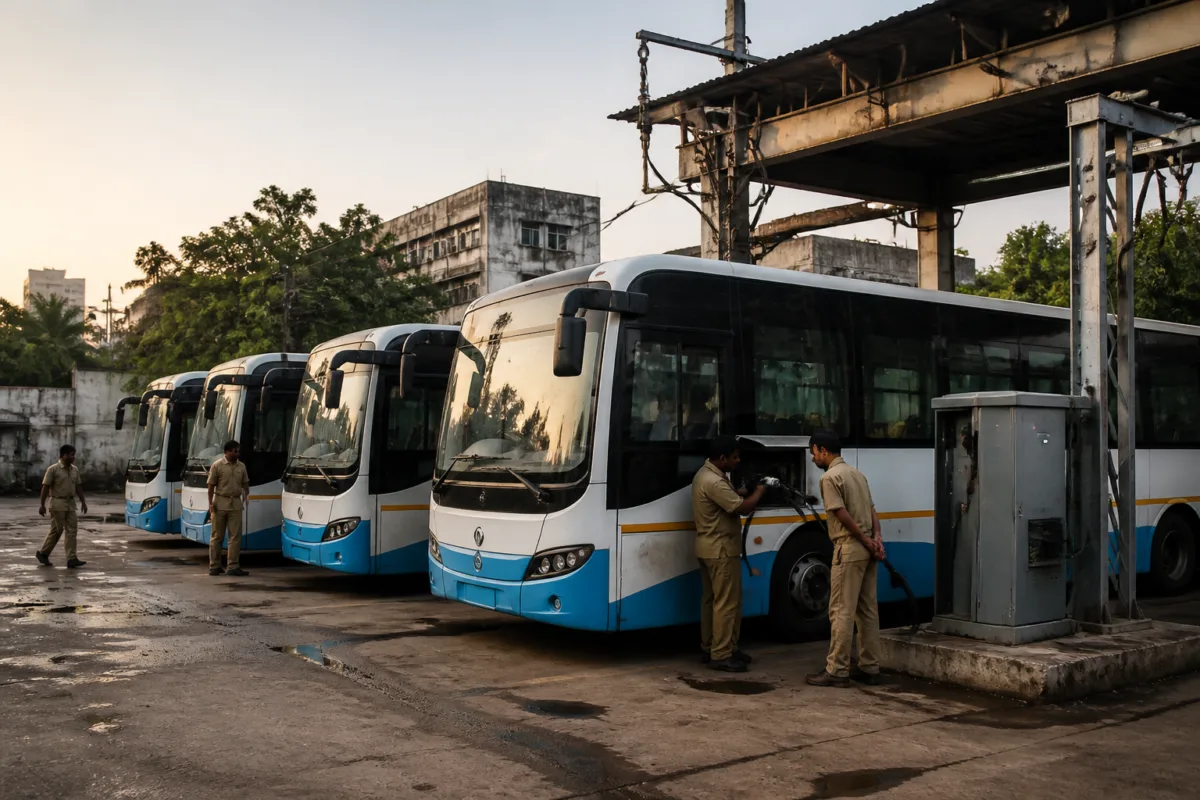
Maharashtra’s electric-bus programme is facing a funding dispute after the Maharashtra State Road Transport Corporation (MSRTC) employees’ Congress claimed that the project had caused a loss of Rs 168 crore up to October 2026 and sought operating support from the state government.
The employees’ organisation has demanded a subsidy of Rs 20 to Rs 25 per kilometre, citing arrangements in Gujarat and Uttar Pradesh. It has also said that the government should compensate MSRTC for the loss or discontinue the programme. The demands are to be submitted to district collectors, according to a report by Pudhari.
The employees’ organisation claimed that MSRTC incurs an average loss of Rs 16 per kilometre on electric-bus operations. It attributed the reported Rs 168-crore cumulative loss to the project and said the corporation’s financial difficulties had increased as a result. These figures were not independently substantiated in the report, and no response from MSRTC or the state government was included.
The dispute highlights the operating-cost challenge faced by state transport undertakings when cleaner buses are introduced without a clearly identified viability-gap funding mechanism. The employees’ organisation said Gujarat and Uttar Pradesh provide average financial assistance of Rs 20 to Rs 25 per kilometre for electric-bus operations, and argued that Maharashtra should adopt a similar approach.
It also linked the funding demand to the state’s stated policy of bringing environment-friendly vehicles on roads by 2047. According to the organisation, financial support is necessary if the government wants the policy to be implemented without transferring the operating burden to MSRTC.
The project was inaugurated in Thane on 13 February 2024 by the then chief minister, Eknath Shinde. The targets announced at the time were to supply 1,288 electric buses by May 2025 and a total of 5,150 buses by May 2026.
The report said that only 1,300 buses had entered the MSRTC fleet by November 2026. Transport minister Pratap Sarnaik had held a meeting with the bus supplier and fixed a revised supply schedule, but the employees’ organisation claimed that deliveries still fell short of expectations.
The reported shortfall matters because fleet availability affects the pace at which the state transport undertaking can replace or supplement conventional buses with electric vehicles. It also raises questions about how procurement schedules, operating subsidies and financial responsibility are being coordinated between the government, MSRTC and the supplier.
The employees’ organisation further claimed that the financial pressure was affecting MSRTC’s day-to-day funding requirements, including employee salaries, allowances and payments relating to increments. The report did not provide documentary details on these impacts or specify the government’s position on the subsidy request.
For the programme to expand at the announced scale, the outstanding issues include the basis for calculating operating losses, the actual number of buses delivered and deployed, the revised procurement timetable, and whether the state will create a per-kilometre support mechanism. Those details will determine whether the electric-bus rollout can progress without worsening the transport undertaking’s financial stress.

