


Ambernath civic works worth about ₹257.43 crore have been proposed for consideration at the Ambernath Municipal Council’s general meeting on 30 November, with the agenda listing 409 projects across three funding streams.
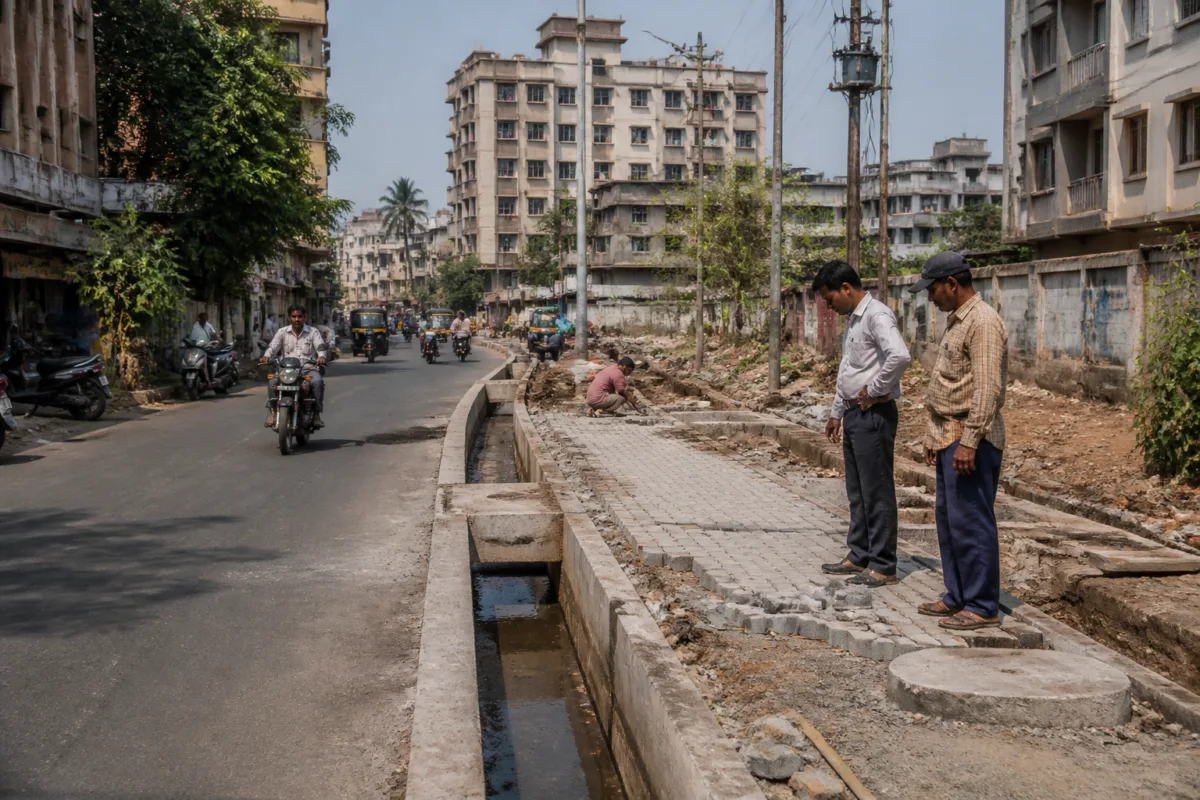
According to a report by Loksatta, the proposals include road concreting, drains, drainage lines, footpaths, junction beautification and chequered tiles. The concentration of these conventional works has prompted questions about whether all the projects are urgent and how priorities were set across the city’s wards.
The reported agenda covers items numbered 69 to 477. Of the 409 proposed works, 253 are to be funded through the municipal council’s own funds, with an estimated value of ₹31.18 crore. A further 74 works, valued at ₹61.50 crore, are proposed under the district-level Urban Development Campaign. The remaining 82 works, estimated at about ₹164 crore, are listed under the OARDS-MUIP campaign.
Loksatta reported that the projects have been placed before the council for approval. The report does not state that the works have already been sanctioned or that funds have been released.
The proposals come shortly after Member of Parliament Dr Shrikant Shinde criticised what he described as a reliance on a narrow set of works centred on footpaths, roads and potholes. Speaking at the inauguration of the Netaji Subhashchandra Bose Sports Complex, Shinde reportedly urged Ambernath’s elected representatives and administration to move beyond routine drainage, metering and water-related works and develop higher-quality projects for the city’s overall development.
However, the council meeting agenda, as described in the report, appears to contain a large number of similar ward-level works. The reported mix has therefore renewed a question about whether municipal investment is being driven by a citywide infrastructure assessment or by the allocation of fixed amounts across individual wards.
The available report does not provide project-wise details, engineering assessments, implementation schedules, procurement information or criteria used to determine urgency. It also does not record responses from the Ambernath Municipal Council administration or elected representatives on how the proposals were prioritised.
For residents, the immediate significance is that the proposed spending could shape the city’s road, drainage and pedestrian infrastructure if the council approves the agenda. The 30 November meeting is expected to clarify which works receive approval and whether the council seeks changes to the list before committing the proposed funds.

