


A delayed Jainapur multi-village drinking water project is leaving residents of 11 villages and 15 hamlet settlements in Karnataka’s Chikkodi taluk without the planned drinking water supply, according to a report by Prajavani.
The project, intended to supply water from the Krishna river, was approved in 2023 at an estimated cost of ₹37 crore. A tender was called in December 2023, and water supply to the settlements was scheduled to begin by the end of November 2024. However, the project had not become operational when the report was published.
The scheme covers Jainapur, Toranhalli, Karoshi, Kamatenatti, Bennihalli, Wadral, Majalatti, Khajagoudanatti, Mugali, Bidarolli and Hattarawat, along with 15 other residential hamlets. It is designed to provide about 3 million litres of water a day from the Krishna river.
Prajavani reported that most of the project work was complete. The jackwell was 98% complete, while the pipeline from the Krishna river to Jainapur had been completed. The report attributed the delay in commissioning the project to construction work on National Highway 548B between Kagawad and Chikkodi, which began about a year earlier.
The delay has come as local water sources face stress. The report said that several drinking water sources had dried up, water levels in village tanks were declining and groundwater levels in borewells had fallen. With drought conditions reported in the current year, residents were already facing shortages before the summer season.
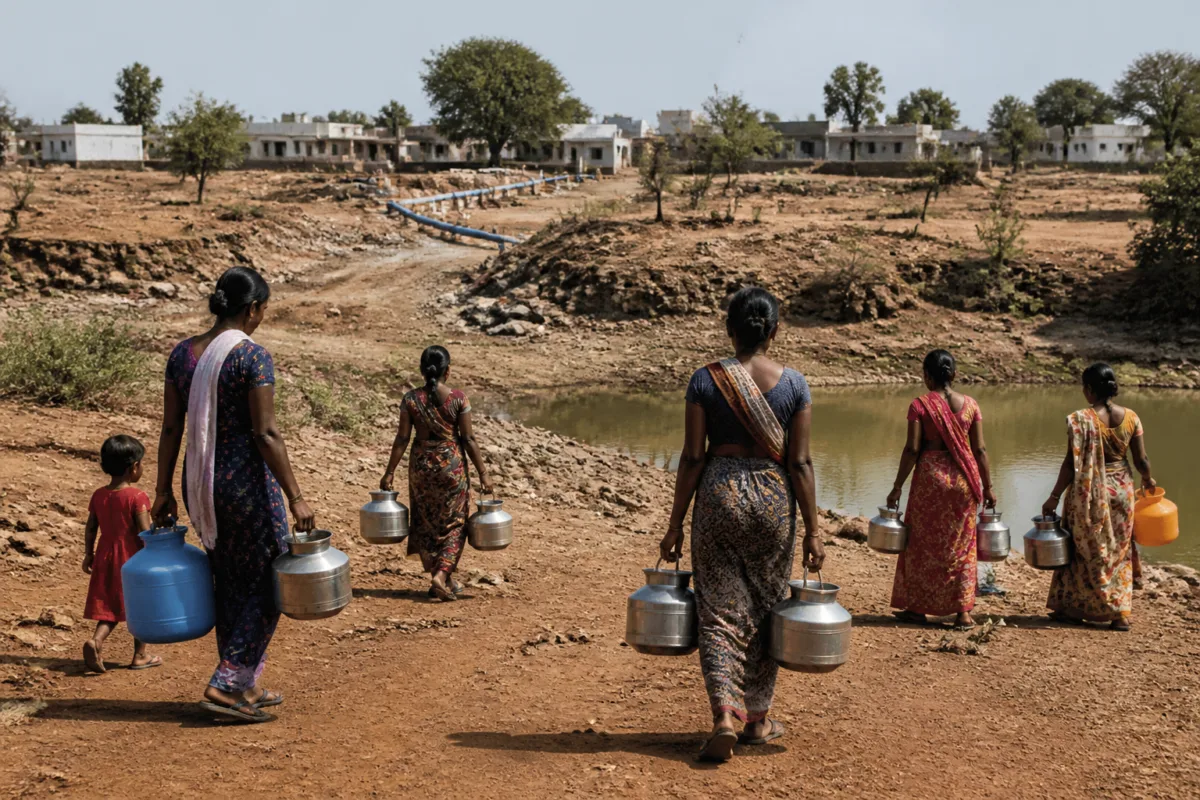
Village panchayats in the project area are consequently dealing with the challenge of supplying water to both people and livestock. Residents in several villages were reported to be carrying water over long distances, with women particularly affected by the daily task of collecting and transporting water.
The report also said that the implementation of Jal Jeevan Mission works in the area had not resolved the shortage. Residents expressed concern that the situation could worsen during summer, when local tanks and other sources are expected to face further pressure.
Ratna Shiragannavar, a resident of Wadral village, called for the multi-village water supply scheme to be commissioned immediately. The report did not include a response from the implementing agency or details of a revised completion and commissioning schedule.
The Jainapur project illustrates the gap between physical completion of water infrastructure and the delivery of an operational public service. Although the intake structure and major pipeline were reported to be nearly or fully complete, residents were still dependent on local and increasingly unreliable sources. Commissioning the scheme and clarifying the remaining work would be central to determining when the planned supply can reach the affected settlements.

