


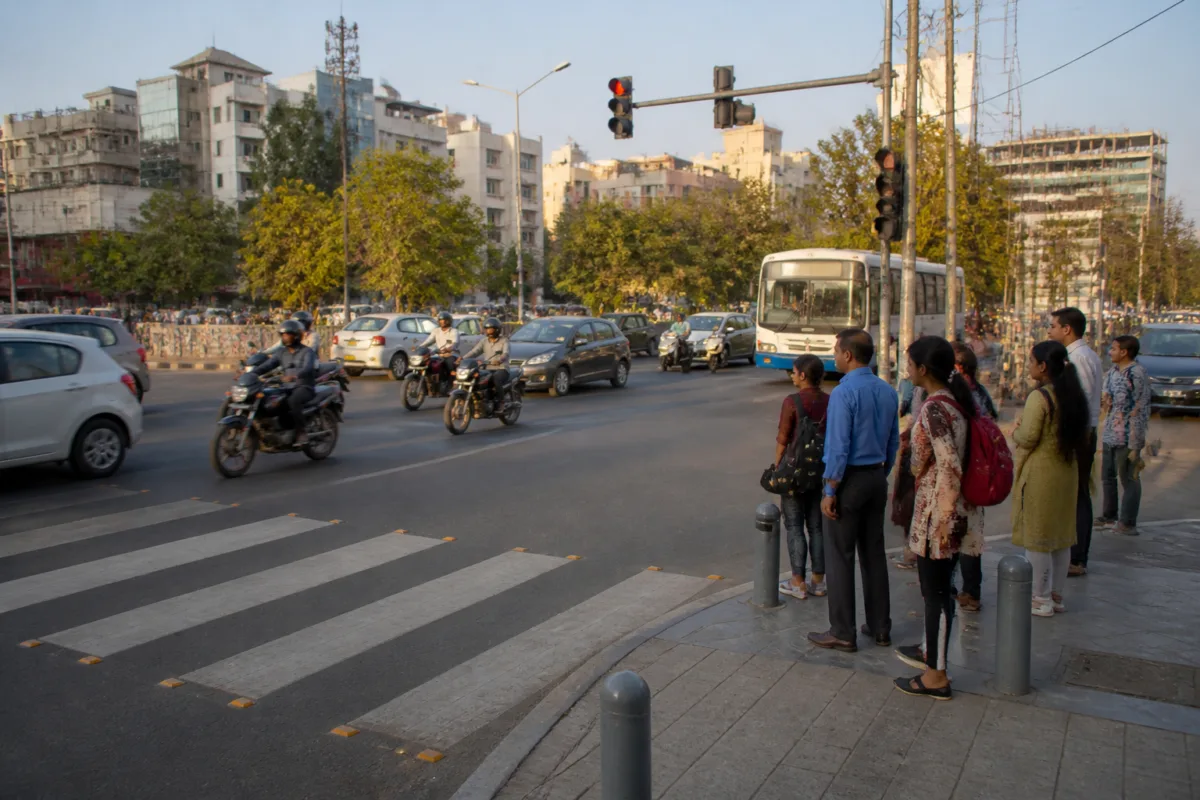
Hyderabad road safety requires more than stricter penalties, according to orthopaedic surgeon Dr Guruva Reddy, who has called for better-designed junctions, stronger enforcement and improved last-mile connectivity across the city.
Describing the road infrastructure as a “classical recipe to manufacture accidents”, Reddy said speeding, poorly designed intersections and inadequate visibility should be studied together when addressing crashes. He said removing trees and other obstructions that restrict sightlines at junctions could improve safety without substantial expenditure.
The comments place junction design alongside enforcement as a central road-safety concern. Intersections with limited visibility can reduce the time available to drivers, pedestrians and other road users to identify conflicts. Reddy also called for technology-driven traffic enforcement, pointing to the large number of unpaid traffic challans and inadequate police manpower.
He said suspension of driving licences and stricter penalties could improve compliance. The source report did not provide figures on Hyderabad’s unpaid challans, the city’s enforcement capacity or the number of crashes linked specifically to junction design. Those details would be necessary to assess the scale of the problem and measure the effect of any intervention.
Reddy cited national road-fatality estimates of between 1.5 lakh and 1.7 lakh deaths annually, saying that one person dies every four minutes and that many young people in their productive years are killed or left with permanent disabilities in road accidents. These figures were presented as part of his remarks and were not independently detailed in the report.
He also highlighted the importance of last-mile connectivity for people travelling to workplaces and hospitals. Patients, he said, may have little option but to use private vehicles when convenient and reliable connections are unavailable. Better links to public transport could therefore have consequences beyond commuter convenience, particularly for people making time-sensitive medical journeys.
The discussion also addressed electric vehicles and their wider environmental effects. Dr Sudheer Vinnamala, regional medical director at KIMS, said electric vehicles could improve urban air quality, but their overall environmental benefits depended on the source of electricity. A greater shift towards renewable energy would be needed to prevent pollution from being transferred from cities to power-generation centres.
Dr Shailaja Tetali of the Public Health Foundation of India said the full lifecycle of electric vehicles should be considered, including battery recycling and disposal. The comments broaden the transport debate from tailpipe emissions to the energy and waste systems supporting vehicle use.
For Hyderabad, the immediate road-safety agenda outlined in the discussion is therefore built around practical junction improvements, more consistent enforcement, clearer sightlines and better access to public transport. The report does not identify specific intersections, announce a government programme or record a formal institutional response. Those remain important gaps for evaluating how the recommendations could be implemented.

