


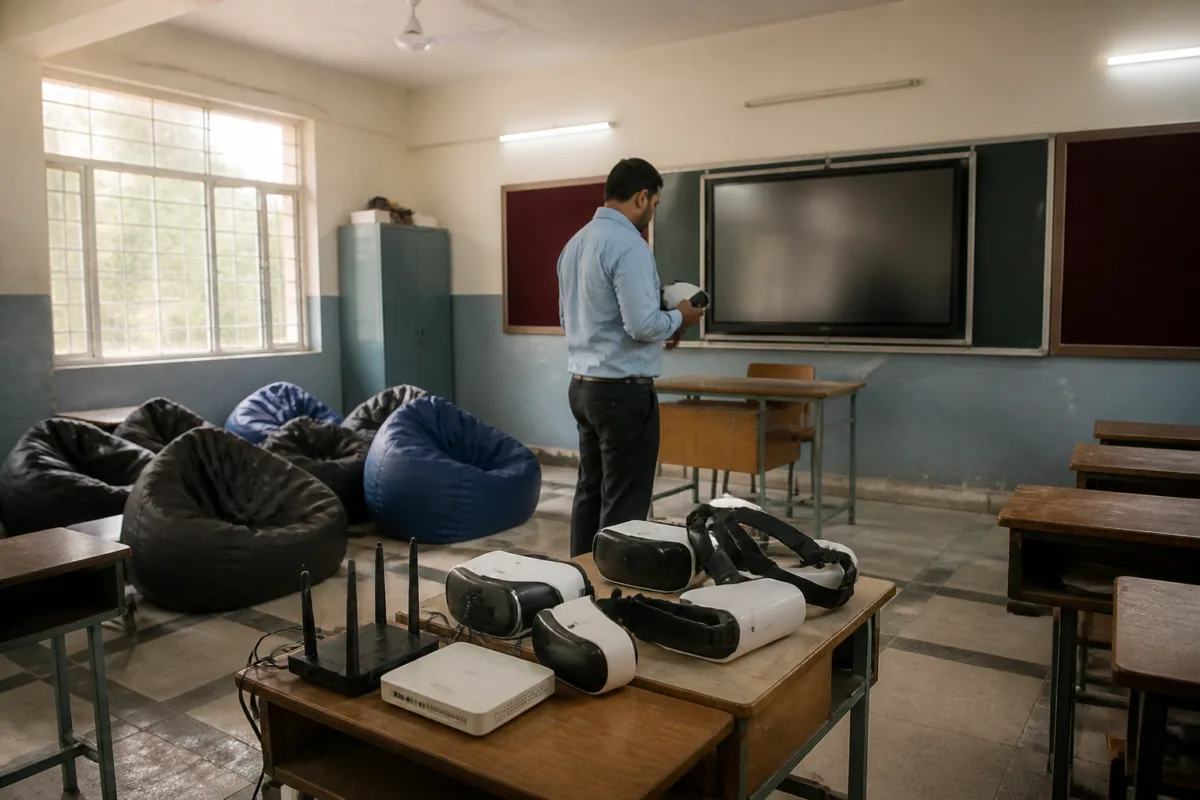
Allegations surrounding Panvel Municipal Corporation’s ₹2.84-crore virtual reality classroom project have raised questions about procurement pricing, installation, inspection and payments in the civic education system.
Prahar, an organisation that has sought an inquiry into the project, has alleged financial and administrative irregularities based on information obtained under the Right to Information Act. The organisation has submitted a complaint to Municipal Commissioner Mangesh Chitale and Mayor Nitin Patil, seeking an independent investigation into the project’s execution and the payments made to its contractor.
According to the complaint, the civic body awarded a contract worth ₹2,84,57,210 to establish VR classrooms in municipal schools. Prahar has alleged that several items were procured at prices substantially above what it described as prevailing market rates. It cited a Wi-Fi router allegedly costing ₹1,34,800, excluding GST, against an estimated market price of ₹13,000 to ₹15,000. Bean bags were allegedly purchased for ₹16,910 each, compared with a market estimate of about ₹11,500 to ₹12,000.
The organisation has also questioned the purchase of VR headsets running on Android 8.1 at an alleged unit price of ₹1,90,342. Prahar said the operating system was outdated and claimed that the complaint showed significant differences in procurement pricing, although it also acknowledged varying figures for the alleged excess expenditure.
The dispute extends beyond the prices listed in the complaint. Prahar’s Raigad district vice-president, Dr Sunil Shirishkar, has questioned how payments were released when, according to the organisation, some equipment was unused or had not been installed. The complaint alleges that VR equipment intended for Municipal School No. 2 remained at Loknete D B Patil Vidyalaya for several months.
Shirishkar has also questioned whether the project received the inspection and certification required before payment. He alleged that an independent third-party agency was supposed to inspect the installation and confirm that the facilities were operational. These claims have not been established through an official inquiry cited in the report.
Prahar further flagged the alleged theft of VR equipment worth lakhs of rupees from Municipal School No. 6. The organisation questioned why the civic education department had not registered a police complaint over the alleged loss of government property.
The case highlights the accountability chain involved in municipal technology projects: procurement specifications, price benchmarking, delivery records, installation certificates, third-party inspection and asset protection. A project intended to modernise civic schools can deliver public value only if the equipment is operational, used by students and maintained after installation.
Prahar has sought a comprehensive inquiry covering procurement, installation, inspection and payments, along with action against officials or contractors found responsible. The report does not record the municipal corporation’s response to the allegations or confirm whether an inquiry, police complaint or recovery process has been initiated.

