


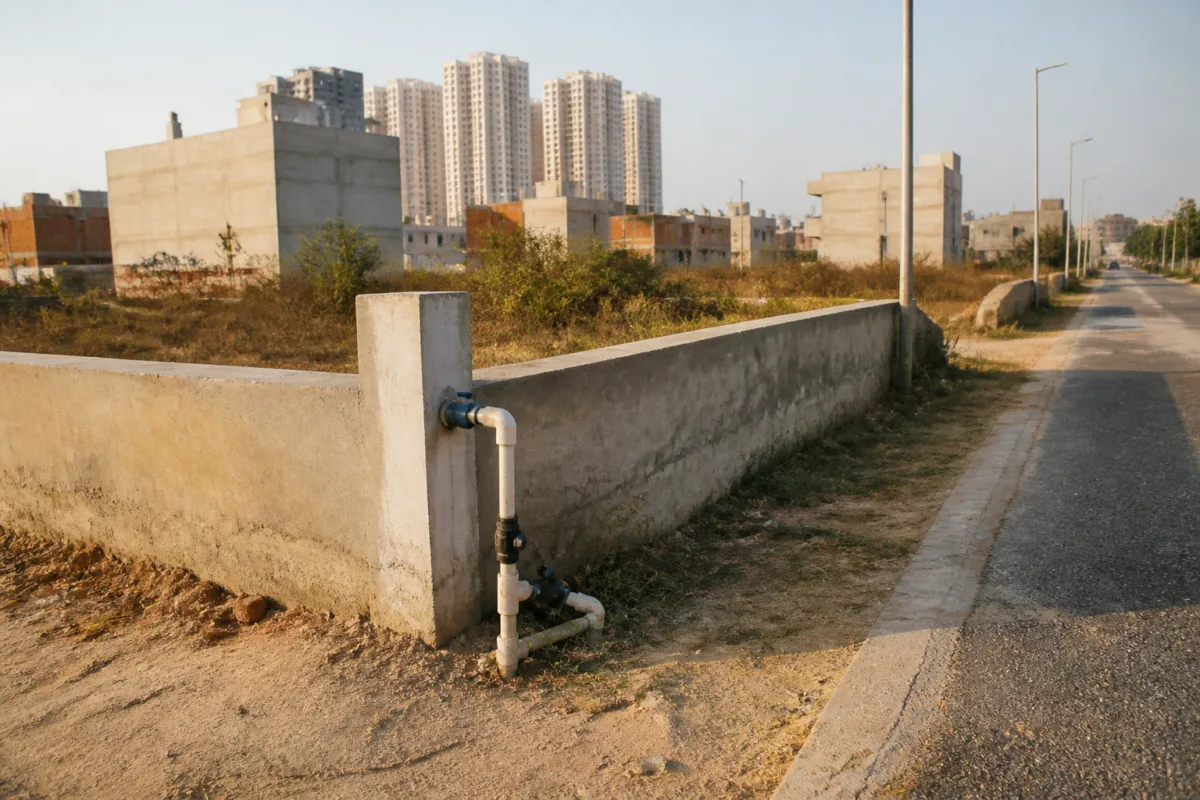
A consumer commission in Delhi has directed the Greater Noida Industrial Development Authority (GNIDA) to pay ₹50,000 in compensation to a plot owner who was billed for water despite claiming that the vacant plot had not been used. The commission also directed GNIDA to prepare future bills on the basis of actual consumption and create a system to distinguish regular water users from consumers who hold a connection but do not use water.
The case relates to a plot allotted in December 2006. The owner received possession in November 2010 but, according to the report, did not begin living there because the area had a low population. GNIDA nevertheless began charging a water fee from February 2011.
The first reported bill was issued in July 2015. It sought ₹14,128, including water charges up to 1 July 2015 and 12% annual interest. The owner received the bill on 22 August 2015 and questioned the basis for charging for water that had allegedly not been used. The complaint also said that the initial demand was not issued during the earlier years and was later raised as accumulated arrears.
The owner said ₹14,130 was deposited in 2015. However, GNIDA issued another bill on 7 January 2016 for ₹19,189, which was received on 2 July that year. That bill covered water charges and interest from 2011 to 2016, according to the report, and allegedly did not adjust the earlier payment. The owner applied to disconnect the water connection in July 2016 and again in March 2019, but received another bill of ₹34,193 in June 2020.
GNIDA told the commission that it operated under applicable rules, regulations and bylaws, and that water rates were revised annually. It said plots smaller than 250 square metres were subject to a fixed monthly water charge of ₹150 until May 2013. The authority also stated that ₹43,167 remained outstanding as water charges as of 31 March 2021, and maintained that no water-bill payments had been made after 2015.
The commission questioned the rationale for charging all consumers a uniform amount without determining whether water was actually being used. It observed that GNIDA did not have a system to establish individual consumption, resulting in regular users and people who did not use water, or used it only occasionally, being placed in the same category.
Citing Supreme Court decisions, the commission said water charges should be linked to actual consumption and should not be imposed as a fixed amount in the manner of a tax. It consequently termed GNIDA’s billing arrangement an unfair trade practice, ordered the compensation payment and directed the authority to develop a mechanism for identifying actual water consumers. It also said future bills issued in the complainant’s name must be based on actual consumption.

