


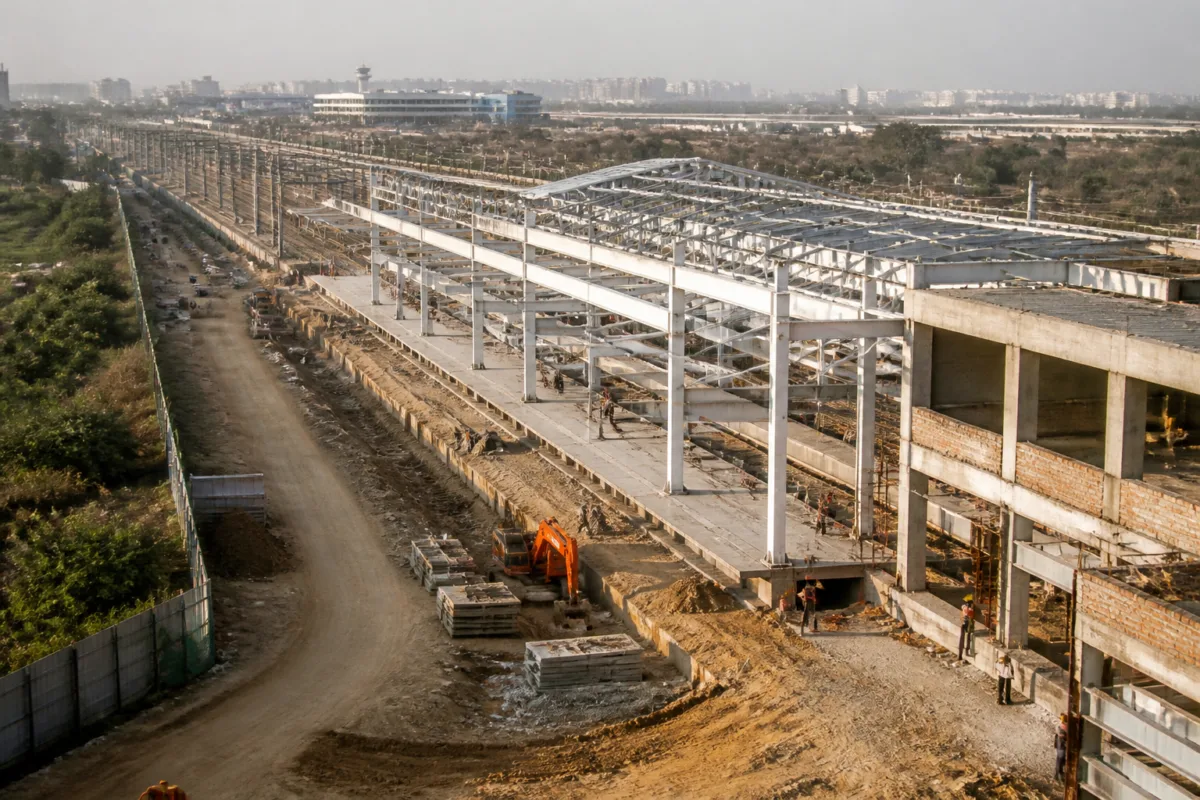
Two railway infrastructure projects in western Delhi are expected to reshape passenger movement in the area, with a seven-platform terminal being developed at Bijwasan and the 1914-built Delhi Cantonment station undergoing a redevelopment estimated at Rs 335 crore, Jagran reported.
The Bijwasan project is planned as a major terminal for trains operating towards western destinations. Its proposed facilities include a 108-metre-wide passenger hall, four subways, an arrival plaza, a large departure area and parking. The project is being overseen by the Rail Land Development Authority (RLDA), according to the report.
A planned connection with Dwarka Sector 21 metro station is intended to link the terminal with the Airport Express and Blue Line networks. Bijwasan’s proximity to the airport could also give passengers views of aircraft movements, the report said. The project is targeted for commissioning in the new year, although the report does not provide a specific date or an updated official completion schedule.
The terminal has had a long implementation history. Its development as an important western Delhi rail terminal was approved in February 2008. Construction began in March 2013, with completion initially targeted for March 2020, according to documents cited by the report. Changes in the construction arrangement and environmental approvals contributed to delays.
The proposed station layout is intended to improve passenger circulation through dedicated arrival and departure areas, internal subways and expanded waiting facilities. If the terminal becomes operational as planned, it could provide an additional rail interchange point for western Delhi and help distribute passenger loads away from the capital’s busiest stations. The report, however, does not provide passenger-volume estimates or a quantified assessment of how much pressure would be shifted.
Delhi Cantonment station is being redeveloped to address the limitations of its older layout. The station serves an area where the surrounding population and passenger numbers have increased, while access routes, entry and exit arrangements and pedestrian movement have remained difficult, Jagran reported.
The redevelopment includes a new station building, arrival and departure areas, a large passenger hall and an elevated road. The plan also provides for renovated platforms, lifts, escalators, waiting rooms, toilets, improved shelters and parking.
The project’s institutional structure has changed over time. Redevelopment began under a public-private partnership model in August 2019. In October 2021, it was transferred to the RLDA under an engineering, procurement and construction model. A master plan was approved in December 2021, tenders were invited in June 2022 and the construction contract was awarded in December 2022, according to the report.
Together, the two projects reflect a wider effort to expand and modernise Delhi’s railway infrastructure beyond its established central terminals. Their public value will depend not only on the completion of station buildings but also on reliable access roads, pedestrian connections, parking management and integration with metro services.
The report does not state a revised completion date for the Delhi Cantonment redevelopment or provide independent confirmation of the current construction percentage at either site. The final effect on congestion and passenger distribution will therefore depend on actual commissioning, the quality of last-mile connections and the operational plans adopted after completion.

