

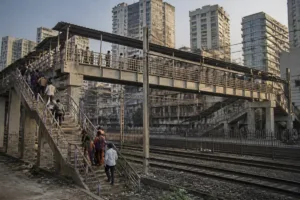
Western Railway is examining the removal of the Prabhadevi–Parel footbridge in Mumbai to make way for the proposed sixth railway line between Khar and Mumbai Central. The demolition date has not been finalised, and the railway administration is inspecting the site to identify space for a replacement structure and plan alternative commuter access.
The footbridge was built by the Indian Army in 117 days after the September 29, 2017, stampede at Elphinstone Road station, now known as Prabhadevi, in which 23 people died. It was among three footbridges constructed by the Army’s Bombay Engineering Group, popularly known as the Bombay Sappers, at Prabhadevi–Parel, Curry Road and Ambivli stations.
The Prabhadevi–Parel bridge, built at a cost of around ₹10 crore, was inaugurated in February 2018. It created an east-west connection for passengers travelling between Prabhadevi and Parel stations, which serve busy commercial, office and residential areas in central Mumbai.
According to the report, the proposed alignment of the sixth line passes through the area occupied by the footbridge. A Western Railway official said the inspection is intended to assess the space available for a new bridge. The official added that an alternative arrangement for passenger movement would have to be planned before the existing structure is removed.
The sixth-line project is being undertaken under the Mumbai Urban Transport Project. Its stated purpose is to separate suburban and long-distance train operations and improve the efficiency and carrying capacity of one of Western Railway’s busiest sections.
That transport benefit is directly linked to a pedestrian-access challenge. The existing footbridge is used by commuters moving between the two stations, and its removal without a ready replacement could disrupt the east-west route during construction. The report says the proposed removal could affect thousands of daily users, although Western Railway has not announced a demolition schedule or detailed temporary-access plan.
The immediate planning question is therefore not only whether the bridge can be removed for the rail alignment, but how passenger circulation will be maintained while replacement infrastructure is designed and built. Until the inspection and access planning are complete, the timing and practical impact of the proposed demolition remain unresolved.