


State Bank of India’s renewable-energy loan book stands at Rs 1.24 lakh crore, while the lender has financed projects representing 60 GW of green-energy capacity, its managing director Ashwini Tewari said at the IVCA Climate Capital Summit 2026 in Mumbai on November 26.
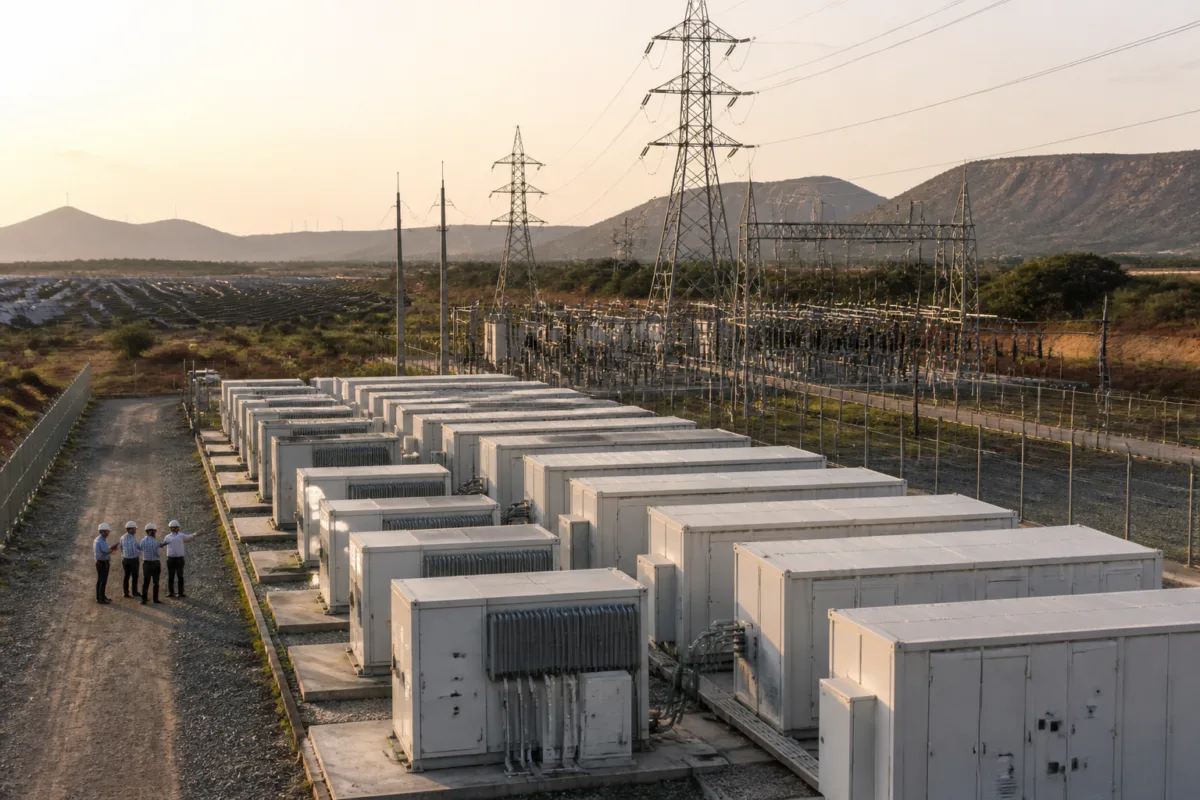
Tewari said battery energy storage was the most significant challenge facing India’s power sector as rising renewable capacity requires supporting storage and transmission infrastructure. SBI has financed 60 GW of renewable-energy capacity out of around 250 GW installed nationally, he said.
Solar and wind projects are intermittent sources, and cannot provide baseload power without adequate storage facilities, according to Tewari. He said this limits the contribution of renewable sources to actual electricity generation despite their large share of installed capacity.
Renewable and fossil-fuel sources account for roughly equal shares of India’s installed power capacity, Tewari said, while fossil fuels continue to contribute around 70-80 per cent of electricity generation. The comparison points to the infrastructure challenge involved in converting installed renewable capacity into dependable electricity supply for cities, industries and households.
Tewari said India needed a movement in battery energy storage similar to the expansion seen in solar power. He also said that transmission infrastructure had not kept pace with the growth of solar installations.
According to Tewari, financing itself was not the main constraint for transmission projects. Banks were comfortable funding the sector, he said, but the infrastructure gap emerged because transmission development did not match the pace of renewable-capacity additions. He estimated that bridging the gap would take two to three years.
SBI is engaging with Power Grid and other entities on the possible monetisation of transmission assets through infrastructure investment trusts, or InvITs, Tewari said. He added that pension funds and other long-term institutional investors were seeking assets that could provide regular yields over extended periods, making transmission infrastructure a potential avenue for such investment.
Tewari said alternatives such as nuclear power and pumped-storage hydroelectric projects would take longer to expand. Nuclear projects could take 15-20 years to develop, while pumped-storage hydro projects could take four to five years, he said. Battery-based solutions would therefore be needed in the intervening period, according to the SBI official.
He also called for faster adoption of electric trucks, saying the segment remained at an early stage compared with electric two-wheelers, three-wheelers and passenger vehicles. The comments place energy storage, grid expansion and freight electrification among the infrastructure requirements accompanying India’s renewable-energy buildout.

