


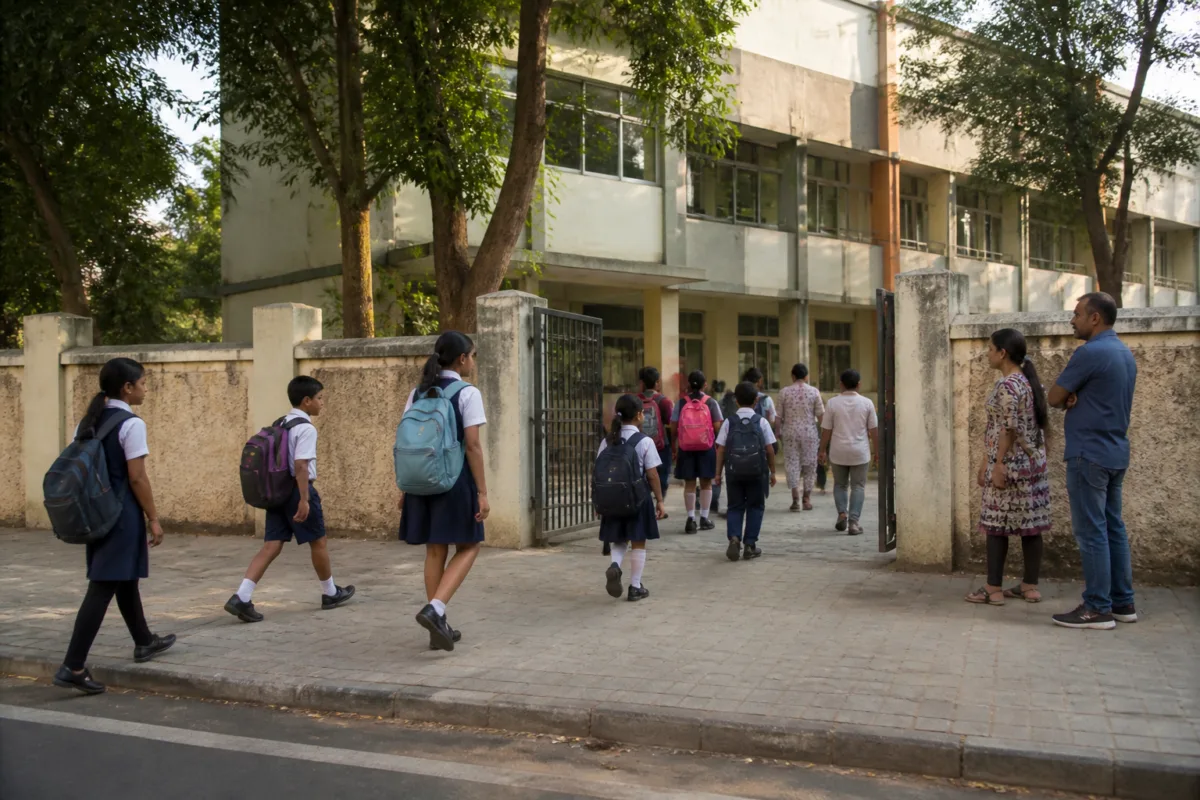
Pune Municipal Corporation (PMC) teachers have enrolled only six of their 44 school-going children in civic schools, according to information provided by the civic administration, raising questions about confidence in the quality of municipal education.
The issue was raised by BJP corporator Sunil Pandey, who sought details about the school preferences of children of teachers in the PMC’s secondary and technical education department. The department has 15 headmasters and 120 teachers, the report said. Forty teachers have children studying in Classes I to XII.
According to the administration’s written reply, six of the 44 children study in PMC schools. The report said 33 attend English-medium schools, while three attend Marathi-medium schools and two attend Urdu-medium schools. However, it also stated that the reply did not specify the medium of education for the remaining four children. These figures require verification because the listed categories already add up to 44.
The data comes as the PMC administration undertakes measures to improve the quality of education in its schools. The civic body reportedly spends around Rs 1,000 crore annually on its schools and has said that they provide students with the necessary facilities.
The low enrolment of teachers’ children has prompted questions about academic standards, school infrastructure and parental confidence in PMC institutions. The available information does not establish why individual teachers chose other schools, and the administration’s response does not provide a comparison of learning outcomes, facilities or school preferences.
Asked whether the PMC would encourage teachers to enrol their children in civic schools or formulate a policy for this purpose, officials said appropriate action would be taken if a policy decision was made. The administration also clarified that admissions could not be made compulsory because the Right to Education Act gives parents the freedom to choose a school for their children.
The enrolment figures therefore point to a public accountability issue for the civic school system, but the underlying reasons for the choices remain unrecorded in the reported reply. Verification of the original written response is needed to reconcile the numerical discrepancy and establish the complete distribution of the 44 children.

