


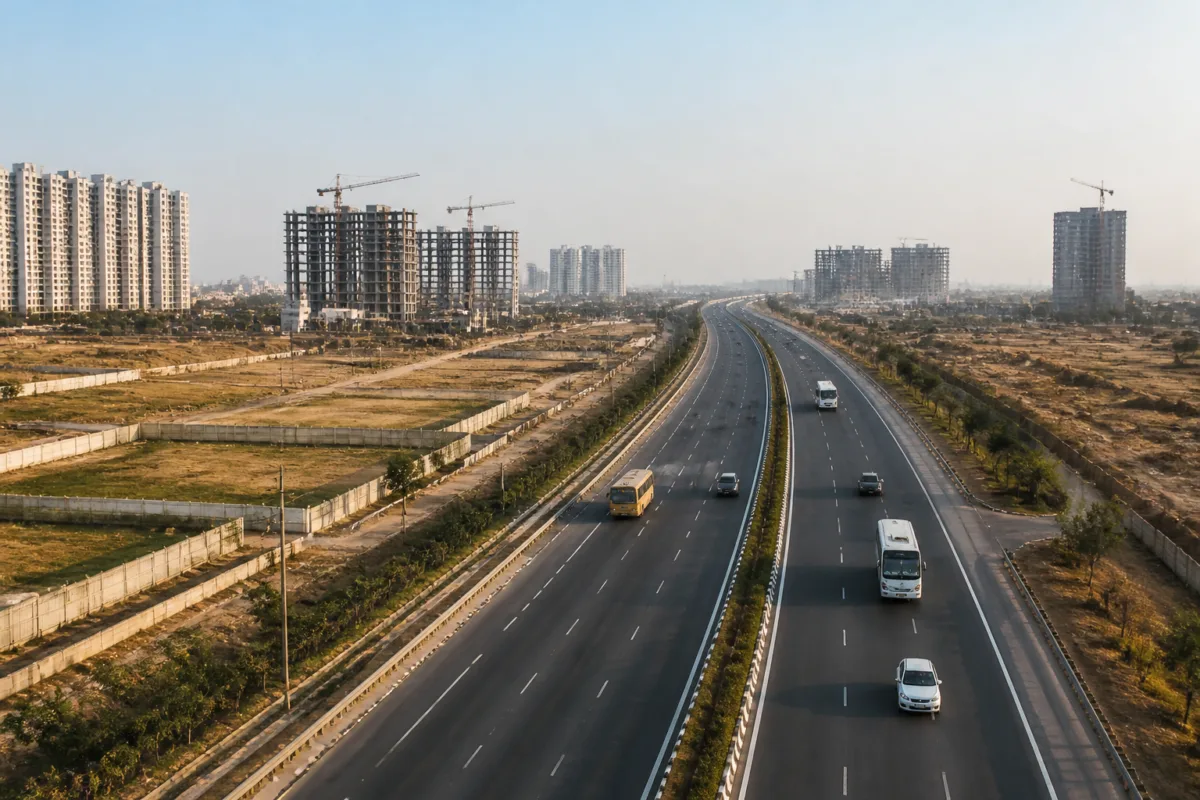
Housing prices along the Yamuna Expressway in Delhi-NCR have risen about 2.5 times in four years, as infrastructure improvements and stronger consumer interest reshape the corridor, according to a report by real-estate consultant Square Yards.
The report, released on Thursday as “India’s Next Growth Corridor: Yamuna Expressway”, estimated that average apartment prices increased at a compound annual growth rate of 27 per cent between 2022 and 2026. Average prices were listed at ₹3,700 per sq ft in 2022, ₹5,000 in 2023, ₹8,000 in 2024, ₹8,900 in 2025 and ₹9,500 currently.
The figures indicate a sharp rise in land and housing values along a corridor that is still developing unevenly. Square Yards identified around 200 residential projects under development across the Yamuna Expressway market. Apartment prices range from ₹75 lakh to ₹5 crore, while estimated rental yields are about 2.20 per cent a year, the report said.
The corridor is anchored by a 165-km, six-lane, access-controlled expressway connecting Greater Noida and Agra. Operational since 2012, the road has reduced travel time between Noida and Agra, according to the report. It spans six districts in Uttar Pradesh and falls under the Yamuna Expressway Industrial Development Authority, or YEIDA.
Square Yards’ assessment places the market between relatively expensive established centres such as Noida and Gurugram and newer development areas seeking to attract residents, investors and businesses. The consultant described it as an “affordability bridge”, reflecting its lower entry points compared with mature NCR markets, although its current price range includes both mass-market and premium housing.
The market’s product mix includes apartments, plotted developments and villas. Plotted projects are attracting early-stage investors, while villas are aimed at the premium segment, the report said. This range suggests that the corridor is being marketed not only as a residential location but also as a longer-term investment market.
However, Square Yards also cautioned that the corridor remains at an evolving stage. Infrastructure gaps and uneven development between sectors could limit near-term occupancy and investment, according to the report. This distinction is important for residents and buyers: rising quoted prices do not necessarily demonstrate that neighbourhood services, employment opportunities or completed social infrastructure have expanded at the same pace.
The consultant projects that the corridor’s population could reach 3.5 million by 2031. The report links that expected growth to large-scale infrastructure development, improved connectivity and major investments, but it does not provide independent occupancy data or a detailed assessment of supporting civic services.
Rahul Purohit, co-founder and chief business officer of Square Yards, said the region was shifting from a relatively affordable property market towards a premium corridor. He said some locations could see substantial further price appreciation and potentially rival or surpass established markets such as Gurugram.
That outlook remains a projection from the consultant rather than a confirmed market outcome. For the corridor’s urbanisation to translate into liveable communities, the pace of housing construction will need to be matched by reliable infrastructure and services across its sectors. The report’s own warning about uneven development indicates that the expressway has improved regional connectivity, but has not by itself resolved the conditions required for sustained occupancy.

