


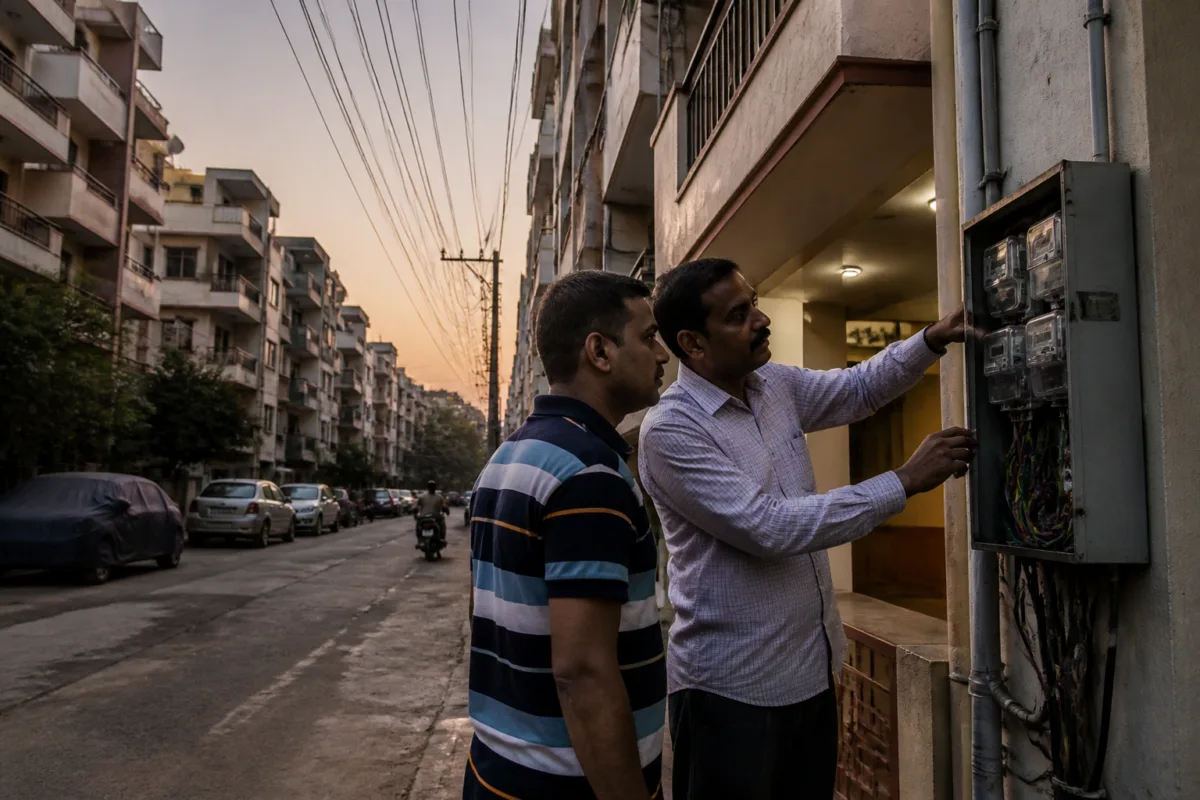
Delhi’s electricity subsidy expenditure has risen by about 180% in 11 years, from approximately Rs 1,442 crore in 2015-16 to Rs 4,037.63 crore in the last financial year, according to a report citing officials in the Delhi government’s Power Department. The increase has prompted the government to consider measures to control the subsidy budget.
The subsidy programme began in 2015-16 with a 50% subsidy for consumption of up to 400 units. Under that arrangement, consumers did not receive completely zero bills, and the annual subsidy outlay remained between about Rs 1,442 crore and Rs 1,700 crore, the report said.
The structure changed in August 2019. Consumers using up to 200 units were made eligible for a 100% subsidy, while those consuming between 201 and 400 units received a 50% subsidy, capped at Rs 800. The monthly subsidy outlay subsequently rose from about Rs 1,700 crore to Rs 2,500 crore, according to the report.
The programme was also extended beyond domestic consumers to farmers, victims of the 1984 anti-Sikh riots and lawyers’ chambers in Delhi courts. The number of beneficiaries has increased by about 5% to 7% each year, which has contributed to the rise in the government’s subsidy payments to electricity distribution companies.
For the current financial year, the government has reduced the budget provision for subsidy payments by about Rs 537.63 crore compared with the previous financial year. Officials cited in the report said the government also faces the challenge of ensuring that payments to distribution companies remain within the amount provided in the budget.
One proposal under consideration is to require consumers to provide online consent for the subsidy every year and complete Aadhaar verification. Resident welfare groups are divided over the idea. Some representatives view a yearly confirmation process as a possible transparency measure, while others fear it could make access more difficult for consumers who are unfamiliar with online procedures or miss a deadline.
Atul Goyal, president of United RWA of Delhi, said consumers may have to register themselves to receive the subsidy and called for clear public communication about the process. Rajiv Kakaria, founder of Save the City, said annual registration and a fixed deadline could result in eligible consumers losing the benefit because they lacked information or failed to complete the process in time.
Saurabh Gandhi of United Residents of Delhi questioned a proposed system under which one electricity meter would be linked to one Aadhaar identity for the subsidy. He said the arrangement could disadvantage other families living in the same property.
The report does not establish that the annual consent, Aadhaar verification or one-meter proposal has been finalised. The immediate policy question is therefore not only how Delhi can contain a growing subsidy bill, but also how any revised eligibility process can avoid excluding households through additional documentation or procedural requirements.

