


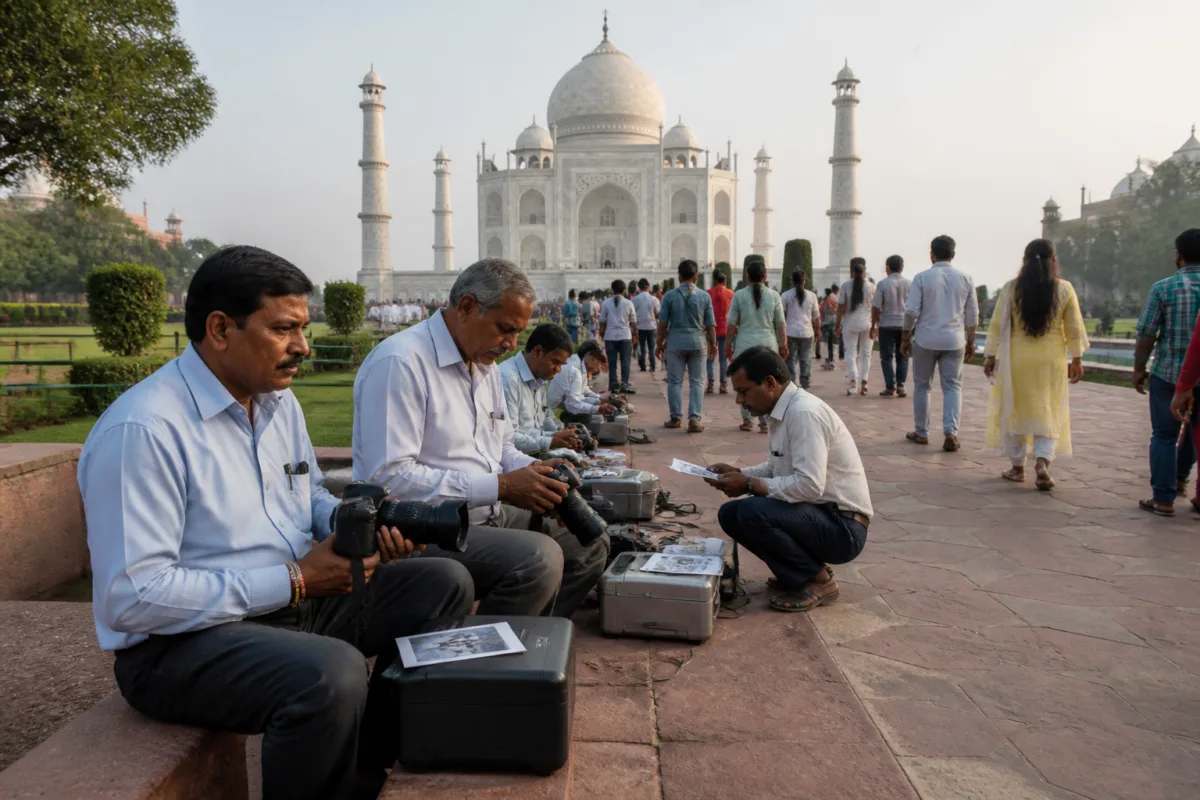
The Delhi High Court has quashed a policy that required licensed photographers working at the Taj Mahal to retire at 65, holding that the restriction was discriminatory and affected their right to livelihood.
A division bench of Justice Pratibha M. Singh and Justice Dinesh Bhatt said the photographers are independent professionals, not employees of the Archaeological Survey of India (ASI). They should be allowed to continue working as long as their physical and mental capacity permits, according to the report on the ruling.
The court was hearing petitions filed by two photographers challenging Clauses 9 and 9.3 of an ASI policy issued on May 24, 2017. The policy required medical fitness after the age of 60 and prescribed retirement at 65.
The petitioners told the court that photography at the Taj Mahal was the sole source of livelihood for their families and that they had worked at the monument for 30 to 40 years. The ASI argued that an age limit was needed to create opportunities for younger photographers. It also said that some older photographers allegedly sent substitutes to work in their place and were not familiar with newer technology.
The report states that about 500 photographers hold licences to work at the Taj Mahal. Referring to a Supreme Court ruling in B.P. Sharma versus the Government of India, which struck down a similar age limit for tourist guides, the High Court set aside Clause 9.3.
The court said the ASI may conduct medical fitness tests for photographers above 65. Licence holders cannot transfer their licences to another person; any such transfer will result in immediate cancellation. Photographers must also attend refresher courses and tests conducted by the ASI.
The court further directed that the petitioners’ licences, which had continued to be renewed, be renewed until the end of the year and annually thereafter. Apart from nominees of licence holders with disabilities, no other nominee may be permitted to work in their place, the report said.

