


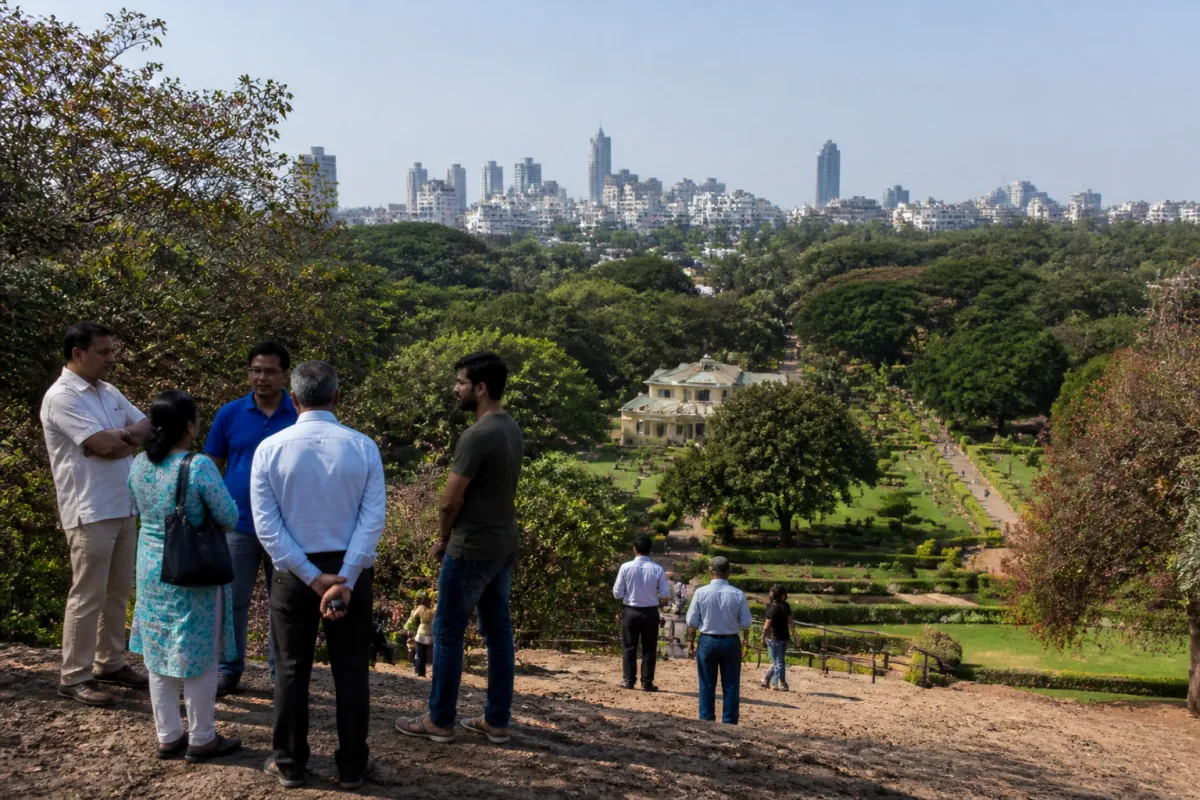
The Karnataka government will change the proposed alignment of the Hebbal-Silk Board tunnel road so that it does not pass through Bengaluru’s Lalbagh, Bengaluru Development Minister Krishna Byre Gowda said on Wednesday, November 25. The decision follows sustained opposition from citizens and environmentalists who objected to using part of the botanical garden for the project.
“Alignment will definitely change; there should be no confusion about that. We have promised the people that we will go outside Lalbagh, and we are committed to that word,” Byre Gowda said at a press conference, according to The News Minute.
The original proposal for the North-South tunnel project included entry and exit points at Lalbagh. The plan triggered protests over the possible impact on the garden’s ecological and geological heritage. In August 2026, thousands of Bengalureans formed a human chain around Lalbagh Rock and demanded that the government withdraw the proposal to use park land.
The government has now identified two alternative locations, the minister said. A survey is under way, and one option will be selected after its advantages and disadvantages are assessed and stakeholders are consulted. The revised alignment has not yet been finalised.
The change is also delaying the project’s work order. The government is negotiating with the contractor to reduce the quoted cost while it examines the alternative routes. Adani Enterprises has emerged as the lowest bidder. A committee headed by the Chief Secretary, with officials from the Finance Department and the Public Works Department among its members, has conducted two rounds of negotiations, Byre Gowda said. Discussions on reducing the contractor’s quoted rate were continuing.
A move away from Lalbagh could increase the tunnel’s length and cost, the minister said. The government’s contribution has been fixed at Rs 7,000 crore, regardless of the contractor’s overall estimate, but a revised alignment could require fresh discussions on how additional costs would be shared. The proposal will have to return to the Cabinet after the rate negotiations are completed. The work order will be issued only after that approval, according to the minister.
The financial structure means the alignment decision is not only an environmental or design issue. It could affect the final project estimate, the distribution of additional costs and the terms under which the project is implemented. Byre Gowda said the toll would remain as fixed by the National Highways authorities, although the toll collection period could vary slightly after the alignment is changed.
Construction would not begin immediately after the work order, he added, because the contractor would require considerable time to mobilise resources. The government has not announced a final alternative location or a construction start date.
The proposed realignment has been welcomed by BJP MP Tejasvi Surya, who called it an initial victory for citizens who campaigned to protect Lalbagh. However, he argued that moving the tunnel away from the garden would not resolve wider questions about the project’s traffic and transport rationale.
Surya said experts from the Indian Institute of Science and other institutions had raised concerns about the tunnel’s possible effect on congestion. He called on the government to place the project’s assessments and rationale in the public domain and hold an open discussion on its merits. These concerns are attributed to Surya and were not independently assessed in the report.
He also raised concerns about the proposed Hebbal Short Tunnel’s reported impact on more than 3.4 acres of Hebbal Lake and about possible implications for Metro expansion, including the dropping of the Veterinary College station on the Red Line. He argued that Bengaluru should not compromise public transport to accommodate projects that encourage private vehicle use.
Environmental activist A.N. Yellappa Reddy, who led protests against the Lalbagh alignment, questioned the basis for continuing with the tunnel project. He sought public consultation and independent technical scrutiny, including examination of debris disposal and the potential effect of tunnelling on Bengaluru’s underground water systems.
The government’s immediate task is therefore to resolve three linked questions: which alternative route can avoid Lalbagh, whether that route can be financed within the project’s agreed structure, and what evidence supports the tunnel’s wider transport benefits. The minister’s statement establishes a commitment to change the alignment, but not yet a final route, revised cost, work order or construction schedule.
Until those details are placed before the Cabinet and made available for public scrutiny, the realignment addresses the specific dispute over Lalbagh without settling the broader debate over Bengaluru’s road priorities, environmental safeguards, public consultation and the relationship between large road projects and mass transit.

