


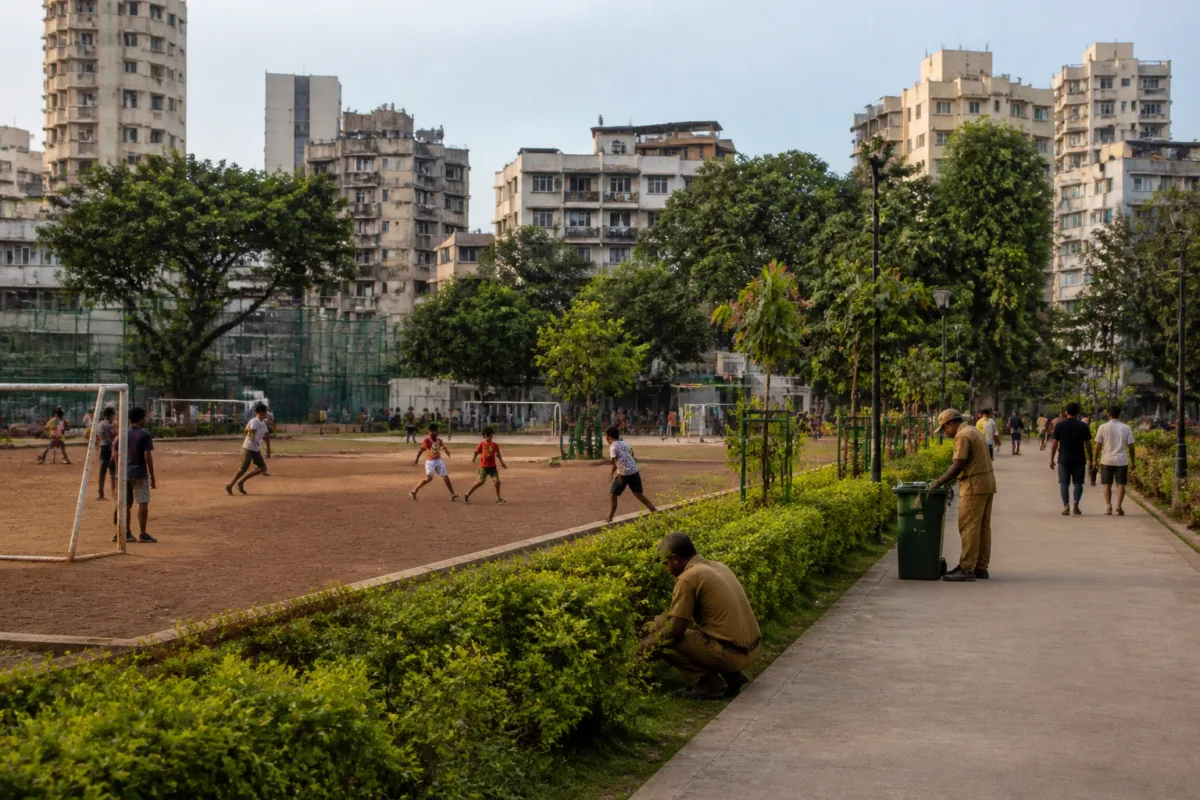
Mumbai’s public playgrounds and gardens are to remain under the Brihanmumbai Municipal Corporation’s direct control, according to a Free Press Journal report on a meeting chaired by Cabinet Minister Ashish Shelar. The meeting also involved Cabinet Minister Mangal Prabhat Lodha, Mayor Ritu Tawde, MLA Ameet Satam, BMC Commissioner Ashwini Bhide and senior civic officials.
Shelar directed the civic administration to withdraw its 2023 draft policy that proposed private participation in the development and maintenance of public open spaces. The report said the policy had remained pending approval. The direction is expected to be formally communicated to the state government; the report does not establish that the withdrawal has already been completed.
The decision comes amid debate over proposals involving reserved amenity plots and private organisations. The report cited the Bandra Reclamation case, where the BMC has proposed handing over two adjoining plots—a 3,300-square-metre recreation ground and a 4,300-square-metre health dispensary plot with an adjoining road—to the developer of a neighbouring slum rehabilitation project for 15 years for plantation, beautification and maintenance.
The reported policy position would keep responsibility for development, maintenance and security with the BMC rather than create third-party rights over the land. At the same time, Bhide flagged manpower and financial constraints in maintaining the city’s open spaces, indicating the operational challenge that the civic body would continue to face under direct management.
Mumbai has 1,123 playgrounds and 343 gardens, according to the report. The BMC directly maintains 1,108 playgrounds, while 15 are entrusted to private organisations through 11-month maintenance agreements. Of the city’s gardens, 336 are maintained by the civic body and seven by private organisations. Earlier arrangements included 11 playgrounds given to private organisations on a caretaker basis and 18 under an adoption model.
As an alternative to wider private participation, Satam proposed converting two or three playgrounds in every administrative ward—about 100 grounds across Mumbai—into sports facilities described as meeting international standards. The proposal would use BMC funding and corporate social responsibility contributions through the ‘Participate Mumbai’ campaign, without transferring rights over the land. Satam sought a final decision within 60 days.
The proposed upgrade would include sports-specific infrastructure, walking and jogging facilities and phased development. Shelar also called for a public appeal to attract CSR funding and broader participation. However, the report does not provide a sanctioned budget, a list of selected playgrounds, a procurement model or implementation schedule.
The distinction between maintenance support and control of public land is central to the issue. The reported approach allows the BMC to seek external funding or participation while retaining ownership and administrative responsibility. Its practical outcome will depend on whether the corporation can secure adequate resources, define transparent CSR arrangements and maintain consistent standards across wards.
The BMC’s approval in June 2026 to convert Neville D’Souza Football Ground into an exhibition and convention centre also remains contested: the Bombay High Court has stayed that decision, according to the report. The case underscores that the future use of individual public spaces may continue to involve separate planning and legal decisions even if the broader draft policy is withdrawn.

