


Maharashtra aims to attract $100 billion in infrastructure investment over the next five years, with about half of that amount expected to be directed towards the Mumbai Metropolitan Region, Chief Minister Devendra Fadnavis said at a municipal leaders’ conference in Mumbai on Wednesday.
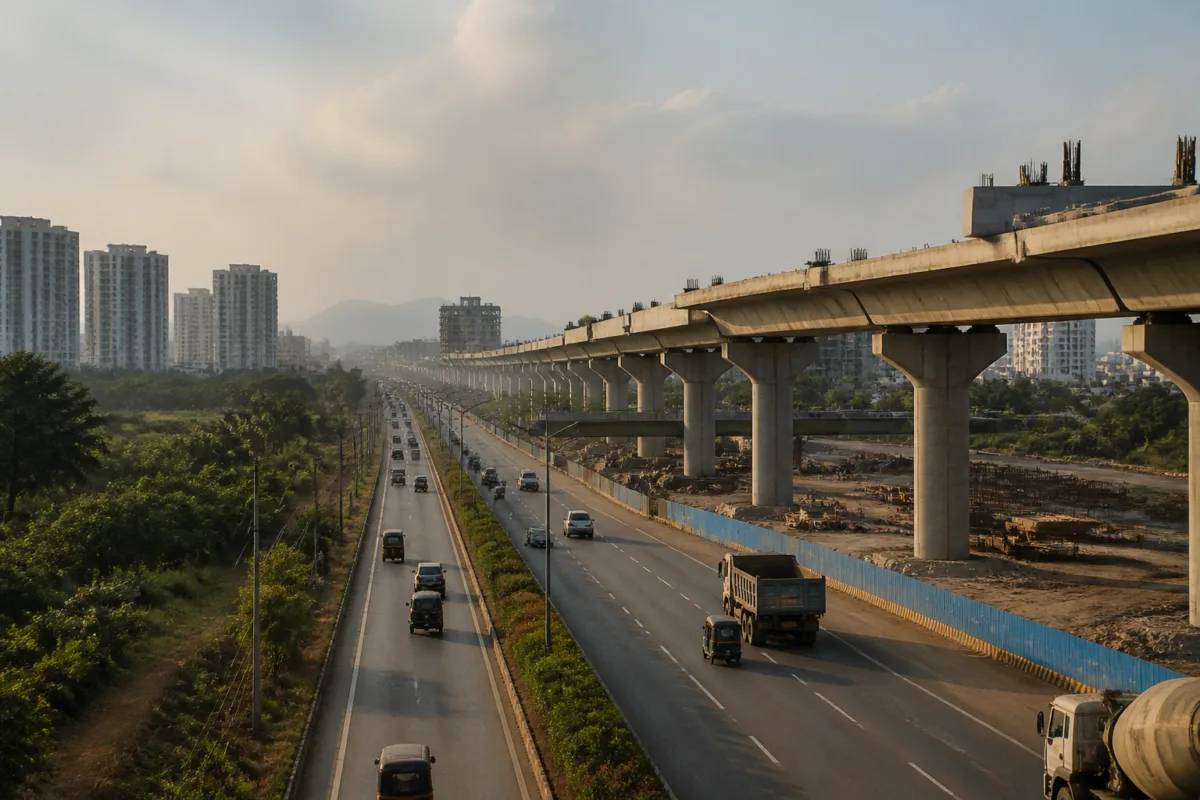
The proposed investment in the region would support metro systems, roads, flyovers, tunnels and other infrastructure, according to Fadnavis. He also said the state was planning a third Mumbai around Navi Mumbai International Airport and a fourth Mumbai in the Virar–Vadhavan corridor.
Fadnavis made the remarks at the third World Mayors’ Conference, organised in Mumbai to mark the centenary year of the All India Institute of Local Self-Government. Union Minister of State for Housing and Urban Affairs Tokhan Sahu, Mumbai Mayor Ritu Tawde, and mayors, urban administrators and representatives from India and abroad attended the event, Loksatta reported.
The proposed development around Navi Mumbai airport and the Virar–Vadhavan belt points to a wider expansion of the Mumbai region beyond its established urban centres. Vadhavan is also the location of a major port project, while the Navi Mumbai airport area is expected to become an important transport and logistics node. However, the report does not specify the boundaries, land-use plans, financing arrangements or delivery agencies for either proposed city.
Fadnavis said the state’s infrastructure strategy included about $50 billion of investment in the Mumbai Metropolitan Region. The report does not clarify how much of this amount has been committed, how much remains a target, or how the proposed projects would be sequenced over the five-year period.
He argued that cities should be treated as engines of economic growth rather than as problems to be contained. More than half of Maharashtra’s population lives in about 400 cities, he said, adding that planned urban development could improve living conditions while supporting economic growth. He also cited an estimate that cities account for about 65% of the country’s gross national product.
The chief minister linked unplanned urbanisation to the growth of informal settlements, inadequate civic services, water shortages and waste-management problems. His remarks place planning and service capacity at the centre of the proposed expansion, but the report provides no operational details on housing, water supply, sanitation, public transport or waste infrastructure for the new urban areas.
The investment target therefore represents a broad state-level direction rather than a detailed project programme. Its urban impact will depend on whether the proposed growth centres are supported by integrated land-use planning, transport links and basic municipal services, and on how the state converts the announcement into funded and approved projects.

