


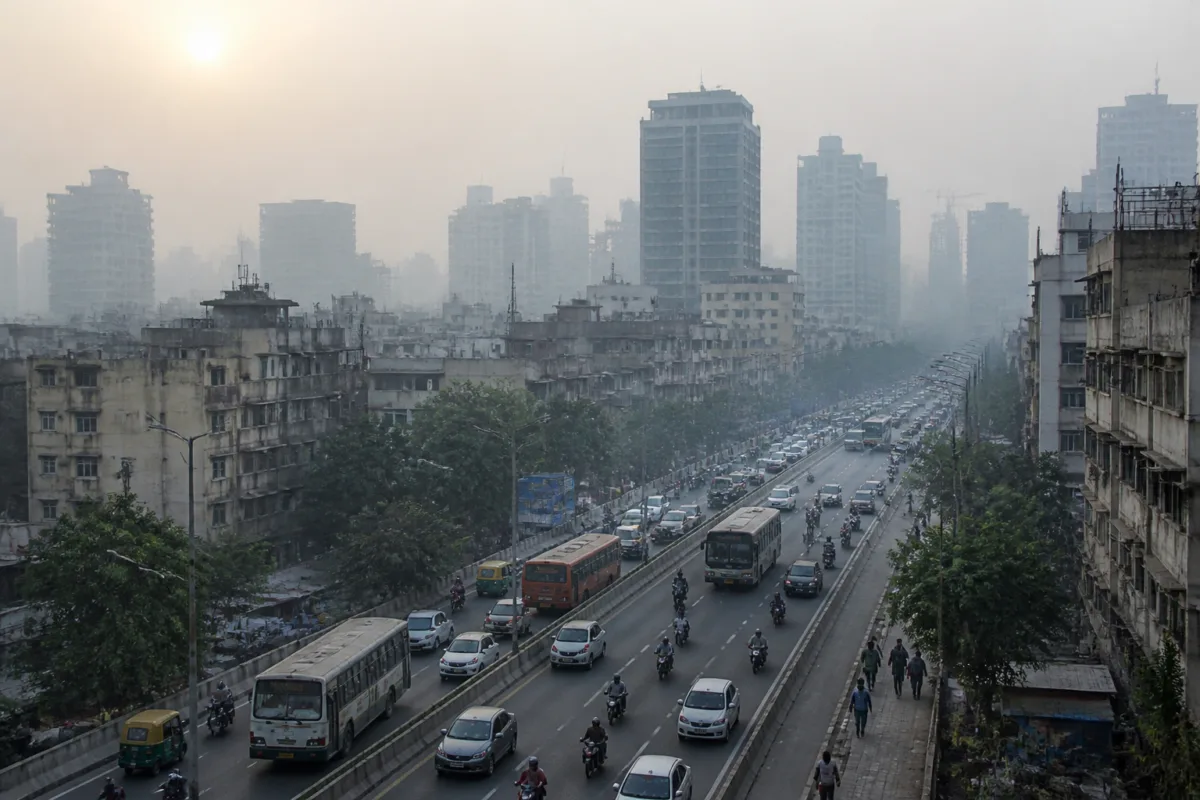
Air pollution may contribute to dementia by altering the activity of genes in microglia, the brain’s immune cells, according to a study published in the Journal of Neuroinflammation. The research combined health records from nearly half a million people in the UK Biobank with experiments involving mice.
The analysis found that people living in areas within the most polluted third were 25 per cent more likely to develop Alzheimer’s disease or a related form of dementia than those living in the least polluted third. The finding identifies a potential health consequence of long-term exposure to polluted air, although the population analysis does not by itself establish that pollution directly caused dementia in every individual case.
Researchers focused on fine particulate matter, known as PM2.5. These particles are small enough to enter deep into the respiratory system and are a common component of urban air pollution. In experiments, mice were exposed for five months to outdoor air from Cleveland in the United States, with PM2.5 concentrations similar to levels found in some of the world’s most polluted cities.
The otherwise healthy mice developed memory problems, inflammation in the brain and a leaky blood-brain barrier, which helps regulate what passes between the bloodstream and brain tissue. Their brains also showed changes in chemical indicators associated with energy balance and the ability to withstand injury and disease. Researchers recorded increased death of newly formed neurons in the hippocampus, the brain region involved in learning and memory.
Microglia normally help maintain brain health by clearing cellular debris and responding to infection. The study found that exposure to polluted air changed which genes were active in these cells, disrupting their normal regulatory functions. In mice genetically predisposed to Alzheimer’s disease, pollution produced similar damage and accelerated the accumulation of amyloid plaques, a characteristic associated with the disease.
“By recreating in mice what happens when people breathe polluted air, we found that pollution causes major changes in which genes are active in the brain’s immune cells,” Sanjay Rajagopalan, a senior author and professor of medicine at Case Western Reserve University, said, according to the report.
The authors described their human and experimental findings as support for PM2.5 being an environmental neurotoxicant. They also identified microglial regulatory changes as one pathway through which genetic background may influence the brain’s response to pollution.
For cities, the findings add a neurological dimension to the established concerns around particulate pollution. They suggest that air-quality management is relevant not only to respiratory and cardiovascular health but also to the protection of brain health. However, the evidence reported here does not quantify the risk for Indian cities, identify a specific safe exposure threshold for dementia prevention or assess which local pollution-control measures would be most effective.
The researchers said the work could support further study of how environmental stresses affect the ageing brain and how brain resilience might be protected when exposure cannot be completely avoided.

