


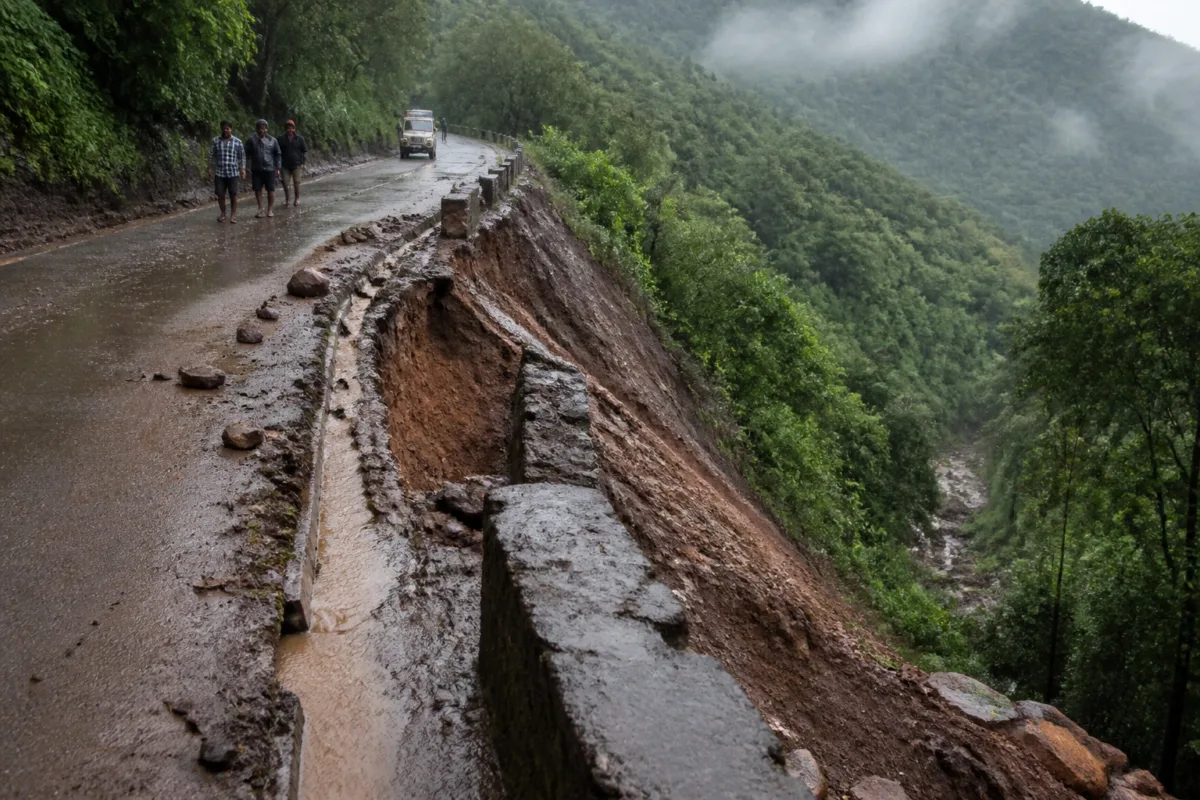
Tourism in Andhra Pradesh’s Alluri Sitharama Raju (ASR) district has been hit by damaged ghat roads, landslides, fallen trees, overflowing streams and disrupted bridges after three successive cyclones, with operators reporting a sharp fall in visitors during the peak winter season.
The district recorded 31,200 visitors up to November 24, compared with 75,400 in November last year, according to the report. October footfall was 94,500, around 30,000 higher than the corresponding figure last year, before the impact of the cyclones disrupted access to several hill destinations.
Popular attractions including Chaparai Waterfalls, Galikonda viewpoint, Katiki Waterfalls and Borra Caves were temporarily closed after the cyclones. All sites except Vanjangi Hills have since reopened, district tourism officer Chalapathi Vardhan Pattasi said, but visitor numbers remain substantially lower than in the previous month.
Vanjangi Hills remained closed after the Forest Department extended its closure by three weeks on November 17, citing safety concerns. The destination normally attracts more than 3,000 visitors a day during the peak season, according to the report. Its approach road was damaged by falling boulders and erosion.
Road damage has been reported in several agency mandals, including Ananthagiri, Dumbriguda, Paderu, Koyyuru, Chintapalli and Gudem Kothaveedhi. The affected network includes ghat roads connecting the hill destinations, making access and visitor safety central to the tourism disruption.
The Ananthagiri ghat road suffered extensive damage, with more than half the road width collapsing into the valley at some locations. The road between Araku and Chilakalagadda, including sections near Beesupuram and Galikonda viewpoint, was among the worst affected, while stretches between Sunkarametta and Tyda also reported landslides. Protective parapet walls and drainage structures were damaged in the affected areas.
The condition of these roads has affected the wider tourist circuit rather than only individual attractions. Temporary closures, unsafe approaches and uncertainty over access have reduced bookings across the hill region. K. Appala Naidu, a manager at resorts in Lambasingi, said the property was receiving more cancellation calls than bookings.
Borra Caves, described in the report as the most visited place in the agency, received fewer than 1,000 visitors on Tuesday, compared with more than 5,000 around the same period last year, Borra Caves manager K. Gowri Shankar said.
The fall in arrivals is also affecting communities and small businesses whose incomes depend on the tourist circuit. The report identifies tribal communities, homestay operators, resort owners, guides, jeep operators and small traders among those facing reduced business.
The Andhra Pradesh Tourism Development Corporation operates 15 cottages in the area, while another 200 cottages are run by private operators, according to the report. Reduced occupancy therefore affects both public tourism facilities and a larger private accommodation network.
District officials have said the sites have reopened apart from Vanjangi Hills, but the report does not provide a comprehensive account of road-repair work, restoration costs or a full reopening schedule for damaged approaches. It also reports that the possibility of another cyclone by the end of November could further discourage visitors.
For ASR’s tourism economy, the disruption shows how destination recovery depends on the resilience of the access network as much as on the reopening of individual attractions. Until damaged roads, drainage systems, protective walls and bridge approaches are made safe, reopening sites alone may not restore movement across the hill circuit.

