


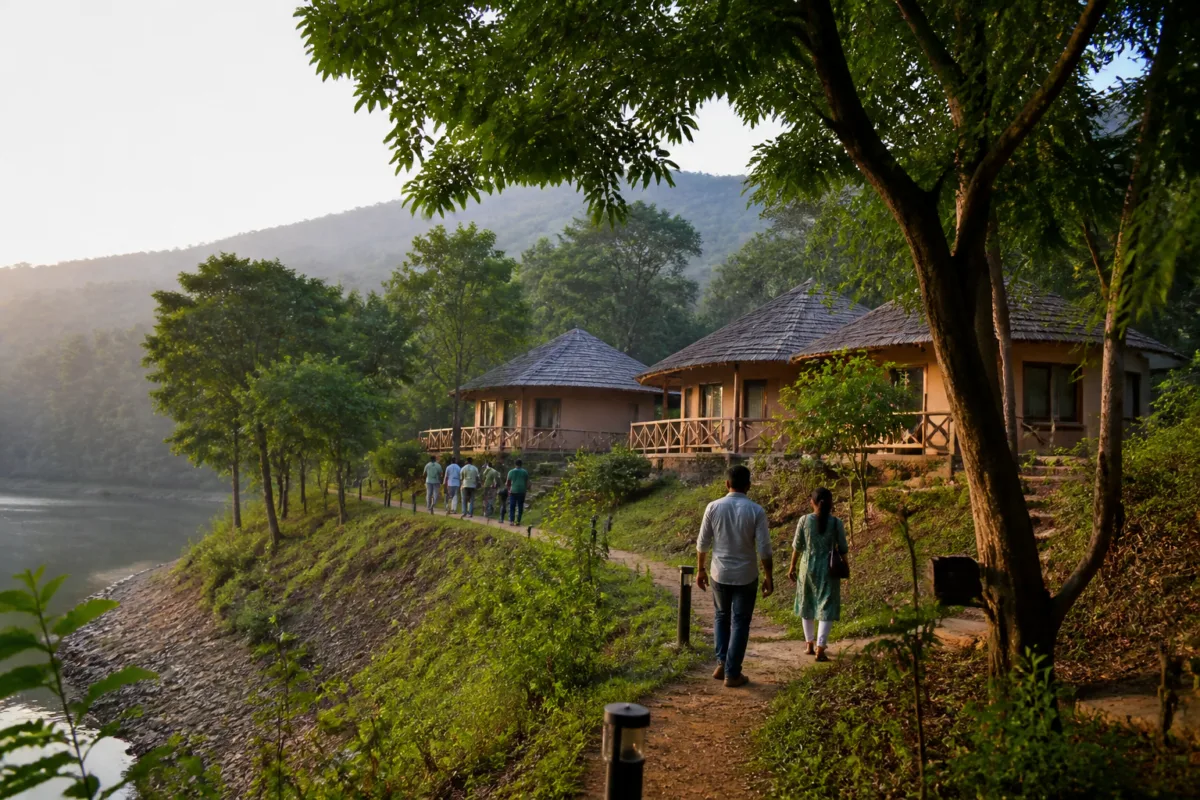
Ganjam district’s ecotourism network in Odisha combines forest landscapes, water bodies, beaches and wildlife habitats with visitor facilities such as cottages, nature camps and proposed beach tents, according to a report by Dharitri.
The report traces the state’s organised ecotourism initiative to a 1993 plan for forest management aimed at protecting nature while providing recreation. An agreement was subsequently made with the Odisha Tourism Development Corporation to begin ecotourism at 22 forest locations across the state’s 30 districts.
Over the years, Ganjam has developed a range of sites across its forest divisions and coastal areas. Locations identified in the report include Singharaj Hill near Samantiapalli, Ghodahada Dam near Digapahandi, Taptapani, Tampara in Chhatrapur, Sunapur beach in Chikiti block and Gopalpur beach.
The district’s ecotourism offerings also include wildlife and wetland destinations. Peafowl are found in the Pakidi area near Asika, while blackbuck are seen in the Bhetanai area near Buguda, the report said. Other locations include the Baghua reservoir, an ecopark, Kurum pond at Golia, Dah Dam near Bhanjanagar, Biju Patnaik Park managed by the Water Resources Department, and forest areas at Kaliaamba near Ragada and Cheramaria.
Visitor infrastructure varies across the destinations. The report refers to small cottages, air-conditioned and ordinary rooms, nature camps and beach-based facilities. It says Sunapur beach, which has Blue Flag recognition, was scheduled to receive 40 tents for the current season. The tents were planned to open from 1 December for 120 days, with accommodation and food arrangements available for visitors.
The report identifies several institutions involved in managing ecotourism, including the Forest Department, Tourism Department, local self-help groups, forest protection committees and eco-development committees. Retired forest employee Bijay Kumar Hota said these groups contribute to the management of the sites. The report also says agencies have been assigned responsibility for the protection of ecotourism areas at Sunapur, Gopalpur and Tampara.
District Tourism Officer Janak Kumar Tarai said some locations, including Ghodahada, Bhetanai and Cheramaria, have ecotourism activity but do not yet have formal recognition. According to the report, revenue collected at these locations is being used for their improvement.
Brahmapur Divisional Forest Officer Soni Khokhar said the department’s objectives include connecting future generations with nature, improving the economic condition of communities near forests, involving them in forest protection, and providing students and researchers with fact-based learning opportunities. She also linked ecotourism with greater awareness of forest and wildlife conservation.
Ganjam’s model therefore extends beyond tourism accommodation. It brings together protected landscapes, reservoirs, beaches, parks and wildlife areas with local management structures and visitor infrastructure. The report also indicates that the district’s destinations are at different stages of development: some have formal recognition and planned facilities, while others operate without that status. That uneven institutional recognition remains an important part of how the network is being expanded and maintained.

