


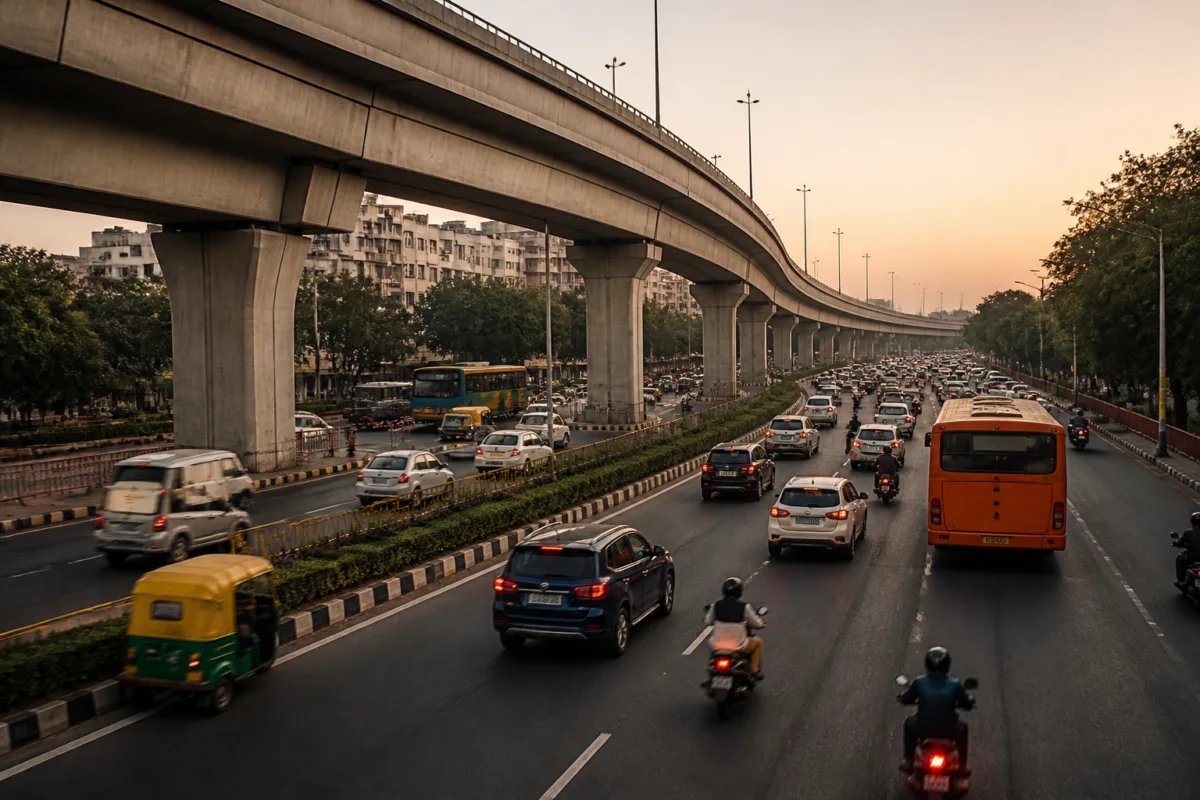
Delhi is working on 10 signal-free corridors aimed at improving traffic movement, with proposed road expansions, flyovers, tunnels and junction-level interventions, according to a report citing the Public Works Department (PWD).
The PWD presented the projects during a review meeting on pollution chaired by Delhi Chief Minister Rekha Gupta, the report said. The department indicated that signal-free movement has already improved on part of Vikas Marg, Mathura Road near the Supreme Court metro station and the Barapulla flyover.
In south Delhi, the Modi Mill flyover is being extended. Construction has also started on a parallel flyover at the Savitri Cinema junction. According to the report, these works are intended to strengthen a signal-free route from Modi Mill through Kalkaji to the IIT Gate.
North Delhi is expected to see another major intervention. The Munnak Canal elevated road is proposed to be extended towards Kashmere Gate. The plan includes a proposed tunnel of about four kilometres between Inderlok and ISBT Kashmere Gate. If implemented, the corridor would connect the Delhi-Haryana border with central Delhi through a more continuous route, the report said.
The Delhi Traffic Police has separately given the PWD a list of 538 locations requiring traffic improvements. The locations include Metcalfe House, Kingsway Camp, Azadpur and Madhuban Chowk, which have been identified as congestion-prone areas.
Suggested measures at these locations include additional U-turn lanes, foot overbridges, changes to signal timings and road widening. The report did not specify the implementation schedule, project costs or the locations of all 10 proposed corridors.
A further interchange is also being planned at Kalindi Kunj with financial assistance from the Central government, according to the report. Details of the proposed design, approvals and construction timeline were not provided.
The projects reflect Delhi’s current focus on reducing stops at major junctions and increasing road capacity through grade-separated infrastructure. Their effect on pedestrian movement, public transport access, local traffic circulation and construction-related disruption will depend on the final designs and implementation plans.

