


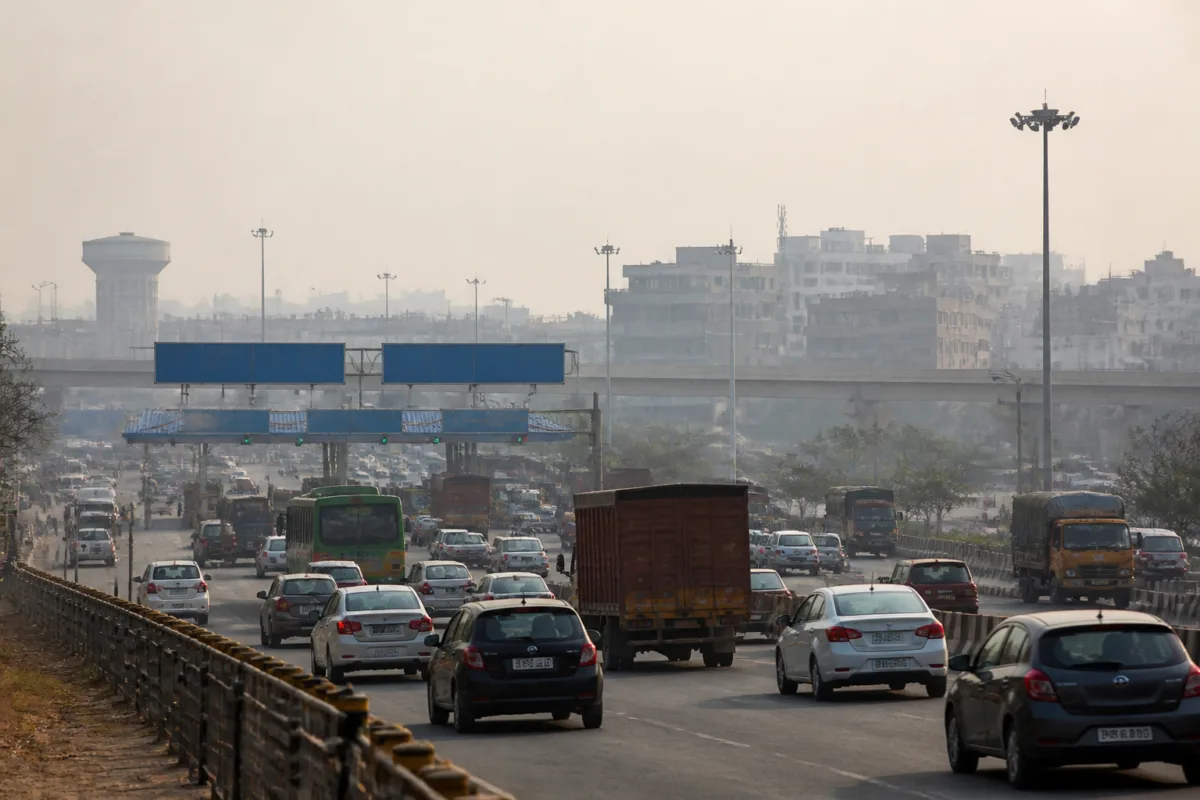
The Supreme Court is considering whether Delhi should allow only BS-VI vehicles to enter or operate in the national capital as part of efforts to address the recurring air-pollution crisis in Delhi-NCR, the Deccan Chronicle reported on Monday, November 23.
A three-judge bench comprising Chief Justice of India Surya Kant and Justices Joymalya Bagchi and V. Mohana was hearing a suo motu case on the regulatory framework for air pollution when the proposal was raised. Justice Bagchi said the court wanted only BS-VI vehicles in Delhi, and possibly across the National Capital Region.
The court has not, according to the report, issued a final order imposing such a restriction. The discussion instead focused on whether tighter vehicle standards could help mitigate pollution and how any restrictions would affect the movement of goods into the city.
BS-VI vehicles comply with India’s latest vehicle-emission standards, which were introduced for vehicles manufactured, sold and registered in India from April 1, 2020. The standards are aligned closely with Euro 6 norms and are intended to reduce harmful exhaust pollutants compared with older BS-IV vehicles.
The bench also discussed a longer-term system under which polluting commercial vehicles would not enter Delhi. The Chief Justice asked how the city could continue receiving vegetables, fruits and other daily necessities if commercial vehicles were stopped at the border.
One option raised during the hearing was the creation of warehouses at the NCR border, followed by the use of battery-operated or otherwise non-polluting vehicles to transport supplies into Delhi. The Chief Justice said such an arrangement might not be possible this year or next year, but questioned why it could not be developed over a five-year period.
The proposal would require coordination between Delhi and neighbouring NCR states, as well as arrangements for freight transfer, storage and last-mile distribution. The court’s comments indicate that any future restriction would need to address both vehicle emissions and the uninterrupted supply of essential commodities.
The bench also sought accountability from Haryana, Punjab, Uttar Pradesh and other concerned states. It directed them to submit status reports on measures taken to reduce particulate pollution across the NCR.
The court has previously identified vehicular emissions as a major contributor to deteriorating air quality and questioned why the air-quality index remains alarming despite existing regulatory measures. It has also highlighted the large number of vehicles travelling on roads linking Delhi with Ghaziabad, Greater Noida, Gurugram and Faridabad.
The hearing places vehicle eligibility, regional freight planning and inter-state pollution control at the centre of the court’s continuing scrutiny. The next steps will depend on the status reports and any directions issued after the court examines the proposed restrictions and their effect on urban supply chains.

