


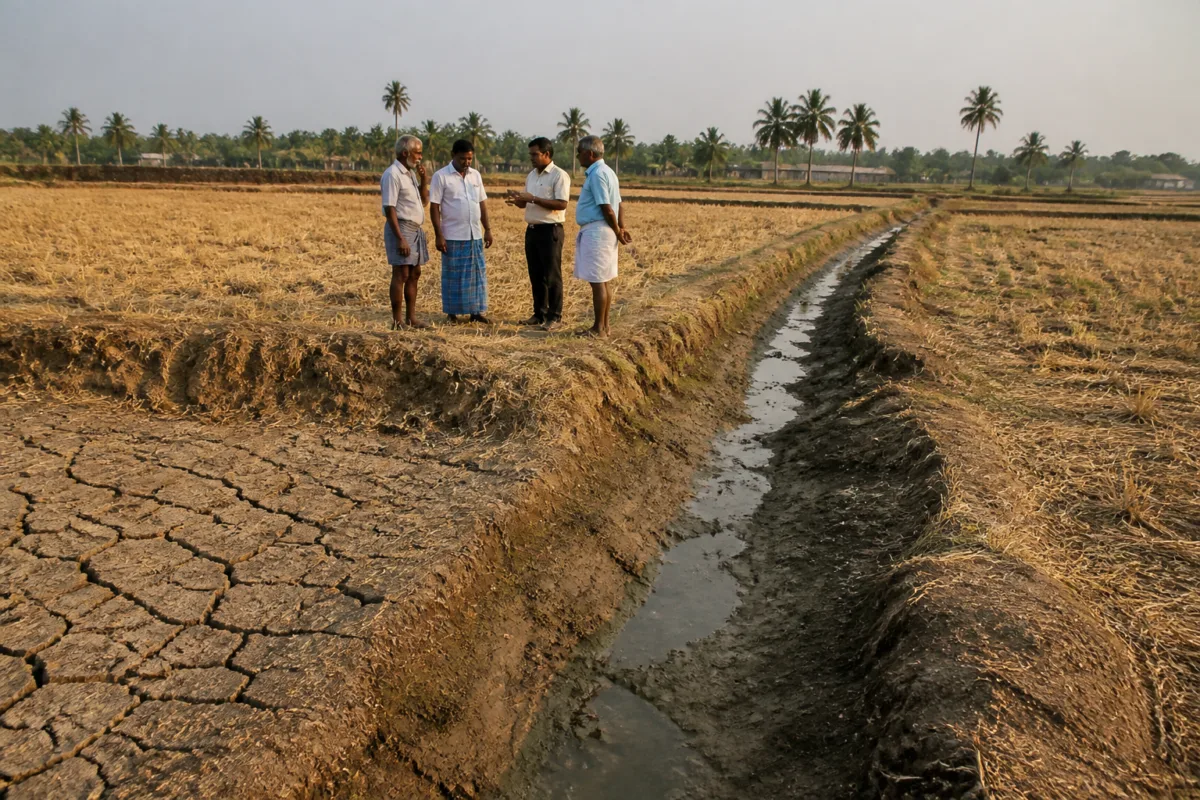
The formation of a seven-member committee to assess water and crop-related grievances in Tamil Nadu’s Cauvery delta has put delayed irrigation, drought-relief demands and paddy procurement under renewed political scrutiny.
The committee was announced by DMK president and former Chief Minister M K Stalin. According to a DMK press release reported by Deccan Chronicle, its members will tour the delta districts and hear the demands of farmers and other residents before identifying their specific needs.
The party said farmers had suffered because water was not released from Mettur Dam on time and because the government had not declared the Cauvery Delta region drought-affected. It also claimed that low rainfall, particularly in catchment areas, had left lakes dry and reduced storage in the state’s dams to 36 percent. These assertions were made by the DMK and were not independently verified in the report.
The committee includes Trichy Shiva MP, M R K Panneerselvam MLA, A K S Vijayan, Durai Chandrasekaran MLA, Arun Nehru MP, Murasoli MP and Senthil Selvan MLA. Its remit covers the difficulties faced during the Kuruvai and Samba cultivation seasons, with the party alleging that farmers had not received the full benefit of either crop cycle.
The DMK also alleged that Mettur Dam was opened too late to meet farmers’ demands and that paddy crops were being damaged because of inadequate water. It linked the situation to the wider dispute over Tamil Nadu’s share of Cauvery water, accusing the TVK government of failing to press Karnataka for monthly releases and of not responding adequately to the proposed Mekedatu Dam.
The source report does not include a response from the Tamil Nadu government or Karnataka authorities, nor does it provide official reservoir data, water-release records or an independent assessment of crop losses. Those gaps leave the committee’s findings important for establishing whether the grievances reflect localised shortages, wider seasonal stress or shortcomings in water-allocation and relief implementation.
The party further criticised a reported decision to shift direct paddy procurement from the Consumer Goods Corporation to cooperative organisations, saying the change could affect farmers. It also alleged that the government had not honoured its promise to waive crop loans.
The committee’s district-level consultations could therefore become a political assessment of both immediate farm distress and the state’s broader approach to irrigation, procurement and drought response. Its eventual findings, however, will need to be accompanied by official water data, details of relief measures and clearly documented recommendations before the scale of the problem and the effectiveness of any proposed intervention can be evaluated.

