


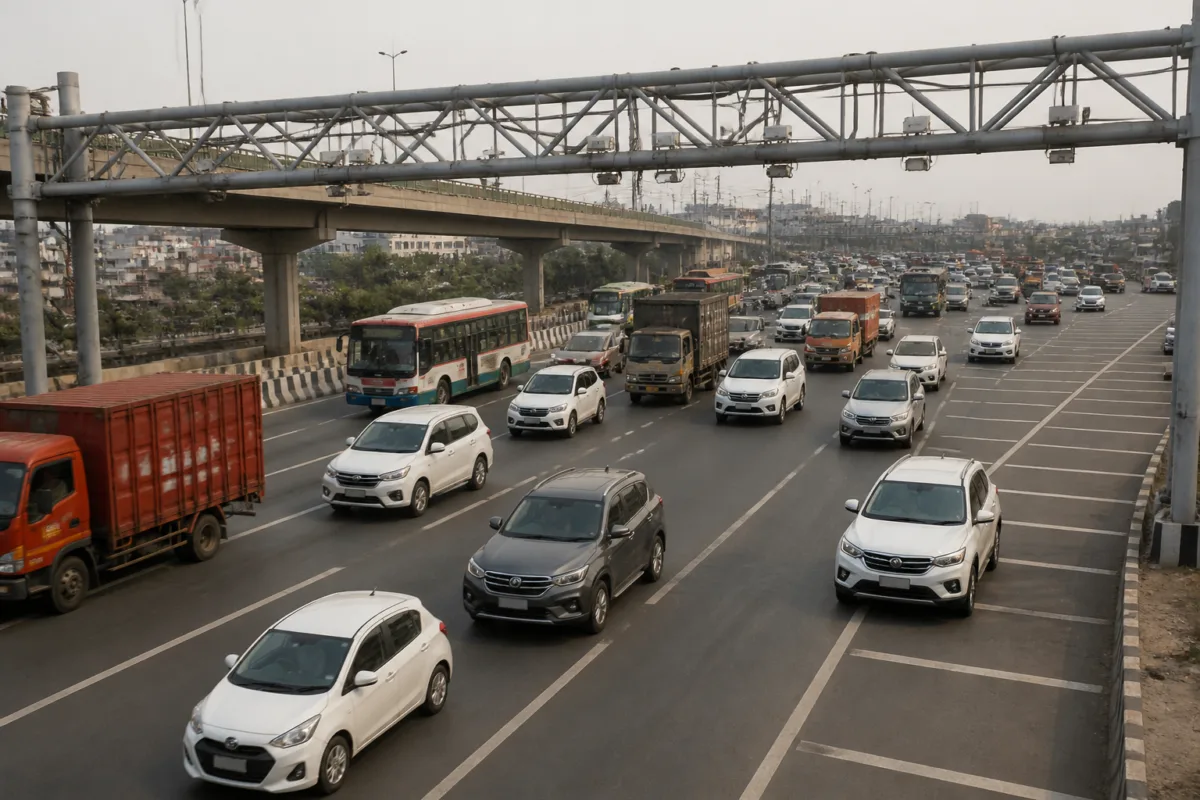
The Municipal Corporation of Delhi (MCD) is preparing to introduce a multi-lane free-flow (MLFF) toll system at 154 entry points into the capital, allowing vehicles to pass toll points without stopping, Live Hindustan reported on November 22.
The system is intended to reduce queues at Delhi’s border toll plazas, particularly at busy entry points such as Badarpur and Ghazipur. The report said trials are already under way at some locations, while the project is expected to be completed soon. It did not provide a specific completion date, project cost or official estimate of the number of vehicles that would be covered.
Under the proposed arrangement, toll collection would use radio-frequency identification (RFID) technology and automatic number-plate recognition. Sensors would scan RFID tags fitted to vehicles, while cameras would capture registration plates so that the applicable toll could be deducted without requiring vehicles to stop at a booth.
The reported aim is to reduce waiting time and vehicle idling at entry points. Live Hindustan said shorter queues could also help lower emissions from engines running while vehicles wait, although no measured reduction in congestion or pollution has yet been provided.
The report said the MCD is distributing information leaflets to explain the new tolling arrangement to road users. It also said the system is designed to function even when vehicles are travelling at speeds of up to 100 kmph, though the report did not provide technical specifications, enforcement procedures or details of how vehicles without readable tags or plates would be handled.
The development comes as the National Highways Authority of India works on plans to expand MLFF tolling across the country, according to the report. For Delhi-bound commuters and commercial vehicle operators, the immediate public-interest questions will be the locations covered, the toll payment and dispute process, and the safeguards for vehicles that are incorrectly identified or charged. These details were not specified in the report.

