


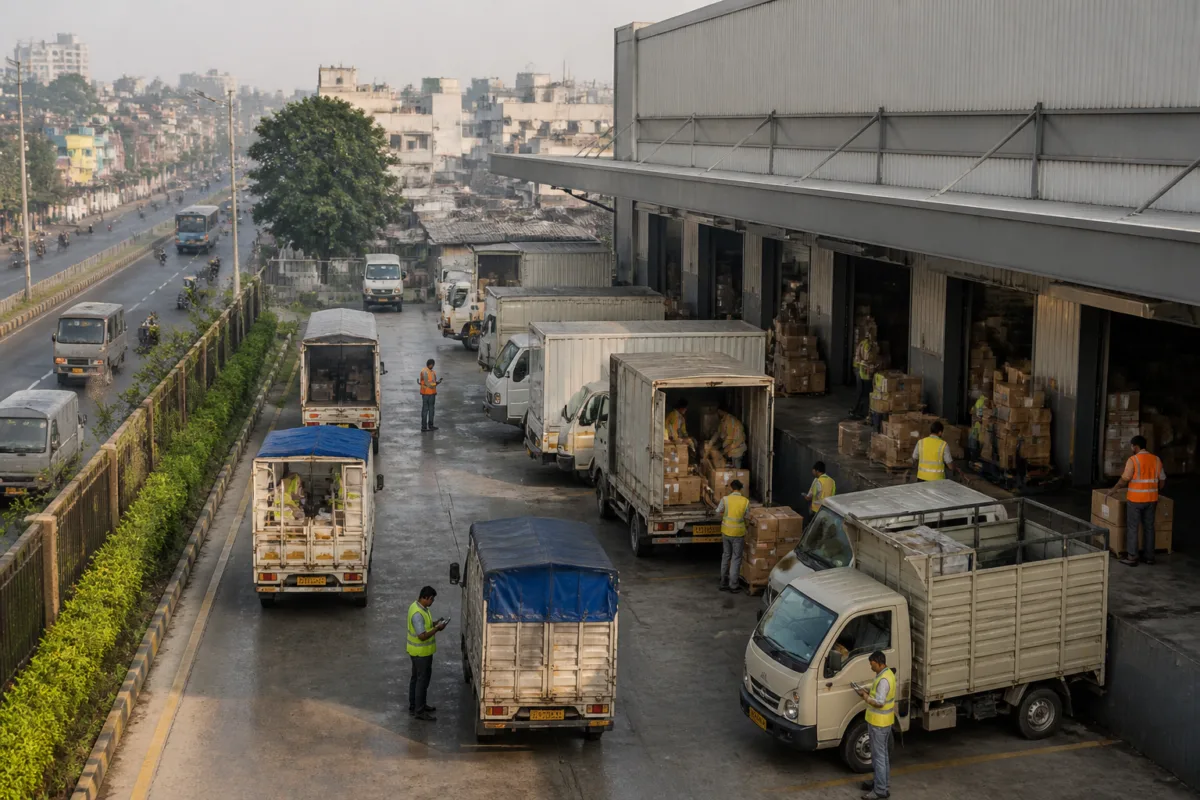
Flipkart Wholesale logistics optimisation has reduced the company’s logistics expenditure by 6% and vehicle deployment by 8% across its pan-India distribution network, according to the company and delivery management platform provider FarEye.
The companies said the improvements followed the digitisation of dispatch, routing, compliance and payment collection processes across 26 stores and one cross-dock. The network handles more than 200,000 orders and about 195,000 vehicle assignments each month, making the reported changes relevant to the efficiency of wholesale distribution and last-mile delivery operations.
FarEye’s platform has digitised the dispatch workflow and provides visibility across distribution activities, the companies said. It uses dynamic routing and fleet optimisation tools to improve vehicle utilisation and delivery schedules. The partnership has also reduced vehicle idle time by 10% and return-to-origin rates by 1%, while maintaining delivery efficiency, according to the statement.
The system automates e-way bill generation and integrates UPI payments into delivery operations. The companies said the digital payment integration generated direct savings of 0.25% on cash collected by reducing reliance on manual processes and cash collection.
The reported results indicate how distribution operators can seek additional capacity from existing fleets and facilities rather than relying only on expansion. For urban delivery systems, better routing and lower idle time can affect how frequently vehicles enter and leave stores, cross-docks and local distribution areas. However, the source does not provide details on changes in vehicle kilometres, emissions, delivery-worker conditions, delivery geographies or whether the reported savings are being passed on to wholesale customers.
Gautam Kumar, chief operating officer of FarEye, said distribution could not scale only by adding capacity and would need to use existing capacity more intelligently. He said the physical distribution infrastructure supporting India’s retail ecosystem had not kept pace with the growth of digital payments and procurement.
The partnership reflects the increasing use of digital systems in wholesale distribution, including automated compliance documentation, electronic payments and route planning. The companies cited an ecosystem of more than 1.4 crore kirana stores, which they said accounts for an estimated 75–80% of India’s fast-moving consumer goods sales. The statement does not identify the specific locations of the 26 stores or the cross-dock, limiting assessment of the initiative’s city-level effects.

