


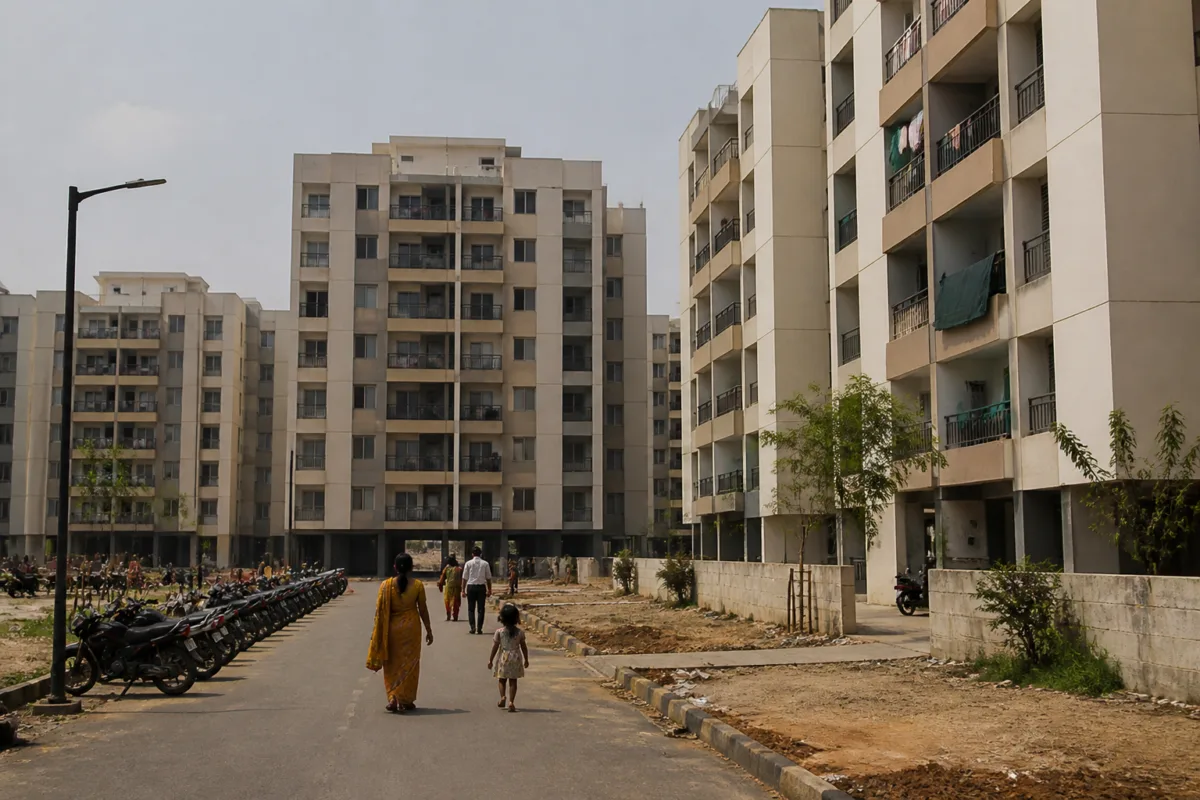
Ahmedabad’s housing allocation process has come under political scrutiny after a Congress MLA alleged that only eight Muslim families received homes out of 2,160 units developed under an economically weaker section (EWS) scheme in Sarkhej, while a BJP MLA rejected the allegation and said the draw was conducted according to the rules.
The dispute relates to EWS-76 in Town Planning Scheme 85, an area described by Congress MLA Imran Khedawala as having a Muslim majority. The homes were allotted through a draw held on November 9 in the presence of Union Home Minister Amit Shah, according to a report by Nav Gujarat Samay.
Khedawala raised the issue at a coordination committee meeting of Ahmedabad’s MPs and MLAs, chaired by the municipal commissioner. He alleged that the low number of allotments to Muslim families reflected deliberate discrimination and claimed that some Hindu families had also objected to being allotted homes near Muslim residents.
The MLA further said that residents from both communities wanted housing to be allotted according to the religious composition of neighbourhoods. Such a basis for public housing allocation was presented in the report as a demand made by the elected representatives and residents; the report does not provide an official policy document establishing that community-based allocation is part of the scheme’s rules.
BJP MLA Amit Thaker, who represents Vejalpur, dismissed Khedawala’s allegations as baseless. He said the entire draw process had been conducted transparently and in accordance with applicable rules. The report does not include the published beneficiary list, the eligibility criteria, the draw methodology or an official statement from the Ahmedabad Municipal Corporation explaining the distribution.
Those missing documents are central to assessing the dispute. The number of beneficiaries from any community alone cannot establish whether the allocation was discriminatory without information on the applicant pool, eligibility status, reservation or quota provisions, and the process used to conduct and audit the draw. Public disclosure of these records would allow applicants and residents to examine whether the scheme was implemented consistently.
The same coordination meeting also examined the design of a bridge being built between Narol and Sarkhej through coordination among the central government, the Gujarat government and the municipal corporation. Khedawala argued that the structure required ramps for vehicles to access and leave the bridge. Without suitable ramps, he said, motorists could face inconvenience and existing traffic problems might continue.
The report does not specify the bridge’s approved design, construction stage, agency responsible for the design or whether a technical review of the ramp demand has been ordered. Both issues therefore remain matters for documented administrative clarification: the housing dispute requires disclosure of the allotment process and beneficiary data, while the bridge concern requires the approved design and traffic-access plans to be made public.

