


Andhra Pradesh’s preparations for the 2027 Godavari Pushkarams include 4,862 proposed works across 22 districts, with an estimated cost of ₹3,723.69 crore, as the state plans to manage an expected 10 crore devotees during the 12-day religious event from June 26 to July 7, 2027.
The scale of the plan places temporary and permanent urban infrastructure at the centre of the state’s preparations. According to officials cited in a review meeting at Amaravati, administrative approvals have been granted for 2,260 works worth ₹2,051.70 crore. Of these, 659 works costing ₹649.70 crore have started, while 69 works worth ₹25.53 crore have been completed.
Chief Minister N. Chandrababu Naidu directed departments to upload district-wise progress and expenditure details on a dedicated portal. He also called for early training of personnel and coordination meetings involving departments and community organisations, including voluntary groups, youth organisations and women’s associations.
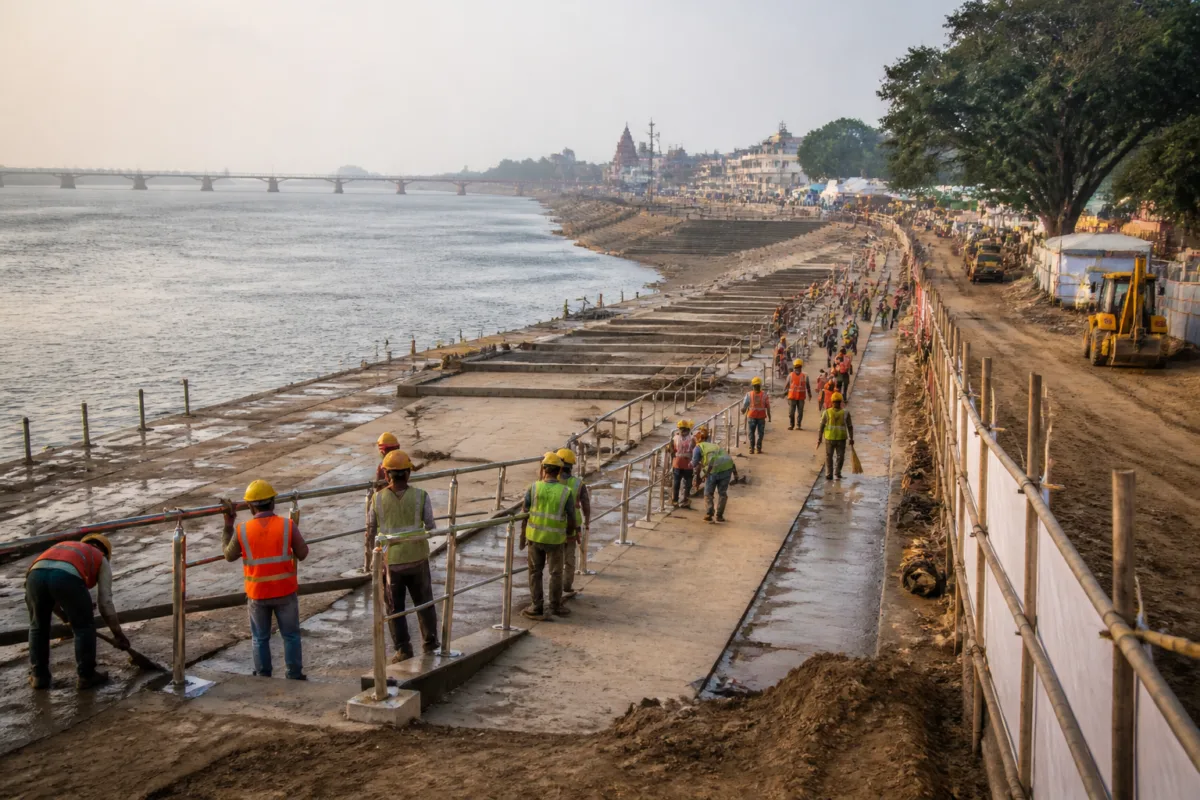
Infrastructure is being planned at 440 bathing ghats along the Godavari River. The proposals include ₹464 crore for temporary toilets, sanitation staff, waste management, drinking water and lighting. Additional arrangements are planned for religious rituals, accommodation, parking and other basic amenities.
The preparations also indicate the likely traffic and crowd-management pressures around key riverfront and transport locations. Alternative roads are proposed to reduce congestion, while barricades would be installed along 268.12 km to regulate vehicle movement. The Transport Department plans to operate 4,000 special buses, including 649 green buses. Railways is expected to run 1,560 special trains, with additional platforms and foot overbridges proposed at Rajahmundry railway station.
The planned transport response will require coordination between road authorities, bus operators, railway agencies, local administrations and crowd-control teams. The report does not provide details of the proposed alternative road alignments, construction schedules, land requirements or the agencies responsible for each work. Those details will be important for assessing whether the infrastructure can be delivered before the event.
The state also plans to establish an advanced command-and-control centre to monitor arrangements. An artificial intelligence-based chatbot is proposed to provide information in 135 languages to visitors from India and abroad. These digital systems are intended to support information access and operational coordination, although the report does not specify the technology provider, launch date, data safeguards or the services that will be integrated with the platform.
Healthcare and emergency-response arrangements include an additional 100 beds at Rajamahendravaram Government Hospital, along with ambulances, medical teams and emergency services. The government has also set a target to complete modernisation and development works at Sir Arthur Cotton Barrage by April 2027. Officials said Polavaram project works would be completed and inaugurated before the Pushkarams.
Six floating pontoons are planned along the 40-km water route between Rajamahendravaram and Polavaram. The proposal could expand river-based access during the event, but the source does not specify the pontoons’ locations, capacity, safety arrangements or operating authority.
Environmental management is another stated component of the plan. The government is considering measures to reduce plastic use, dispose of waste scientifically, protect Godavari water quality and promote renewable energy. These objectives will depend on how sanitation, collection, segregation and disposal systems operate across the bathing ghats and surrounding settlements during the peak visitor period.
The programme may also include cultural and spiritual events such as Godavari River Harathi, a mass Kuchipudi performance, extensive lighting, a Godavari-themed rangoli display and collective yoga programmes. Together with the transport, health and riverfront works, these plans show that the Pushkarams are being approached as a large-scale temporary urban-management exercise as well as a religious gathering.
The figures reported so far represent a government action plan and a mix of proposed, approved, ongoing and completed works. The next public-interest test will be whether district-level progress, spending, responsibilities and completion dates are disclosed consistently, particularly for sanitation, crowd movement, rail access, emergency care and protection of the river environment.

