


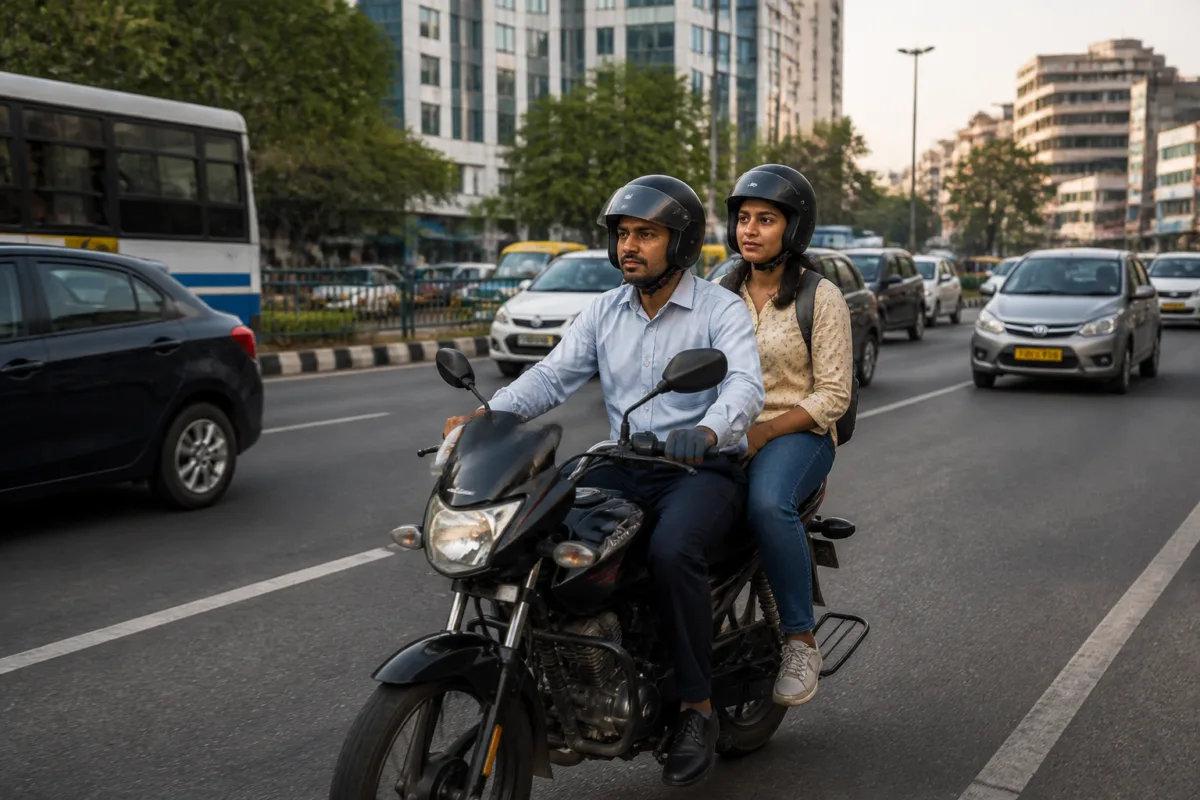
The Supreme Court has dismissed the Karnataka government’s special leave petition against a High Court order permitting app-based bike taxi services, allowing operators such as Ola, Uber and Rapido to function subject to applicable regulatory requirements.
A bench comprising Justices N Kotiswar Singh and Satish Chandra Sharma held that a complete ban was not necessary where concerns could be addressed through an adequate regulatory framework, according to a PTI report published by Prajavani. The bench also questioned the state’s concerns about traffic congestion, observing that motorcycles occupy less road space than cars.
The ruling upholds a January 23 order of a Karnataka High Court division bench. That order stated that motorcycles used for bike taxi services fall within the definition of transport vehicles under the Motor Vehicles Act, 1988. It also said eligible motorcycles would have to be issued contract carriage permits under Section 74 of the Act after the required applications were submitted.
The High Court had earlier directed that bike taxis should not operate until guidelines and rules were framed under the 1988 Act. Service providers challenged that direction, leading to the subsequent proceedings before the division bench and the Supreme Court.
The Karnataka government will have to comply with the Supreme Court’s order. The state government, however, is considering a regulatory framework after further discussions with the Advocate General, the report said. Officials have been directed to work on rules covering the documentation of bike taxi riders, GPS installation, vehicle insurance and other records.
The Supreme Court bench also referred to the affordability of bike taxis. Justice Sharma recounted a conversation with a young woman working in his office who used a bike taxi because she could not afford a conventional taxi and said an autorickshaw would cost substantially more.
Respondents in the case argued that about 150,000 gig workers in Karnataka depend on bike taxis for income, with most based in Bengaluru, and that about 450,000 passengers in the state had benefited from the service. These figures were presented during the proceedings and were not independently verified in the report.
The ruling provides Karnataka with a legal basis to regulate bike taxis rather than prohibit them. The report also said motorcycles may be used as taxis under a notification issued by the Union Ministry of Road Transport and Highways, and that bike taxi services are operating in 25 states. The practical effect in Karnataka will depend on the rules, permits, insurance requirements and other compliance conditions that the state ultimately adopts.

