


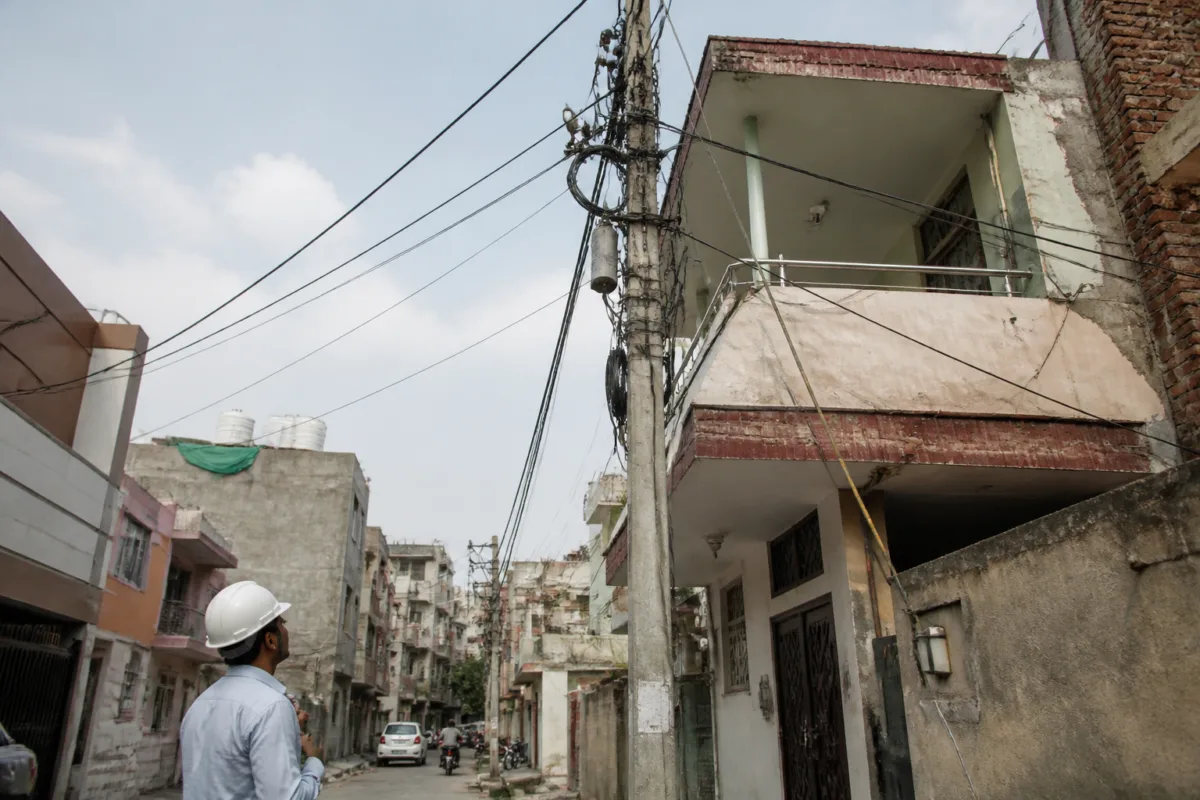
Unauthorised building extensions around electricity poles, wires, transformers and substations have prompted 84,334 safety notices from Delhi’s two major power distribution companies since 2025-26, highlighting a recurring conflict between dense construction and basic electrical clearances.
BSES issued 80,263 notices and Tata Power-DDL issued 4,071, according to figures reported by the discoms. The notices cover unsafe constructions around electrical infrastructure, including balconies, rooftops, verandas and chhajjas.
Some cases involved electricity poles being incorporated into occupied parts of homes. Tata Power-DDL officials said a pole in Patel Nagar had become part of a bathroom and was located only a few centimetres from the commode chair. The discom said the unauthorised construction was demolished and the required safety clearance was restored.
In another case in north Delhi, a pole was found passing through the centre of a consumer’s balcony. The encroachment was removed, officials said.
The cases illustrate how incremental additions to buildings can create risks beyond the individual property. According to BSES, unresolved violations can increase the risk of electrocution and electrical fires, disrupt power supply and obstruct maintenance work. The discom said such cases are referred to the special task force and civic authorities, including the Municipal Corporation of Delhi, the Delhi Development Authority and Delhi Police.
Tata Power-DDL, which serves north and parts of northwest Delhi, said its unauthorised construction control team issued 4,071 safety notices between 2025 and November 1, 2026. Officials said awareness campaigns and interim orders resulted in voluntary compliance in most cases. Interim removal orders were issued in 2,374 cases, while demolition orders were sent to individual property owners in 733 cases where hazards persisted.
BSES, which serves south, west, east and central Delhi, issued more than 44,000 notices in 2025-26 and over 35,500 up to November 20, 2026, officials said. Its notices covered construction around poles, overhead wires, transformers and substations.
The enforcement process involves more than the discoms. BSES officials said cases that remain unrectified are referred to civic and administrative authorities for action. Tata Power-DDL also said its teams work with government authorities, while describing awareness and voluntary compliance as its preferred approach and enforcement as a last resort.
The safety rules cited by the discoms prescribe minimum vertical and horizontal clearances that vary according to the voltage of the line. For lines up to 650 volts, the minimum vertical clearance is 2.5 metres and the horizontal clearance is 1.2 metres. For lines above 650 volts and up to 11kV, the vertical clearance is 3.7 metres and the horizontal clearance is 1.2 metres. For lines above 11kV and up to 33kV, the vertical clearance remains 3.7 metres while the horizontal clearance rises to 2 metres.
Residents can report unsafe constructions and electrical hazards to BSES on 19123 in south and west Delhi and 19122 in east and central Delhi. Tata Power-DDL’s helpline is 19124.
The reported enforcement activity places electrical safety within Delhi’s wider building-governance challenge: ensuring that additions made within or around existing properties do not compromise infrastructure designed to serve the wider neighbourhood. It also shows that resolving such hazards requires coordination between discoms, property owners, civic agencies and local administration, rather than action by the electricity provider alone.

