


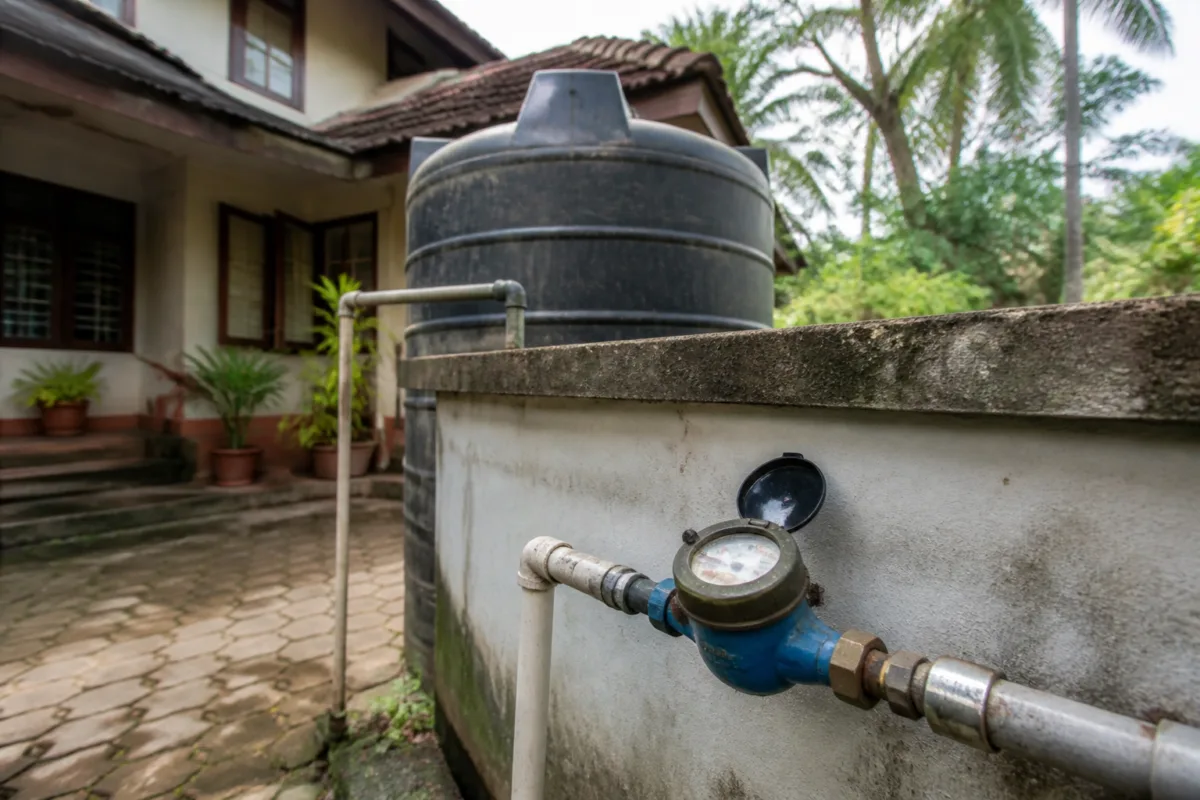
A consumer commission in Kottayam has ordered the Kerala Water Authority (KWA) to cancel a disputed water bill of Rs 5,218, test the household’s meter and reassess the charges according to legally ascertainable consumption.
The District Consumer Disputes Redressal Commission also directed KWA to refund any excess amount collected and pay Rs 20,000 as compensation for mental agony and Rs 5,000 towards litigation costs. The total compensation and costs of Rs 25,000 must be paid within 30 days, after which interest will apply, according to the order reported by The Times of India.
The complaint was filed by Gigi Philip Vettithanam and Ancy G Philip, residents of S B High School Ward in Changanassery. KWA had billed the family for 1,48,000 litres during August-October 2025. The complainants said they had not used water from the connection during that period because their household relied on a private well and kept the KWA connection as a backup.
Records cited in the report showed that consumption from January 2022 to August 2025 had generally ranged between two and five kilolitres. The family usually paid the minimum bi-monthly charge of about Rs 145. KWA’s own inspection report also found that the connection supplied only a 500-litre tank, according to the commission’s proceedings.
On October 15, 2025, the complainants submitted three applications seeking cancellation of the bill, temporary disconnection and technical testing of the meter. They alleged that the applications were not acted on promptly, that access to KWA’s online portal had been blocked and that they were asked to remove the government-owned meter themselves and take it to a KWA office. They further alleged that payment of the disputed amount was sought as a condition for temporary disconnection.
The commission held that KWA’s conduct amounted to deficiency in service. It cancelled the bill and directed the authority to test the meter, issue a fresh bill based on actual consumption and refund any excess amount collected.
The ruling highlights the importance of a documented process for investigating unusually high water bills. In this case, the large jump in billed consumption was considered alongside the household’s earlier readings and KWA’s inspection report. The commission’s directions link billing correction to meter testing rather than treating the disputed demand as an amount that must first be paid.
The case also underscores the role of consumer redressal forums when utility users contest billing or service procedures. The complainant, Philip, argued the case himself after studying consumer protection law and rules governing KWA. Following the order, he said government authorities were accountable for the services they provide and that consumers could seek legal remedies when those rights were violated.
The report does not indicate whether KWA has appealed the order or completed the meter test and reassessment. Those steps will determine how the disputed account is ultimately settled.

