


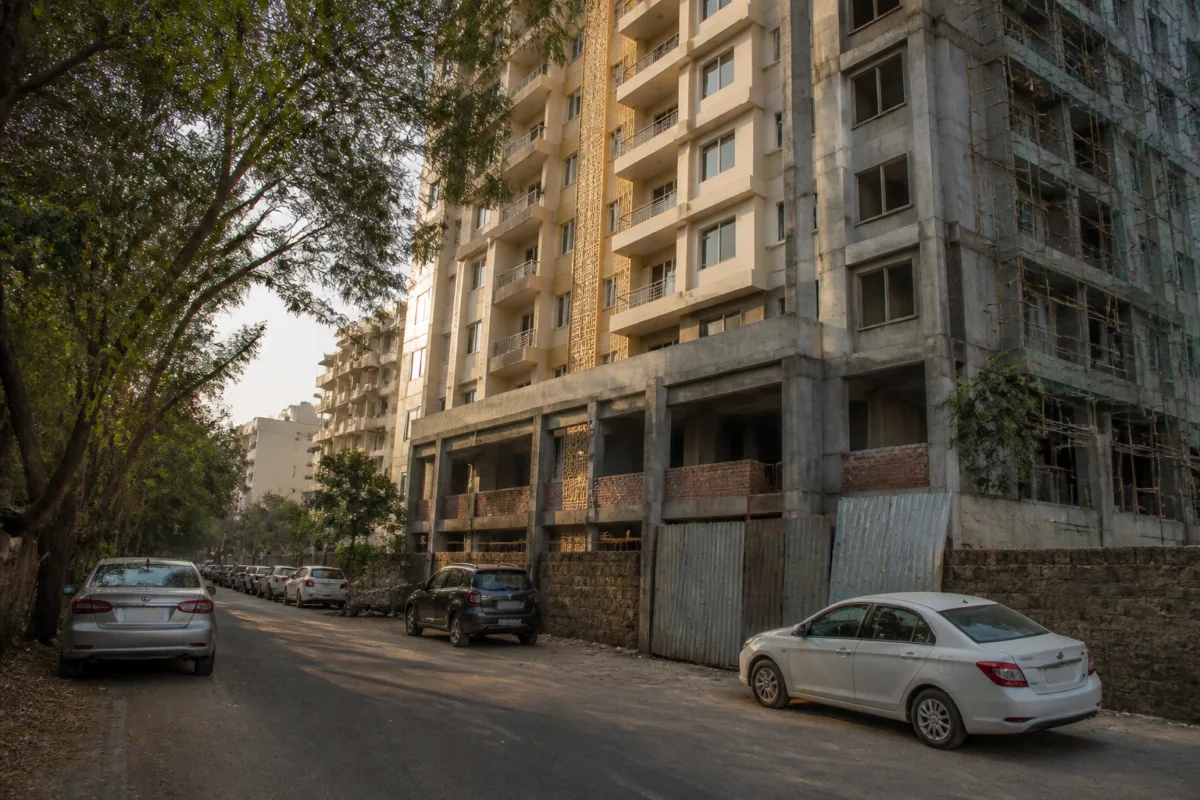
MahaRERA has held that a successor developer cannot automatically avoid a predecessor promoter’s commitments to landowners merely because a stalled Pune housing project changed hands through mortgage enforcement proceedings, according to an order reported by Pune Mirror.
The authority ruled that Dilrez Gopal and Farah Zaheer Vakil, daughters of landowner Zaheer Jehangir Vakil, qualify as ‘allottees’ under the Real Estate (Regulation and Development) Act, 2016. Their promised homes formed part of the consideration for their family’s land, MahaRERA held.
The ruling concerns a 4,167.20-square-metre plot at CTS No. 30A on Boat Club Road, Pune. The land was conveyed to Marvel Dwellings Pvt Ltd, then led by developer Vishwajeet Jhavar, through a registered deed dated September 25, 2012, for a stated consideration of ₹65 crore.
Under the reported arrangement, each sister was entitled to ₹6.50 crore. After receiving ₹1.50 crore in cash, the remaining ₹5 crore for each was to be adjusted against residential flats in the proposed Marvel Ribera A building, along with parking spaces.
The reported order identifies the allotted homes as Flat A-302 for Dilrez and Flat A-402 for Farah. The developer had undertaken to complete construction, secure an Occupancy Certificate and hand over possession by March 25, 2015. The flats were not delivered within that period, and the sisters continued without possession or registered agreements for sale after the project changed hands.
The project’s ownership changed after mortgage enforcement proceedings initiated by financial institutions. Following settlement of claims by ICICI Home Finance Company Ltd and ICICI Bank Ltd, the project was transferred to Ribera Projects LLP through a registered conveyance dated January 9, 2024.
Ribera Projects LLP, along with promoters Suresh Gattani and Ramgopal Rameshchandra Bansal, disputed liability for the earlier commitments. Their position, as reported, was that they were not parties to the original transaction and that the complainants were landowners rather than ordinary homebuyers.
MahaRERA rejected that defence, relying on Sections 2(d) and 15 of the RERA Act. It held that the flats constituted part of the consideration for the land and that the complainants therefore qualified as allottees. The authority also held that the change in ownership through proceedings under the SARFAESI Act did not extinguish existing commitments attached to the project.
The authority directed Ribera Projects LLP to execute and register agreements for sale for Flats A-302 and A-402, including their respective parking entitlements, within 60 days. The respondents were also directed to bear stamp duty, registration charges, VAT and applicable taxes.
MahaRERA ordered payment of interest for delayed possession from March 26, 2015, until actual possession is handed over with the Occupancy Certificate. The interest is to be calculated at the State Bank of India’s highest Marginal Cost of Lending Rate plus 2%, subject to the COVID-19 moratorium benefit granted by the authority.
The respondents were further directed to take steps to seek an extension of the project within 30 days. Failure to do so could attract a penalty under Section 63 of the Act. Each complainant was awarded ₹20,000 towards proceedings costs.
The authority rejected some additional claims. It did not grant separate compensation for mental harassment and rejected Dilrez’s claim for a ₹2.70-crore refund with interest, holding that the claim fell beyond MahaRERA’s jurisdiction. It also held that the interest awarded for delayed possession was compensatory for the delay and that separate compensation on the same ground was not warranted.
The ruling places the continuity of project obligations at the centre of a takeover involving an incomplete development. For landowners who receive flats as part of a development or land-transfer arrangement, the decision indicates that the form of the original consideration may be relevant to their status under RERA. For successor promoters, it underscores the regulatory exposure that can accompany acquisition of a stalled project, even where the transfer follows enforcement of security interests.
The developer’s lawyer told Pune Mirror that he would study the order before commenting.

