


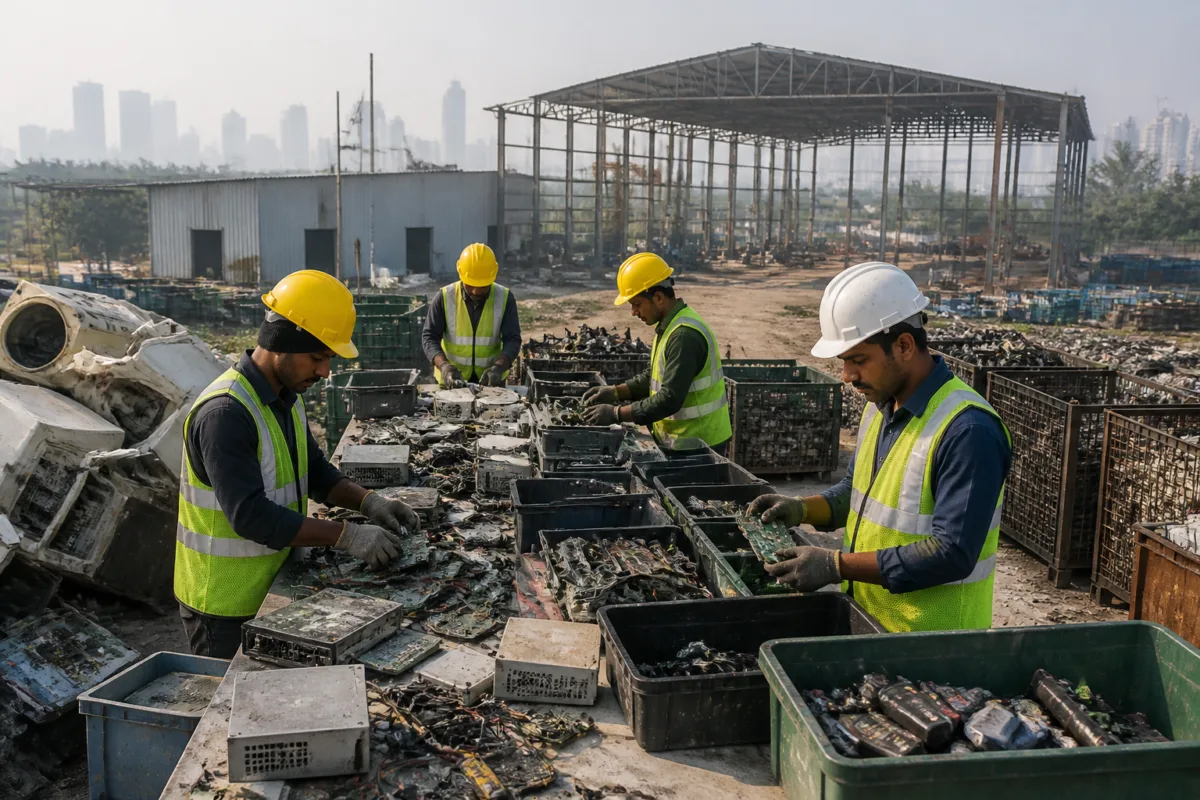
Delhi has moved ahead with plans for an e-waste processing plant at Holambi Kalan industrial area after a delay of about five years, with the Delhi State Industrial and Infrastructure Development Corporation (DSIIDC) issuing a tender for the project under a public-private partnership model.
The plant is intended to scientifically handle an estimated 274,087 metric tonnes of e-waste generated in Delhi each year, according to the report, which cited a Central Pollution Control Board estimate. The facility is expected to be completed in about 18 months once the project moves forward.
The proposed plant will collect, sort and recycle discarded electronic equipment, including mobile phones, computers, laptops, televisions, refrigerators, air-conditioners, batteries, printers, circuit boards, wires and LED screens. The equipment contains recoverable materials such as copper, iron, aluminium and plastics, as well as hazardous substances including lead, mercury, cadmium and lithium.
The project was announced in April 2021, but progress was held up by delays involving land, the project structure and the tendering process. The latest tender is intended to advance the project on a PPP basis, the report said.
A large share of Delhi’s e-waste is currently handled by informal collectors, scrap dealers and small units. The report identified Seelampur, Mustafabad, Mandoli, Shastri Park and Mayapuri among the areas where e-waste collection, trading and sorting have taken place. It also reported that Delhi does not currently have an authorised recycling plant, meaning e-waste is sent to registered facilities in other National Capital Region states.
The absence of local authorised processing has made pollution control and safe disposal more difficult. The report said discarded electronics are generated by households, offices, government institutions, hospitals and commercial establishments, and that some waste is dismantled or processed through informal channels.
Improper handling can release hazardous substances and pollutants. The report noted that plastic burning has been observed in areas associated with informal e-waste processing, while dumping electronic equipment with ordinary municipal waste creates environmental and health risks.
Dr Chandrashekhar, a senior neurosurgeon at GB Pant Hospital, told the publication that e-waste management required stricter enforcement, similar to the rules governing biomedical waste, and greater public responsibility. He said e-waste contributes to pollution and can adversely affect health.
The tender marks a new implementation step, but the project’s delivery will depend on the completion of the procurement process and construction of the proposed facility. Until an authorised Delhi plant becomes operational, the city’s e-waste will continue to require collection, transport and processing through existing registered facilities, alongside the informal handling described in the report.

