


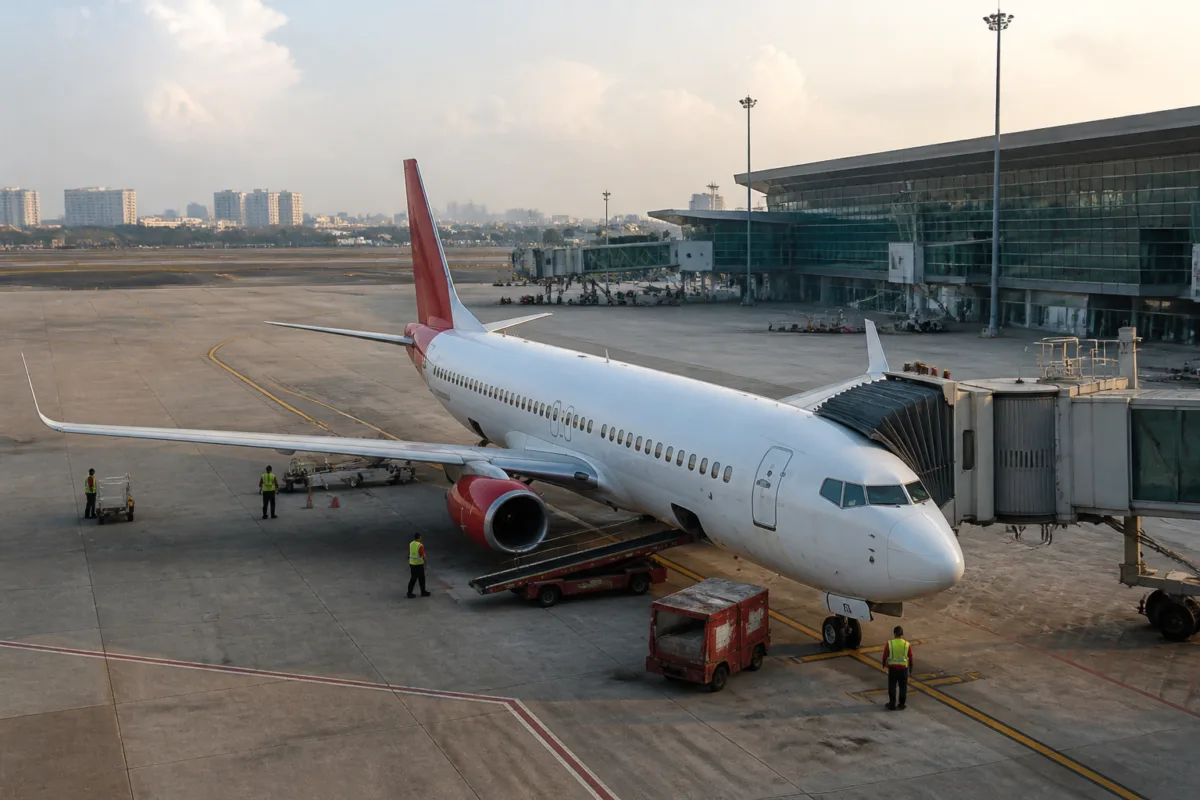
SpiceJet’s proposed ₹5,500-crore fundraise could determine whether the airline can restore aircraft operations and rebuild flight capacity, but its recent record shows that fresh capital alone has not yet produced a sustained recovery. The airline cancelled 31 of its 42 scheduled flights at Delhi, Mumbai and Bengaluru airports on Thursday amid a cash crunch and mounting dues to service providers and aircraft lessors, according to Business Standard’s report citing Reuters and company disclosures.
The proposed fundraise, approved by SpiceJet’s board earlier this week, may involve equity and other permitted financial instruments. The airline has said the proceeds would be used to ease liquidity pressures, strengthen its balance sheet, restore flights, support fleet expansion and meet operational requirements. The proposal remains subject to shareholder and regulatory approvals, and the company is in discussions with potential investors, the report said.
The immediate operational impact is visible in the airline’s falling market share. Directorate General of Civil Aviation data cited in the report show that SpiceJet’s domestic market share declined from 3.9 per cent in January 2026 to 0.6 per cent in September. Its passenger numbers fell from 592,000 to 73,000 over the same period. In September, the airline’s market share was below that of regional carrier Star Air, which recorded 0.7 per cent.
SpiceJet also recorded a 20.29 per cent cancellation rate during September, the highest among scheduled domestic carriers, according to the DGCA data cited by Business Standard. For passengers, this combination of cancellations and reduced capacity can mean fewer direct travel options and greater dependence on competing airlines, particularly on routes served from major metropolitan airports.
The airline’s aircraft availability has deteriorated alongside its financial position. Six recently leased aircraft remained grounded over unpaid dues to lessors, according to a Times of India report cited by Business Standard. Moldova-based low-cost airline FLYONE also terminated an agreement to lease three aircraft to SpiceJet over outstanding payments.
CARE Ratings’ assessment published in April 2026 showed the longer-term scale of the contraction. SpiceJet’s operating fleet declined from 114 aircraft in March 2020 to 25 in March 2025, before recovering to 33 in December 2025. Around 37 aircraft remained grounded at the time of the assessment. CARE cited unpaid lessor dues, financial constraints and shortages of components and spare parts. It downgraded the airline’s long-term bank facility rating to CARE B+ from CARE BB-, pointing to a deteriorating financial risk profile and stretched liquidity.
This creates a feedback loop between the airline’s finances and its operating network. Unpaid dues and limited cash make it more difficult to maintain aircraft, secure components, settle lessor obligations and return grounded planes to service. A smaller operational fleet restricts the number of flights SpiceJet can offer, reducing its capacity to carry passengers and generate revenue. Lower operating capacity can then make it harder to fund maintenance and rebuild the fleet.
SpiceJet’s financial filings also point to the depth of the challenge. The airline has not filed its financial results for the March and June 2026 quarters, attributing the delay to the time required to complete the audit, according to the report. The Bombay Stock Exchange has warned that trading in the airline’s shares could be suspended from December 10 if the results are not submitted by December 7.
The airline’s previous fundraise illustrates why the latest proposal is being assessed against implementation rather than headline value. SpiceJet raised ₹3,000 crore through a qualified institutional placement in September 2024, while the promoter group infused ₹500 crore during FY25, including a final tranche of ₹294.09 crore. Its FY25 annual report said that ₹2,699.54 crore of the QIP proceeds had been used by March 31, 2025, including for statutory dues, creditor settlements, aircraft maintenance and ungrounding, fleet induction, employee-related payments and airport dues.
The capital infusion coincided with an improvement in reported financial performance. SpiceJet recorded a standalone profit after tax of ₹58.07 crore in FY25, compared with a loss of ₹409.44 crore in FY24. Its net worth turned positive at ₹683.02 crore as of March 31, 2025, from a negative ₹2,585.85 crore a year earlier.
However, the same annual report recorded accumulated losses of ₹7,764.81 crore and a deficit of ₹3,845.07 crore between current assets and current liabilities. Statutory auditors also flagged material uncertainty related to the company’s ability to continue as a going concern. These figures indicate that the earlier capital infusion improved some balance-sheet measures without resolving the airline’s broader operational and creditor pressures.
SpiceJet’s difficulties also have a longer history. Its FY15 annual report attributed an earlier crisis to delayed funding, legacy liabilities and mounting obligations to tax authorities, employees, airport operators, suppliers, aircraft lessors and other creditors. The resulting aircraft returns and flight cancellations reduced average daily flights from 340 in July 2014 to 230 in December 2014. The Directorate General of Civil Aviation subsequently imposed restrictions on forward bookings, cancelled slots and increased safety surveillance. The airline partially suspended operations in December 2014, before a revival plan approved in January 2015 transferred management and control to Ajay Singh from the previous promoters, Kalanithi Maran and Kal Airways.
The latest proposal therefore faces a practical test with three connected parts: whether SpiceJet can mobilise the approved capital, whether the funds can settle enough obligations to release aircraft and whether those aircraft can be maintained and operated reliably. The company has identified fleet restoration and operational requirements as uses for the proceeds, but the report does not establish when the funds will be raised or how many grounded aircraft could return to service.
For passengers and airports, the significance of the fundraise will be measured less by its announced size than by a sustained increase in available aircraft, scheduled flights and completion rates. Until those indicators improve, SpiceJet’s reduced market share, grounded fleet and payment disputes will continue to constrain its role in India’s domestic aviation network.

