


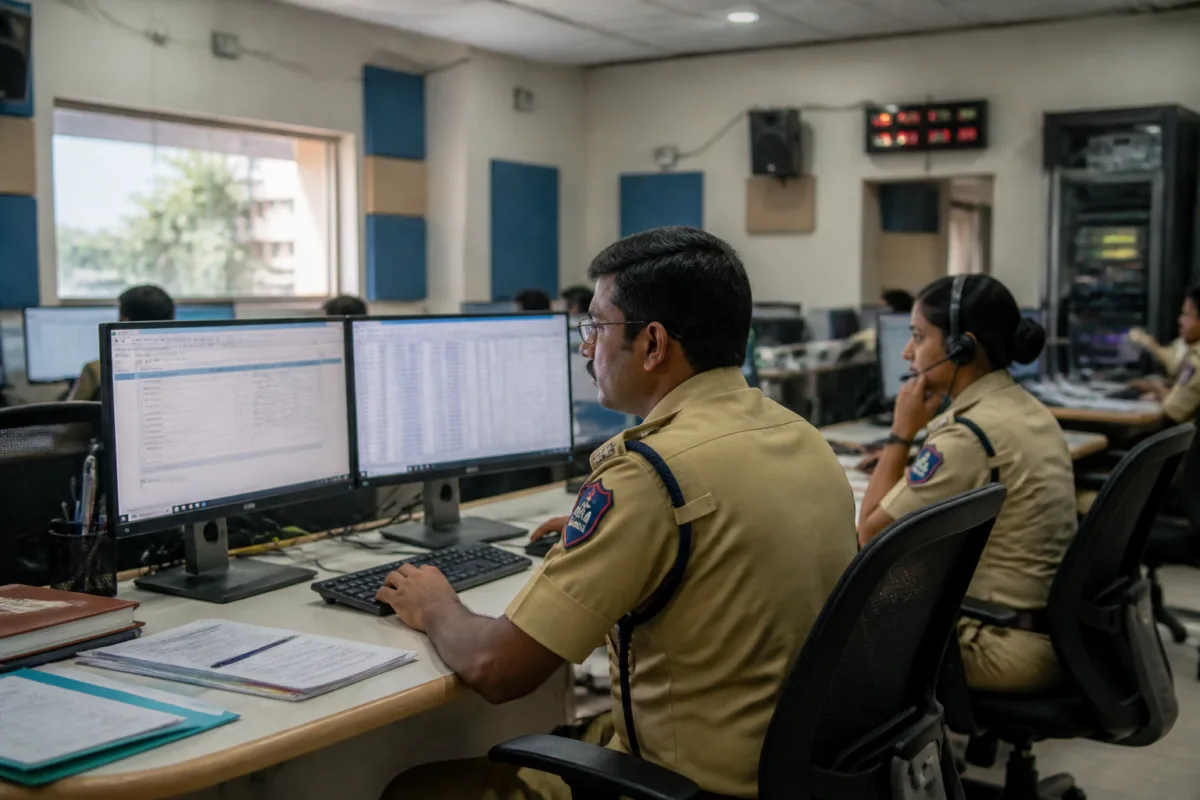
An India-built AI voice dispatcher for police helplines is being positioned as a way to reduce delays in complaint registration and help departments manage high call volumes, but its wider public value will depend on verified deployments, oversight and measurable results.
Hyderabad-based Blue Cloud Softech Solutions has announced the commercial launch of BluVaani, an AI-powered system designed to answer police helpline calls, record complaints and flag suspected cyber-fraud cases for review. NDTV Business reported that the product is also intended for government agencies and other public-service desks.
According to the report, BluVaani uses the company’s Access Genie platform to understand callers, extract relevant details and create case records. It can identify repeat callers, connect them with existing complaints and alert officers to suspected fraud cases. The system also supports Indian vernacular languages, which could lower a significant access barrier for residents who are not comfortable reporting complaints in English or Hindi.
The company said a pilot handled more than 8,500 calls over 10 days. The report does not identify the police department or departments involved, provide a breakdown of the calls, or independently assess the accuracy of the system’s transcriptions, classifications or referrals. Those details will be important in judging whether the technology can work reliably in real public-service settings.
BluVaani is also described as capable of sending updates to citizens through WhatsApp. Blue Cloud has emphasised an on-premise model in which a BlueEdge server is installed at the customer’s premises. The company says the system does not require an external cloud server or an internet connection, allowing call recordings and transcripts to remain within the department’s infrastructure.
Keeping data within a government facility may address some concerns around the handling of sensitive complaints, but it does not by itself establish that the system is secure or compliant with applicable data-protection requirements. Departments would still need clear retention rules, access controls, audit trails and procedures for correcting inaccurate records.
The company has said that BluVaani does not make policing decisions. Officers are expected to review each case, while investigations and final decisions remain with the police. That human-review arrangement is central to the system’s public legitimacy, particularly when a caller’s account is converted into an official record or a case is flagged as suspected fraud.
The platform’s other reported tools include CopWriter, which converts spoken statements into case records, and Complaint Memo, which turns daily status reports into official memos and routes them to relevant authorities. Together, these products reflect a broader attempt to automate the administrative work surrounding public complaints.
For citizens, the potential benefit is a faster first point of contact, especially during periods of high call traffic. However, an automated dispatcher cannot substitute for adequate staffing, trained officers, emergency response capacity or accessible complaint channels. The relevant test is not simply how many calls the system can answer, but whether complaints are accurately recorded, routed to the right authority and followed through.
The report provides no confirmed information on government orders, deployment locations, service-level performance or the share of the company’s revenue that could come from the AI products. Until such evidence is available, BluVaani remains a promising but early-stage example of technology being applied to public-service administration rather than proof of a scaled police modernisation programme.

